 Factory-Proven Physical AI Humanoid PlatformTW • 2026
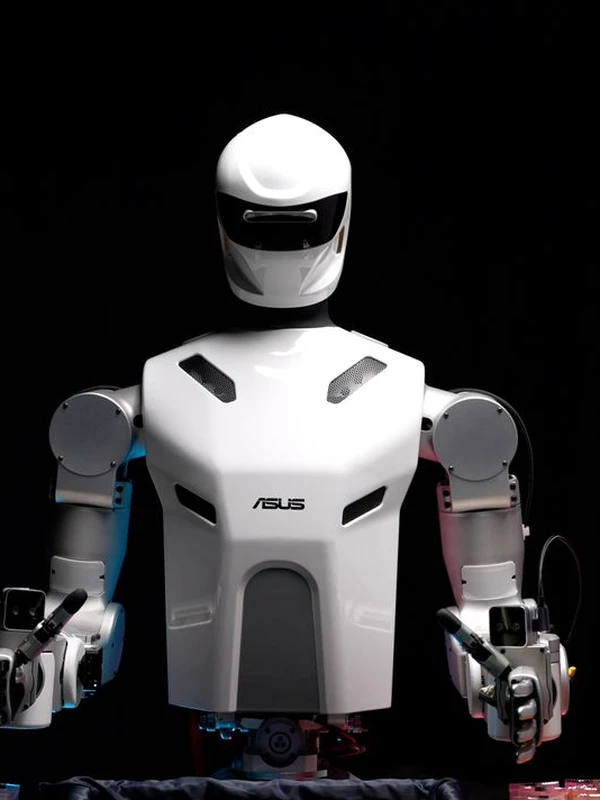
ASUS Gallop
ASUS (Physical AI Solutions Business Group) • Taiwan
« ASUS's factory-proven dual-arm physical AI humanoid powered by NVIDIA Jetson Thor for precision EMS assembly. »
Who is this robot built for? (Procurement Verdict)
Independent engineering assessment grounded in official manufacturer disclosures, deployment trials, and facility constraints.
Ideal Profile & Recommended Use Cases
- ✓Electronics Manufacturing Services (EMS) seeking automated packaging of delicate, flexible accessories
- ✓High-mix, low-volume manufacturing lines where fixed industrial arms lack re-programming adaptability
- ✓Factory operators aiming to deploy physical AI at existing human-scaled workstations without facility rebuilding
Key Caveats & Who Should Avoid It
- ✕Heavy automotive metal stamping and structural welding (exceeds 15 kg payload limits)
- ✕High-speed outdoor dynamic bipedal rough-terrain navigation (stationary and wheeled platform)
- ✕Direct consumer home assistance prior to hospital and commercial phase (post-2028)
Procurement Reality & Commercial Availability : How to procure or deploy?
Direct enterprise engagement via ASUS Physical AI Solutions Business Group (PAS BG).
Field Reality: AI Autonomy vs Teleoperation
Assessment of real-world operational independence versus human supervision.
💡 SpecsLib Summary: Factory-grade pick-and-place autonomy targeting 99.5% success rate in 20-second cycles on 15-part motherboard kits.
Confirmed 100% Autonomous Capabilities
- ✓Autonomous pick-and-place packaging of 15 delicate motherboard accessory components in thin plastic bags
- ✓Multi-modal tactile and visual verification of flexible part insertion without human intervention
- ✓Supervisor AI closed-loop error recovery and dynamic trajectory re-planning upon part misalignment
- ✓Standardized workstation operation on existing human factory lines without plant redesign
Tasks Requiring Teleoperation or VR Supervision
- ⚠Initial human demonstration recording for imitation learning of new assembly stations
- ⚠Corner-case trajectory fine-tuning for rare mechanical component geometry variations
Kinematics & Drives
Subsystem breakdown of degrees of freedom (DoF) and actuation torque.
- Total DoF
- 28 DoF
- Hands & Fingers
- 10 DoF
- Arms
- 14 DoF
- Legs
- N/A
- Torso & Neck
- 4 DoF
- Actuator Type
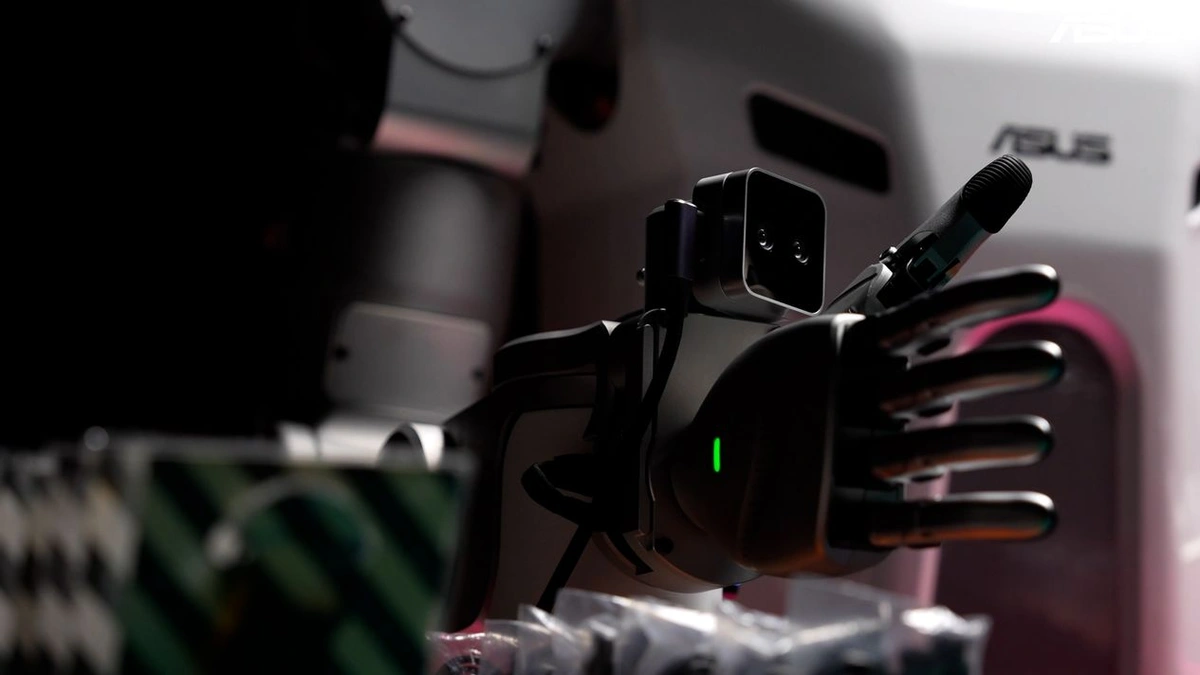
- ASUS in-house tactile dexterous hands with custom harmonic rotary drives and modular BLDC joint actuators
Sensors & Compute
Perception cameras, onboard AI compute hardware, and power management.
- Vision Perception
- Stereo vision head cameras + dual wrist-mounted RGB-D depth sensors with in-house tactile fingertip touch sensing
- LiDAR Sensing
- No (Pure Vision)
- Compute Architecture
- Single integrated NVIDIA Jetson AGX Thor system-on-chip with Blackwell GPU architecture
- Embedded AI Model
- ASUS 4-layer physical AI architecture (Planner VLA + Supervisor AI + Skills layer + Real-time motion control)
Energy & Payload
Lithium battery capacity and rated lifting payload.
- Battery Pack
- N/A
- Endurance Runtime
- ~8 h
- Total Payload
- 15 kg
- Single Hand Payload
- 3.5 kg
- Charging Interface
- Station-tethered 220V/380V industrial grid power for continuous 24/7 factory shifts
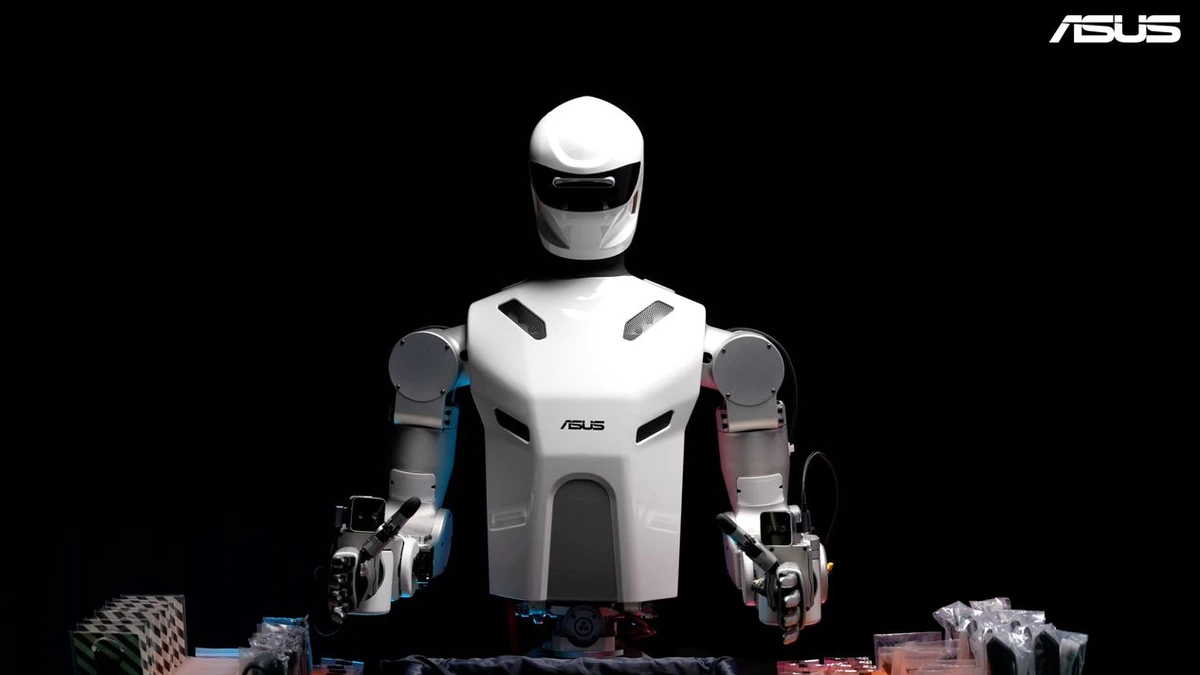
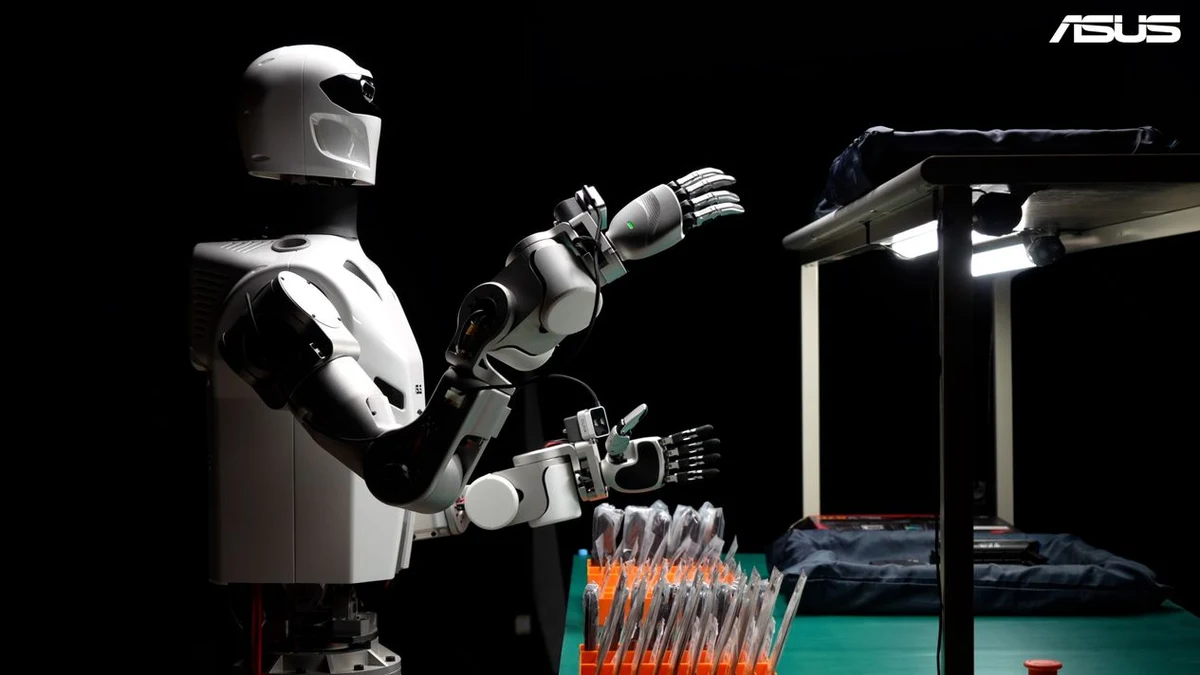
Hardware Gallery: ASUS Gallop
Manufacturer photography covering chassis architecture, actuators, and operational validation.
Frequently Asked Questions & Expert Answers : ASUS Gallop
Everything you must know before evaluating or acquiring this platform.
1Why did ASUS choose motherboard accessory packaging as Gallop's first workstation task?
ASUS deliberately chose one of the most challenging manual workstations in its EMS plants: sorting and packing 15 small, soft, and flexible accessory components enclosed in thin, transparent plastic bags. Traditional vacuum cups and simple rigid mechanical grippers fail when handling deformable, transparent packaging. Gallop proves that physical AI with tactile feedback can achieve a 99.5% success rate within human cycle times of 20 seconds per board.
2How does Gallop's 4-layer AI architecture and single NVIDIA Jetson Thor computer operate?
Gallop operates on a single embedded NVIDIA Jetson AGX Thor computer running standard robotics middleware. The software is organized into four modular decoupled layers: a high-level Planner that interprets the scene and breaks jobs into sub-tasks; a Supervisor AI that monitors progress in real time and triggers dynamic recovery upon failure; a Skills library handling reach, grasp, and placement primitives; and a low-level Control layer commanding joint trajectories with immediate safety stops. Fixed standardized interfaces allow ASUS to upgrade underlying VLA foundation models without re-engineering the robot's physical structure.
3What is the commercial deployment roadmap for Gallop between 2026 and 2028?
The Gallop project launched internally in early 2026 at ASUS group EMS factories. Over 2026 and early 2027, ASUS is integrating its proprietary tactile dexterous hand and preparing a wheeled mobile base. The robot will be demonstrated publicly at Computex 2027, followed by enterprise customer pilot programs throughout 2027. Full commercial market availability is targeted for the second half of 2028, prioritizing electronics manufacturing before expanding to hospital logistics and service automation.
Recommended Head-to-Head Duels
Confront this robot directly against other market leaders with 1-click comparison: