 Commercial Developer & Education Humanoid / Open SDKUS • 2026
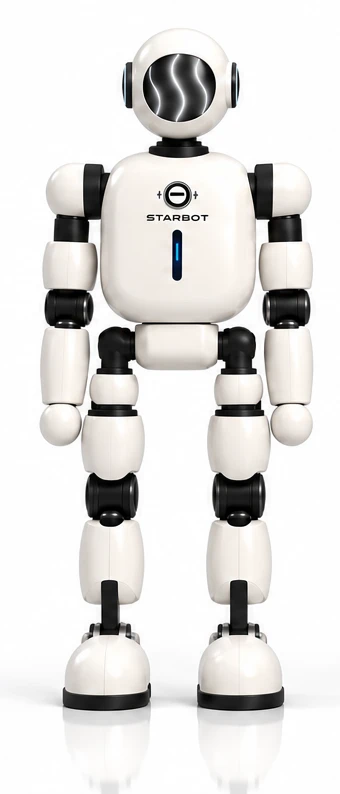
StarBot Spark
StarBot Robotics • United States
« North America's first affordable US-made developer humanoid for education and physical AI. »
Who is this robot built for? (Procurement Verdict)
Notre analyse indépendante basée sur les retours d'ingénieurs terrain, les tests en conditions réelles et les contraintes d'infrastructure.
Ideal Profile & Recommended Use Cases
- ✓Robotics and STEM classrooms seeking an accessible, American-made physical humanoid platform
- ✓AI researchers needing affordable real-world validation beyond Isaac Sim screens
- ✓Developers programming custom Python and ROS2 locomotion or companion skills
Key Caveats & Who Should Avoid It
- ✕Heavy industrial pallet handling or automotive stamping plant lines
- ✕High-payload bimanual warehouse crate stacking exceeding 5 kg
- ✕Extreme outdoor wilderness rock climbing or catastrophic disaster rescue
Procurement Reality & Commercial Availability : Comment l'obtenir concrètement ?
Direct online reservation and purchase via StarBot USA portal
Field Reality: AI Autonomy vs Teleoperation
Assessment of real-world operational independence versus human supervision.
💡 Synthèse SpecsLib : Autonomous dynamic bipedal walking, obstacle avoidance, and pre-programmed interactive routines with open SDK extensibility.
Confirmed 100% Autonomous Capabilities
- ✓Dynamic bipedal walking and turning
- ✓Omnidirectional visual obstacle avoidance
- ✓Pre-programmed companion behaviors and dancing
- ✓Low-battery auto-return to charging dock
Tasks Requiring Teleoperation or VR Supervision
- ⚠Complex teleoperated bimanual object grasping
- ⚠Advanced classroom demonstration puppeteering
- ⚠Real-time remote voice and conversational facilitation
Cinématique & Moteurs
Subsystem breakdown of degrees of freedom (DoF) and actuation torque.
- Total DoF
- 22 DoF
- Hands & Fingers
- 4 DoF
- Arms
- 6 DoF
- Legs
- 10 DoF
- Torso & Neck
- 2 DoF
- Actuator Type
- High-torque brushless DC motors with planetary gearheads and integrated encoders
Capteurs & Calculateurs
Perception cameras, onboard AI compute hardware, and power management.
- Vision Perception
- RGB-D depth camera with face display head and wide-angle perception
- LiDAR Sensing
- Non (Pure Vision)
- Compute Architecture
- Onboard ARM/x86 AI Edge processor with open Python and ROS2 SDK
- Embedded AI Model
- NVIDIA Isaac Sim reinforcement learning locomotion & PyTorch Sim2Real policies
Énergie & Charge
Capacité du pack lithium et charge utile admissible.
- Battery Pack
- 0.24 kWh (24V)
- Endurance Runtime
- ~3 h
- Total Payload
- 3 kg
- Single Hand Payload
- 1 kg
- Charging Interface
- 40-minute fast charging via external 24V dock / DC barrel
Frequently Asked Questions & Expert Answers : StarBot Spark
Everything you must know before evaluating or acquiring this platform.
1Where is StarBot Spark manufactured, and how does it compare to Chinese developer platforms?
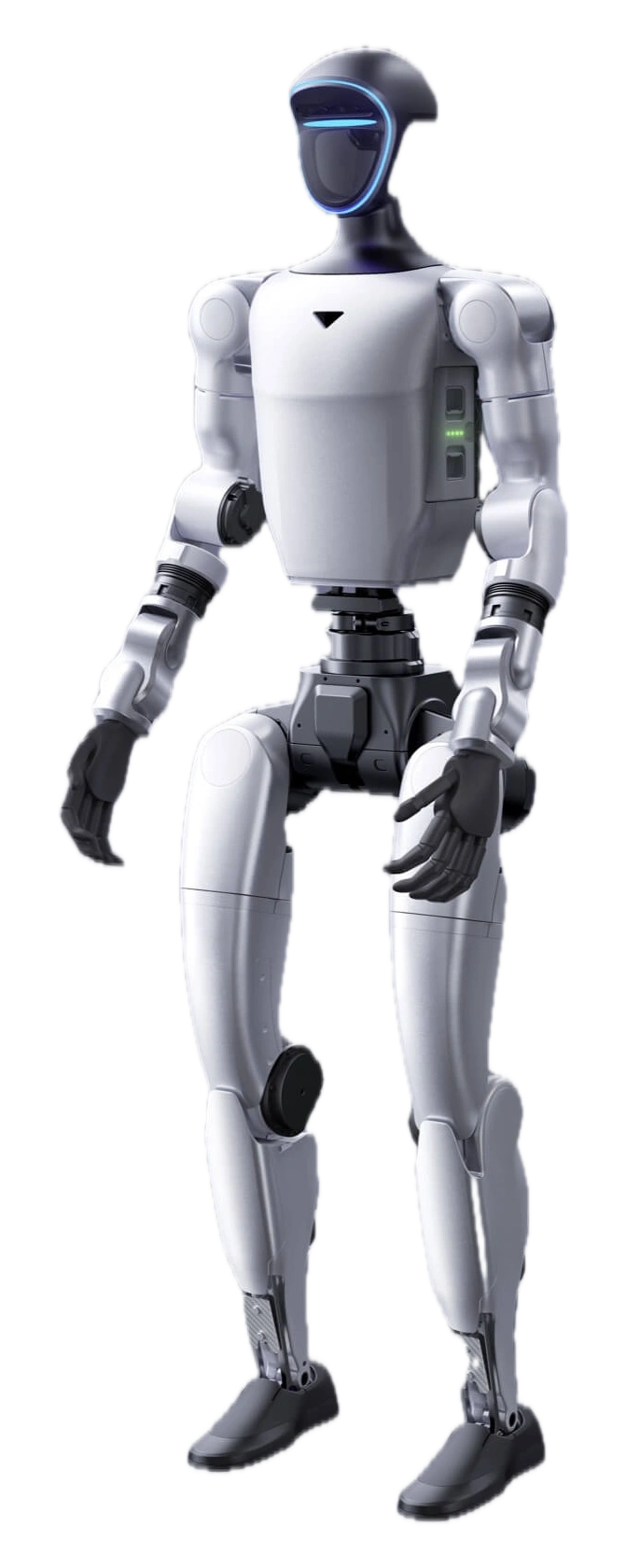
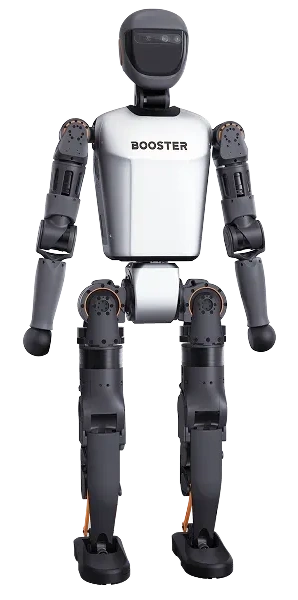
StarBot Spark is designed and 100% manufactured in the United States at StarBot's Santa Barbara facilities in California. Unlike Chinese platforms like the Unitree G1 ($16,000) or Booster T1 ($12,500), Spark is priced below $8,000 ($5,999 introductory) with local US support and compliance.
2How does StarBot Spark integrate with NVIDIA Isaac Sim and developer SDKs?
StarBot trains whole-body dynamic walking and posture balance policies directly in NVIDIA Isaac Sim before deploying them to Spark's edge processor. Developers receive native Python and ROS2 APIs to read telemetry, modify control loops, and test vision-language-action policies.
3What is the battery runtime and recharge speed of StarBot Spark in educational settings?
Spark features an integrated 24V lithium battery providing up to 3 hours of continuous mixed locomotion and interaction. Its 40-minute fast charging protocol allows rapid turnaround between class periods or laboratory sessions.
Recommended Head-to-Head Duels
Confront this robot directly against other market leaders with 1-click comparison: