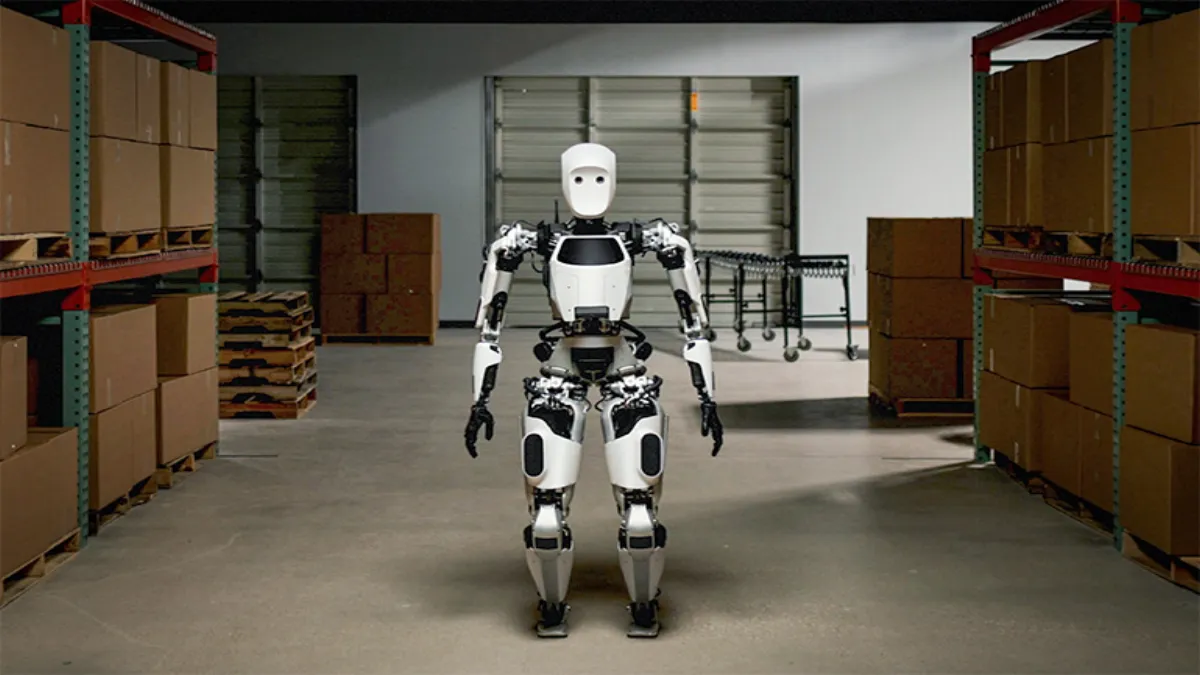
While humanoid robotics headlines often revolve around laboratory stunts or athletic parkour, the true competitive front for embodied AI has shifted to automotive assembly floors and logistics fulfillment centers. Apptronik, the Austin-based robotics firm born out of the University of Texas Human Centered Robotics Lab, is accelerating the rollout of its flagship humanoid platform, the Apollo 2.
With commercial pilot agreements actively underway at Mercedes-Benz manufacturing facilities and logistics giant GXO, Apollo 2 represents a pragmatic engineering philosophy: designing a humanoid robot specifically built around the physical realities of modern industrial environments.
Modular Industrial Architecture
Standing at 173 cm (5 ft 8 in) and weighing approximately 75 kg, Apollo 2 matches standard human dimensions. This deliberate form factor allows the robot to navigate existing industrial aisles, workstations, and stairways without requiring costly facility re-engineering.
Unlike monolithic bipedal platforms, Apptronik designed Apollo around modularity. The upper torso can be unmounted and attached to stationary workstations or paired with a wheeled mobile base for high-throughput logistics tasks where walking provides no operational advantage.
Heavy Payload and Continuous Operation
The critical bottleneck for warehouse and automotive humanoids has consistently been payload capacity and runtime. Apollo 2 directly addresses both challenges:
- 25 kg Payload: Apollo can lift and carry up to 25 kg (55 lbs), putting it ahead of general-purpose competitors like Tesla Optimus Gen 2 (rated for 20 kg payload) and Unitree G1 (rated for 3 kg per hand). This capacity makes Apollo capable of handling heavy component totes and automotive sub-assemblies.
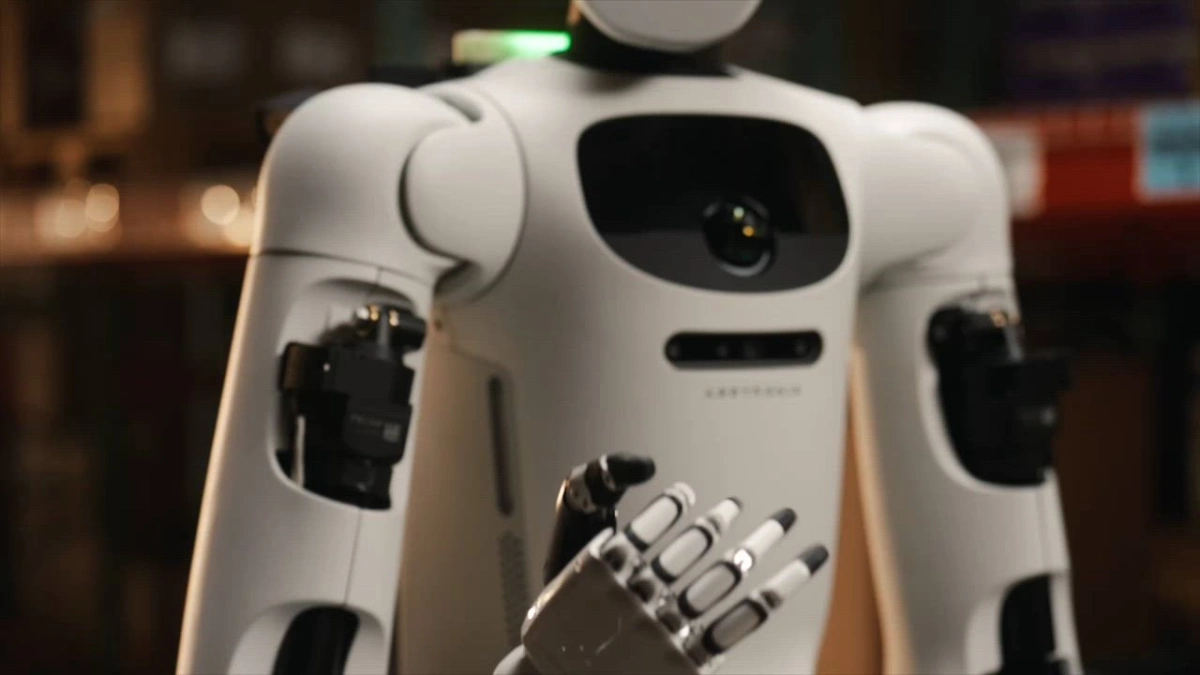
- Hot-Swappable 4-Hour Batteries: Rather than taking the robot offline for hours of charging, Apollo uses modular battery packs in its torso that can be hot-swapped in under two minutes. For stationary tasks, it can also operate continuously via a high-voltage tether.
- Kinematics & Actuation: Powered by 35 degrees of freedom (DoF), Apollo utilizes electric linear actuators that deliver high mechanical stiffness and force control while minimizing maintenance compared to complex hydraulic systems.
Real-World Factory Integration: Mercedes-Benz & GXO
Apptronik’s commercial strategy prioritizes targeted, structured tasks over open-ended household generalization. At Mercedes-Benz assembly plants (including pilot testing at the Digital Factory Campus in Berlin and facilities in Hungary), Apollo is being evaluated for parts delivery to assembly line stations and automated kitting.
By delivering pre-sorted components directly to human technicians, Apollo eliminates low-value walking time for assembly workers while avoiding the rigid track requirements of conventional Automated Guided Vehicles (AGVs).
Positioning in the 2026 Humanoid Landscape
In the broader humanoid race, Apollo 2 occupies a distinct niche between high-agility athletic bipeds and consumer companion concepts:
- vs. Tesla Optimus Gen 2/3: Tesla targets massive in-house manufacturing scale and end-to-end neural network autonomy, but Optimus remains primarily confined to Tesla’s internal Fremont and Austin facilities. Apollo 2 is already delivering third-party client integrations with established automotive OEMs.
- vs. Figure 02: Figure AI focuses heavily on speech interaction and zero-shot neural policies with BMW Spartanburg. Apptronik matches this automotive validation with Mercedes-Benz, while offering higher gross payload (25 kg vs. 20 kg) and modular mounting options.
- vs. Boston Dynamics Atlas: While Boston Dynamics leads in dynamic full-body agility and hydraulic-free 360-degree joint rotations, Apollo emphasizes straightforward linear electric actuation designed for rapid repairability and lower bill-of-materials costs.
As enterprise pilot programs convert into multi-unit procurement contracts through 2027, Apptronik Apollo 2 stands as one of the few platforms proving that humanoid robotics can deliver measurable return on investment in active automotive production.