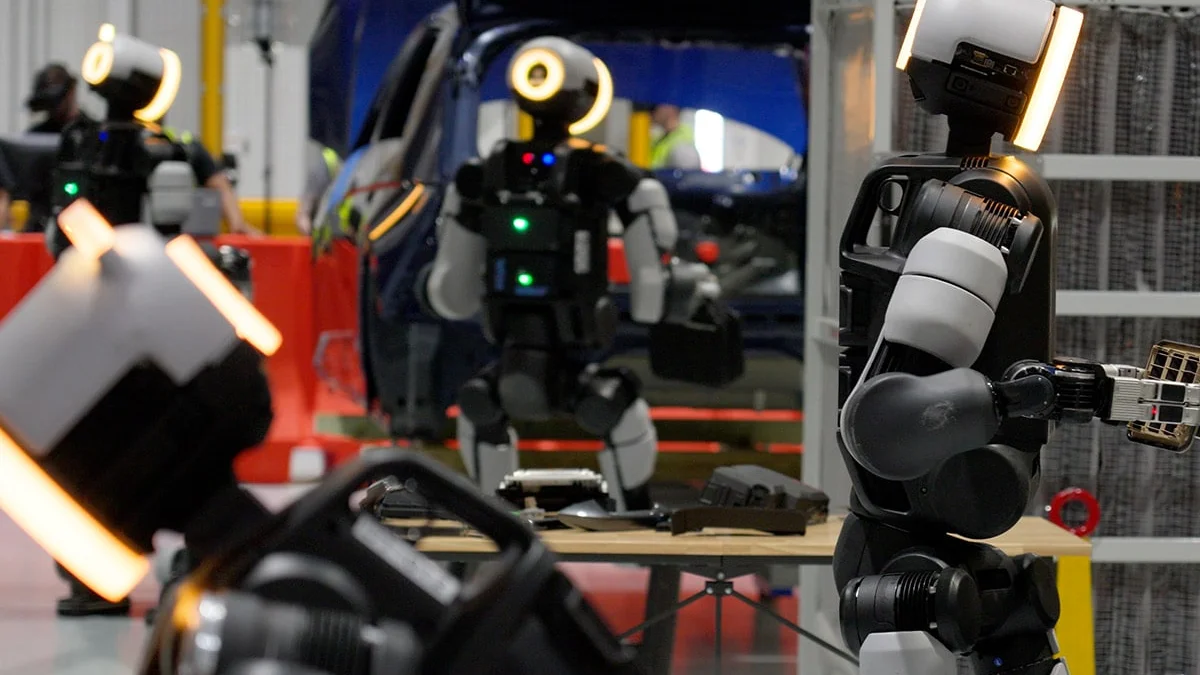
Boston Dynamics has crossed a major threshold in the commercialization of humanoid robotics. On September 21, 2026, the company officially opened its Robotics Metaplant Application Center (RMAC), a dedicated “Robot Behavior Factory” located within the Hyundai Motor Group Metaplant America (HMGMA) in Georgia.
Rather than a simple assembly line for robots, the RMAC functions as a massive, real-world training ground where the All-Electric Atlas humanoid learns to operate in a live manufacturing environment. This marks a decisive shift from controlled laboratory research to industrial-scale deployment.
The “Robot Behavior Factory”
The fundamental challenge of deploying humanoids in factories is not the hardware itself, but the behavioral AI required to handle the chaotic, unscripted reality of a production line. The RMAC directly addresses this by replicating actual automotive workflows using real Hyundai parts and fixtures.
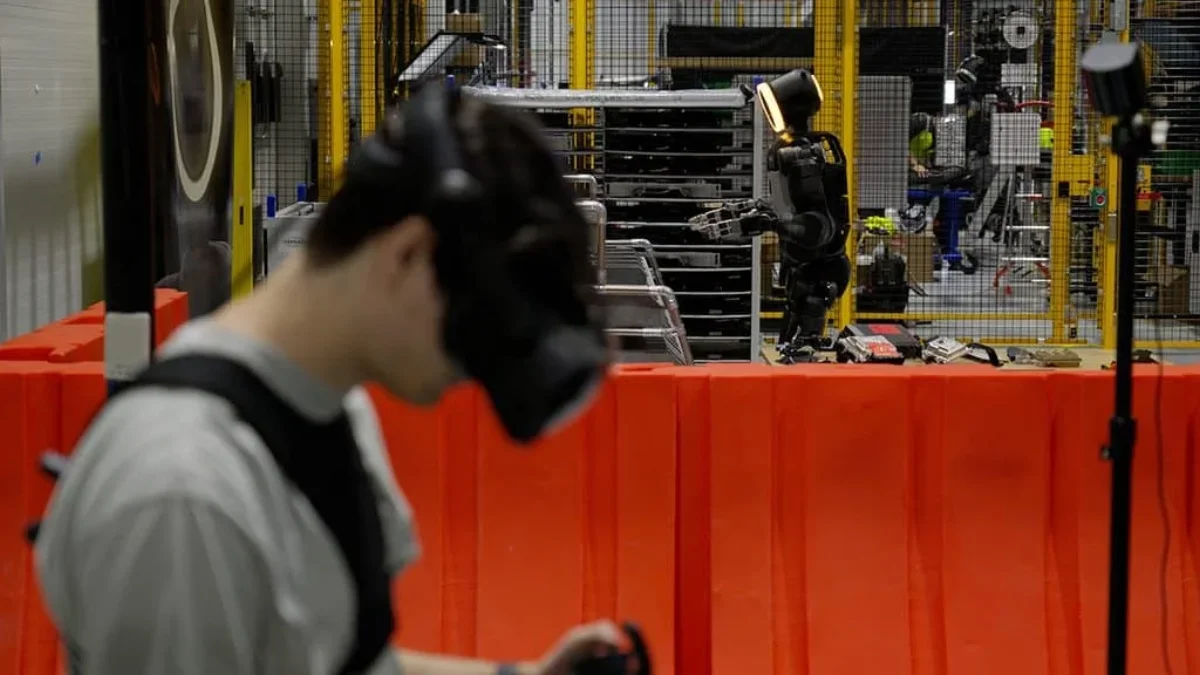
Currently, the training focuses heavily on logistics and parts sequencing-the critical process of arranging components in the exact order needed for the final assembly line. By feeding real-world operational data into its behavioral models, Boston Dynamics is establishing a continuous feedback loop that accelerates the robot’s zero-shot learning capabilities.
Scaling Up: 25,000 Atlas Units Planned
The RMAC is just the first step in an unprecedented scaling effort following Hyundai’s full acquisition of Boston Dynamics earlier this year. The automotive group’s internal roadmap is highly aggressive:
- Global Deployment: Hyundai plans to integrate approximately 25,000 Atlas units across its global manufacturing network, including Kia plants, over the coming years.
- Facility Expansion: By 2027, the RMAC will relocate to a new building within the HMGMA campus roughly ten times the size of the current center.
- Mass Production: To support this rollout, plans are underway for a dedicated U.S. facility capable of manufacturing 30,000 robots annually.
While initial applications remain focused on moving and sequencing parts, the long-term objective for 2030 and beyond is to transition Atlas into complex component assembly and heavy-lifting tasks, fundamentally altering the economics of automotive manufacturing.