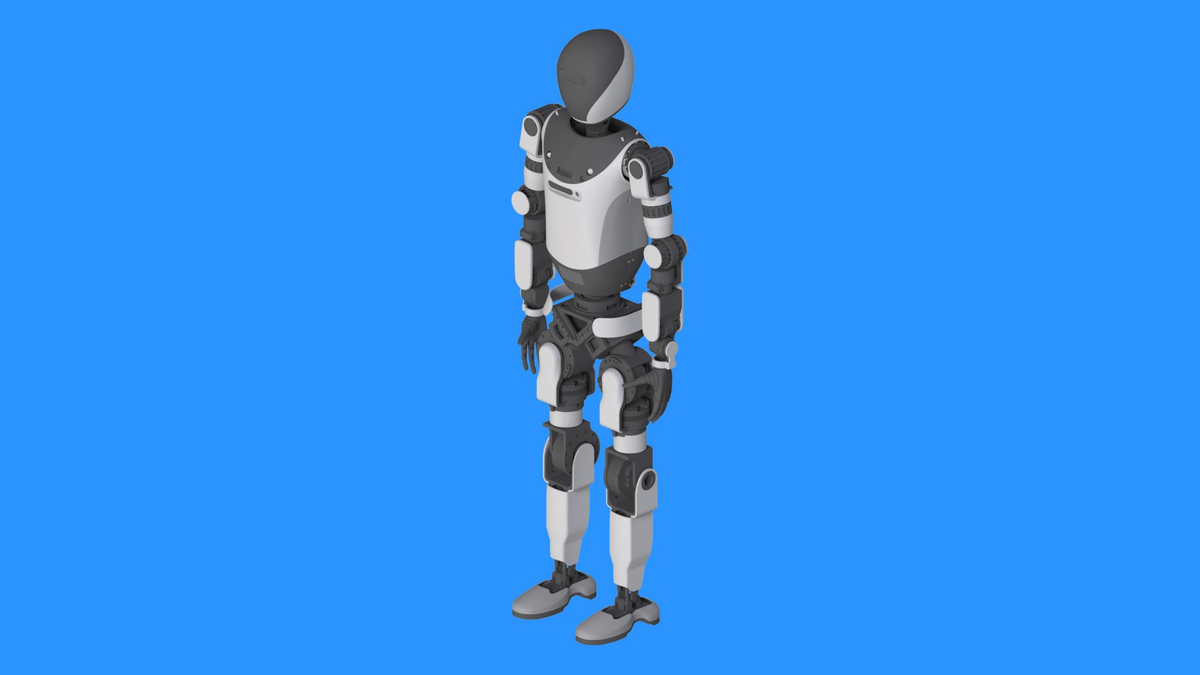
The world’s largest electric vehicle manufacturer is formally entering the humanoid robotics arena. The China National Intellectual Property Administration (CNIPA) has published and authorized a national design patent (Publication No. CN310247768S) granted to BYD Company Limited, unveiling the complete exterior architecture and mechanical layout of its first self-developed bipedal humanoid robot, codenamed Xiao Di (小迪).
This milestone marks a decisive shift for the Shenzhen automotive giant. While automotive peers like Tesla, XPeng, and Chery have pushed aggressively into embodied artificial intelligence, BYD is leveraging its unmatched manufacturing scale, battery technologies, and vertically integrated component supply chain to field a commercial-grade humanoid.
Sleek Bipedal Architecture and 31 Degrees of Freedom
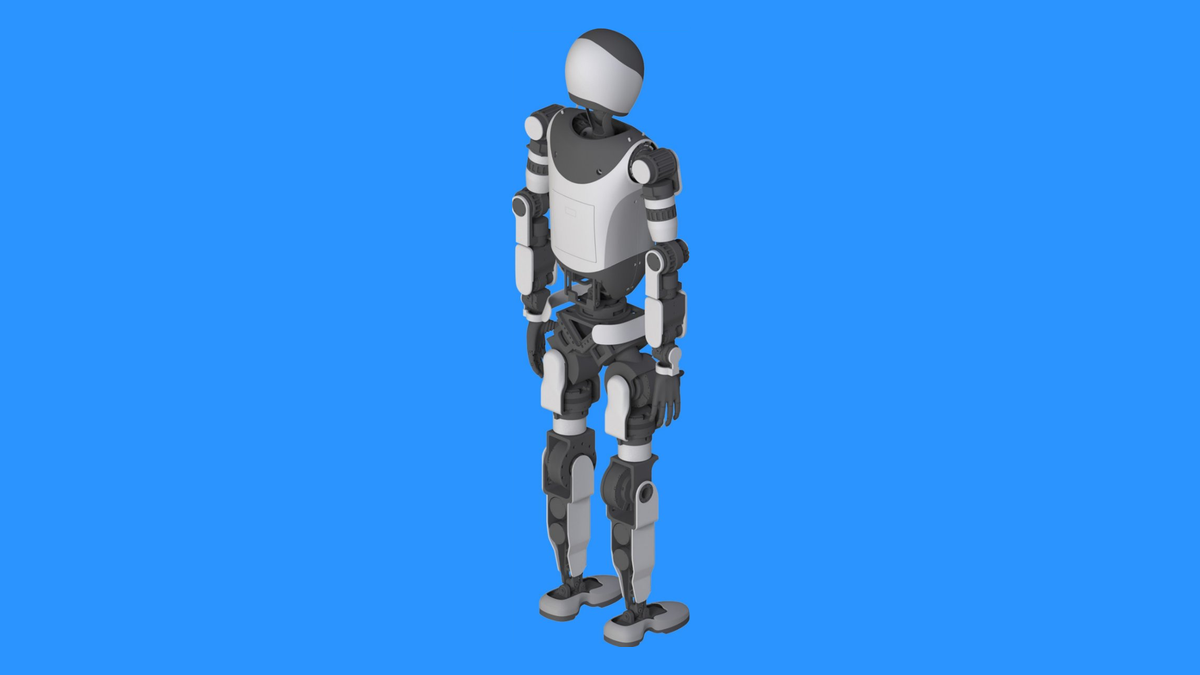
The patent disclosures reveal a humanoid robot standing approximately 1.61 meters tall with an operating weight of 58.5 kilograms, positioning it in an optimal physical envelope for human-centric environments. The aesthetic pairs a minimalist black-and-white shell with exposed mechanical ball-and-hinge joints across the hips, knees, and shoulders.
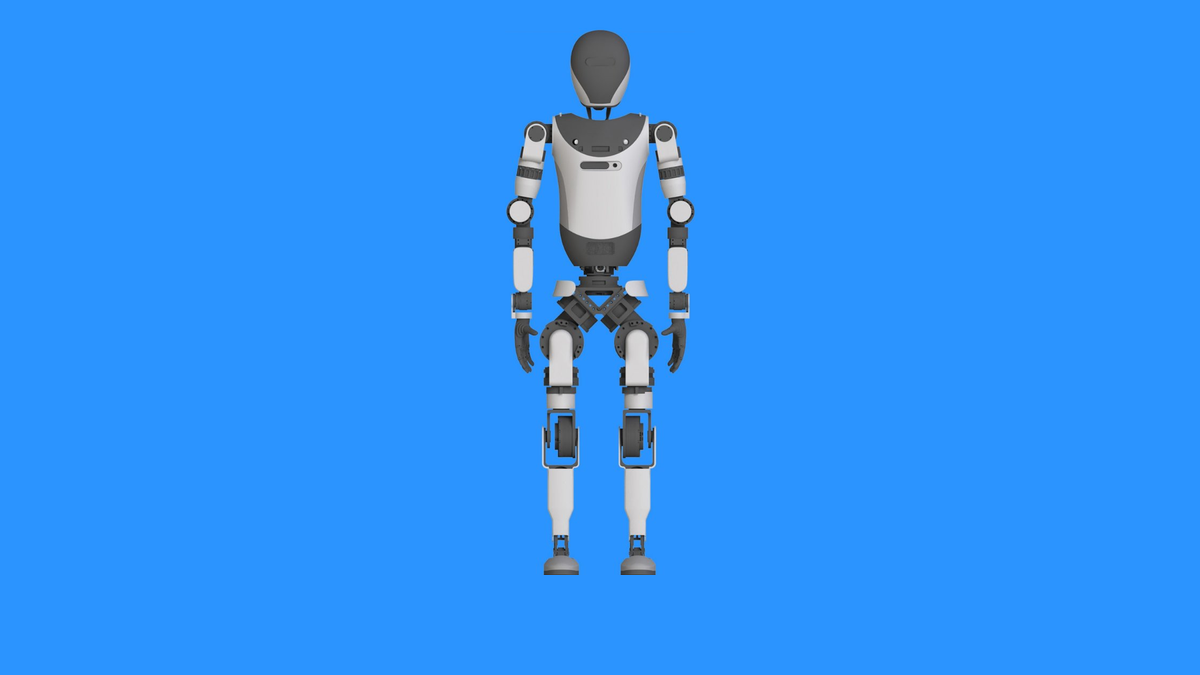
Xiao Di features 31 total degrees of freedom (DoF) across its bipedal chassis:
- Articulated upper limbs and arms (8 DoF) paired with dexterous multi-finger hands achieving ±1 mm repeatability for greeting gestures, pointing, and delicate vehicle operations.
- Lower limb bipedal kinematics (12 DoF) with 6 DoF per leg delivering dynamic balance, terrain adaptation, and stable walking.
- Cervical and torso articulation (3 DoF) enabling natural head orientation and fluid torso rotation during face-to-face customer interactions.
Its oval head houses a dark visor concealing an omnidirectional 360-degree sensor suite, bypassing conventional screens in favor of an unobtrusive, functional facial geometry.
Deep Component Commonality with Electric Vehicles
BYD’s primary competitive advantage in robotics lies in its industrial vertical integration. According to internal technical reports, the robot achieves an over 80% self-development rate for core components, with more than 60% parts commonality with BYD electric vehicles.
Rather than purchasing off-the-shelf harmonic reducers and servomotors at premium prices, BYD utilizes miniaturized brushless motors, motor drive controllers, and battery management electronics (BMS) derived directly from its automotive divisions. This massive parts re-use offers an unprecedented cost structure that could challenge Western and domestic humanoid startups alike.
BYD RobotOS 1.0 and Dealership Deployment Strategy
On the computing side, Xiao Di runs on BYD RobotOS 1.0. The software stack adapts the domain controller architecture and algorithm foundations pioneered in BYD’s smart-driving driver-assistance systems (ADAS). Operating with an end-to-end perception-to-actuation latency under 50 milliseconds, the robot processes multimodal inputs including 360-degree spatial vision, facial recognition, lip reading, and gesture commands. It is equipped with multilingual communication capabilities supporting 12 languages and regional Chinese dialects.
Unlike competitors focusing exclusively on hazardous industrial assembly lines, BYD has adopted a hybrid commercial deployment strategy:
- Automotive Dealership Network: BYD plans to deploy 2 to 3 humanoid robots across each of its major 4S dealership showrooms. Xiao Di acts as a high-tech receptionist and brand ambassador, greeting visitors, explaining vehicle technical specifications, and operating car doors.
- Experience Centers (Di Space): Early pilot units are already operating in science and technology showcases in Zhengzhou, Shenzhen, and Shanghai to gather human-robot interaction telemetry.
- Smart Manufacturing and Home Horizons: In parallel, BYD is testing the robot’s manipulation precision on automotive assembly tasks, establishing a foundational stepping stone toward eventual general-purpose home robotics.
Showroom vs. Factory: Two Divergent Industrialization Doctrines
The emergence of Xiao Di illuminates a striking philosophical divergence in how leading EV giants approach embodied artificial intelligence:
| Strategic Axis | Tesla (Optimus Gen 2) / XPeng (IRON) | BYD (Xiao Di) |
|---|---|---|
| Primary Deployment Environment | Heavy manufacturing plants and assembly lines | 4S retail dealerships and Di Space centers |
| Physical Demands | High continuous payload (10–20 kg), industrial torque, hazardous shop floors | Lightweight service manipulation, ±1 mm dexterity, high human safety compliance |
| Data Collection Priority | Repetitive mechanical tasks (battery pack carrying, screw driving) | Real-world conversational interactions, human gesture nuance, dynamic retail spaces |
| Commercial Risk Profile | Assembly line stoppage risk if robot faults occur | Low-risk brand ambassadorship generating immediate consumer buzz |
While Tesla and XPeng subject their robots to the grueling rigors of manufacturing lines to replace repetitive manual labor, BYD uses its retail footprint as a proving ground. Deploying 2 to 3 units per 4S dealership provides thousands of daily customer interaction hours, training multi-modal foundation models on human engagement before attempting complex factory-floor autonomy.
With Xiao Di now formalized in national patent registries, the duel between electric vehicle powerhouses is expanding rapidly from the road to the factory floor and the showroom. Full specifications for Xiao Di are now accessible in the BYD Xiao Di product directory, with direct comparisons against rival automotive humanoids such as the BYD Xiao Di vs. XPeng IRON and BYD Xiao Di vs. Tesla Optimus Gen 2.