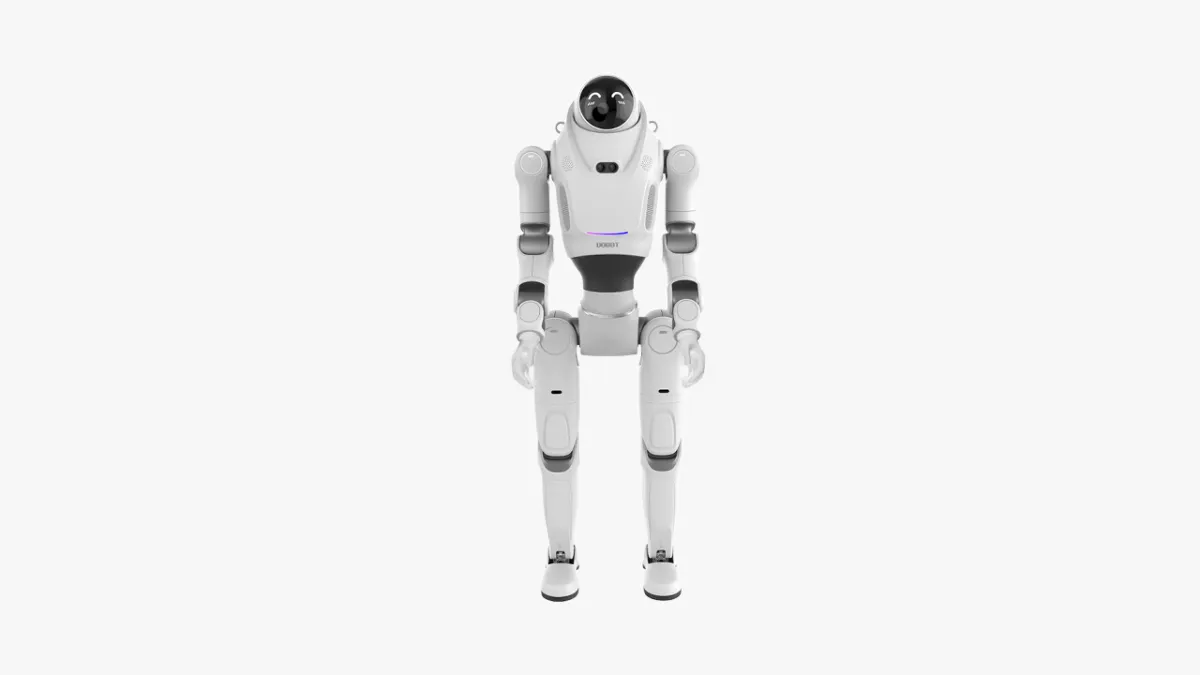
During the “Robots on the Runway” event at IFA Berlin 2026, DOBOT Robotics officially unveiled DOBOT LUMO, a versatile humanoid robot designed to push the boundaries of dynamic movement and human-robot interaction. Standing at approximately 1.3 meters tall, LUMO marks a significant step for DOBOT as they expand their lineup of advanced robotic platforms.
Embodied AI and Multimodal Perception
At the core of the LUMO is DOBOT’s self-developed embodied intelligence model. Unlike traditional robots programmed for specific, rigid tasks, LUMO’s AI framework integrates deep spatial intelligence and multimodal perception. This allows the robot to seamlessly blend visual and audio data, enabling it to recognize human emotions, understand verbal commands, and dynamically navigate complex 3D environments.
This advanced perception is crucial for its intended use cases, which span from academic research to entertainment and eventually household assistance. By processing sensory inputs in real time, LUMO can safely interact with humans and adapt to unstructured spaces.
Dynamic Movement: From Cobblestones to Backflips
Equipped with 30 Degrees of Freedom (DoF), LUMO boasts impressive agility. It is engineered as a true all-terrain humanoid, capable of maintaining its balance on challenging surfaces like grass, sand, and uneven cobblestones.
But LUMO isn’t just about walking steadily; it has been designed for highly dynamic maneuvers. Demonstrations have highlighted its ability to perform backflips, punches, and kicks, showcasing the rapid torque response of its actuators and the sophistication of its real-time balancing algorithms.
Looking Ahead
While DOBOT has demonstrated LUMO’s impressive physical and cognitive capabilities, comprehensive hardware datasheets regarding its exact payload capacity, battery longevity, and retail pricing remain undisclosed. Currently positioned as an advanced platform for research and commercial exhibitions, LUMO serves as a powerful demonstration of DOBOT’s vision for the future of embodied AI in everyday environments.