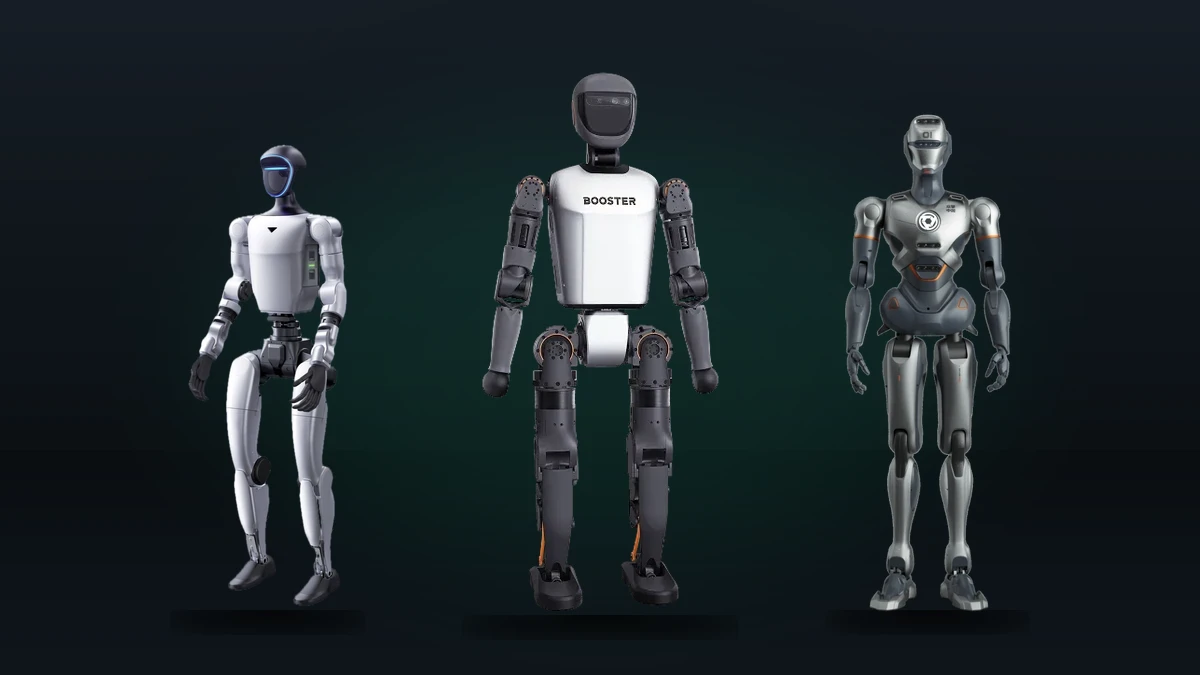
The 2026 edition of IFA Berlin (September 4 to 8, 2026) cemented a structural turning point in consumer and industrial electronics: humanoid bipedal robotics shifted from laboratory curiosity into frontline commercial hardware.
While past expos relegated bipedal platforms to tethered booths and looped promotional videos, IFA 2026 placed autonomous humanoids directly into interactive public spaces, headlined by the live Robots on the Runway showcase on the IFA Creator Stage.
Agibot A3 Clinches IFA Innovation Award
Leading the commercial hardware surge, Chinese robotics pioneer Agibot secured the prestigious IFA Innovation Award 2026 (Best in IFA Next & Emerging Technologies) for its flagship Agibot A3 platform, alongside “Best in Show” recognitions from international technical press.
Standing 1.73 meters tall and weighing 55 kg, the Agibot A3 addresses one of the hardest mechanical tradeoffs in full-size humanoid engineering: combining explosive kinetic power with delicate micro-manipulation.
Key technical specifications verified at IFA Berlin:
- Instantaneous Power Output: Up to 12 kW delivered across high-torque joint modules, yielding a power-to-weight ratio of 0.218 kW/kg.
- Continuous Operational Endurance: Up to 10 hours on a single charge, supported by a 10-second hot-swappable battery module built into the lower torso.
- OmniHand Dexterous Manipulation: Integrated multi-axis force sensing and capacitive fingertip arrays capable of handling both heavy workshop components and fragile glassware.
- Multi-Robot Synchronization: Ultra-Wideband (UWB) swarm communication enabling deterministic choreographies and co-manipulation tasks across up to 100 synchronized units without local Wi-Fi latency.
Explore the verified engineering teardown in the Agibot A3 Specification Sheet.
EngineAI Showcases Dynamic Gait and Dynamic Agility
Shenzhen-based EngineAI drew intense technical scrutiny with live demonstrations of its T800 full-size platform (1.73 meters, 85 kg) alongside the agile PM01.
EngineAI’s demonstrations highlighted high-frequency balance recovery and human-like locomotion. Using a hybrid actuation strategy that combines planetary reducers with high-efficiency harmonic gear drives, the T800 maintained dynamic stability through rapid directional cuts, obstacle clearing, and aggressive physical push recoveries without the rigid, locked-knee gait that plagues conventional position-controlled bipeds.
With the earlier EngineAI SE01 already indexed on SpecsLib for its sub-$20k architecture, EngineAI’s IFA presence confirmed that high-power dynamic walking algorithms have reached commercial maturity.
Unitree G1: The Reality of Mass Production
While competitors demonstrated pilot-stage platforms, Unitree Robotics highlighted physical assembly line scale with its production-ready Unitree G1.
Priced at an aggressive $16,000 baseline, the G1 demonstrated its 120 Nm peak torque actuators and integrated 360-degree 3D LiDAR perception. Unlike concept robots relying on off-chassis compute clusters, the G1 operated autonomously on its internal NVIDIA-powered embedded architecture, navigating dense crowds on the show floor.
Review full kinetic metrics and actuator torque curves in the Unitree G1 Hardware Dossier.
The Strategic Shift: Real Hardware Over CGI Promises
The clear takeaway from IFA Berlin 2026 is that the humanoid robotics industry has outgrown the era of pre-rendered promotional videos and unverified venture capital announcements.
Constructors are now evaluated on concrete engineering metrics: joint torque density in Nm/kg, sensor refresh rates in milliseconds, battery swap cycle times, and verified unit shipments. With European industrial enterprises and research institutes evaluating procurement contracts directly on the show floor, humanoid robotics has entered its pragmatic deployment phase.