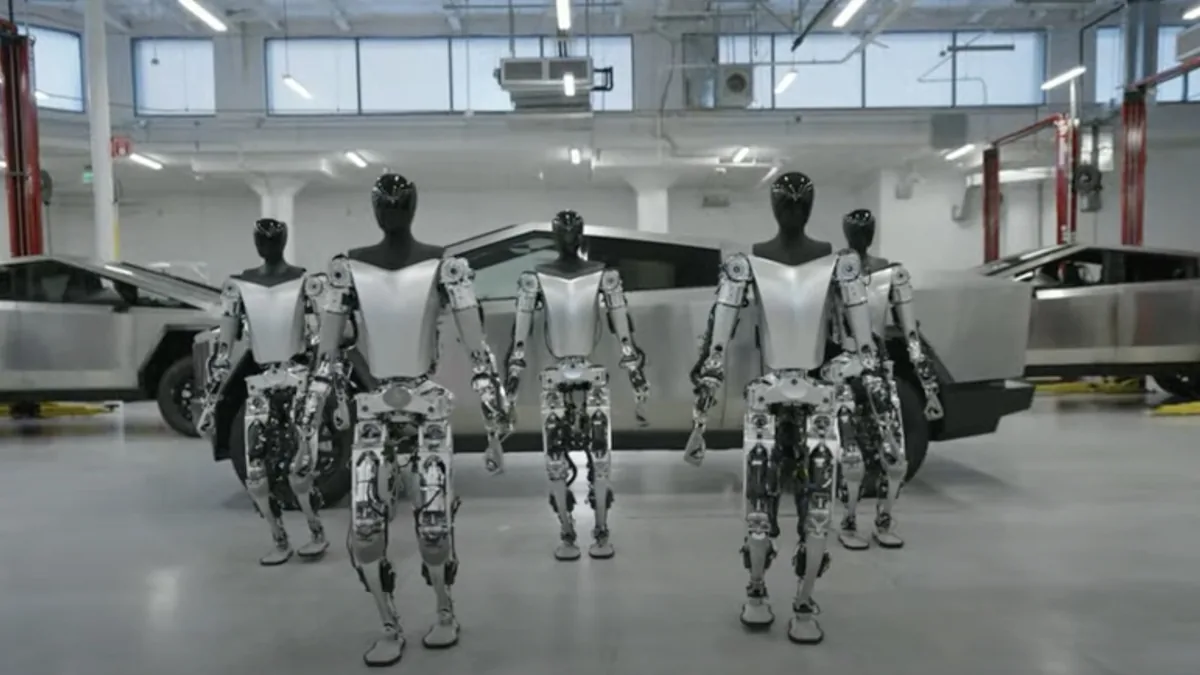
Corporate registry records uncovered in Germany on November 25, 2026, show that Tesla has established Tesla Machining Technologies Management SE with a registered business address at Austraße 24 in Salach, the Baden-Württemberg headquarters of precision machine-tool manufacturer EMAG. Neither Tesla nor EMAG has publicly confirmed an acquisition or workforce transfer, yet the registry trail and German press reports align closely with Tesla’s push to resolve mechanical gear bottlenecks on Tesla Optimus Gen 3.
Under registration HRB 315756 at the Munich District Court with 120,000 EUR in share capital, the entity originated as pre-registered shelf company “Blitz 26-299 SE” on August 26, 2026, before being renamed in November. According to federal gazette filings reported by Business Insider Germany and cited by Electrek, its named management includes Maximilian Stromberger (Tesla Germany’s 33-year-old head of sales), an American robotics engineer, and the head of human resources at Tesla’s Grünheide Gigafactory. Local press coverage from Stuttgarter Nachrichten (Nov 23) and Business Insider (Nov 25) reports that EMAG briefed employees at a staff meeting on November 16, 2026, and roughly 220 EMAG employees could transition toward Tesla’s robotics effort.
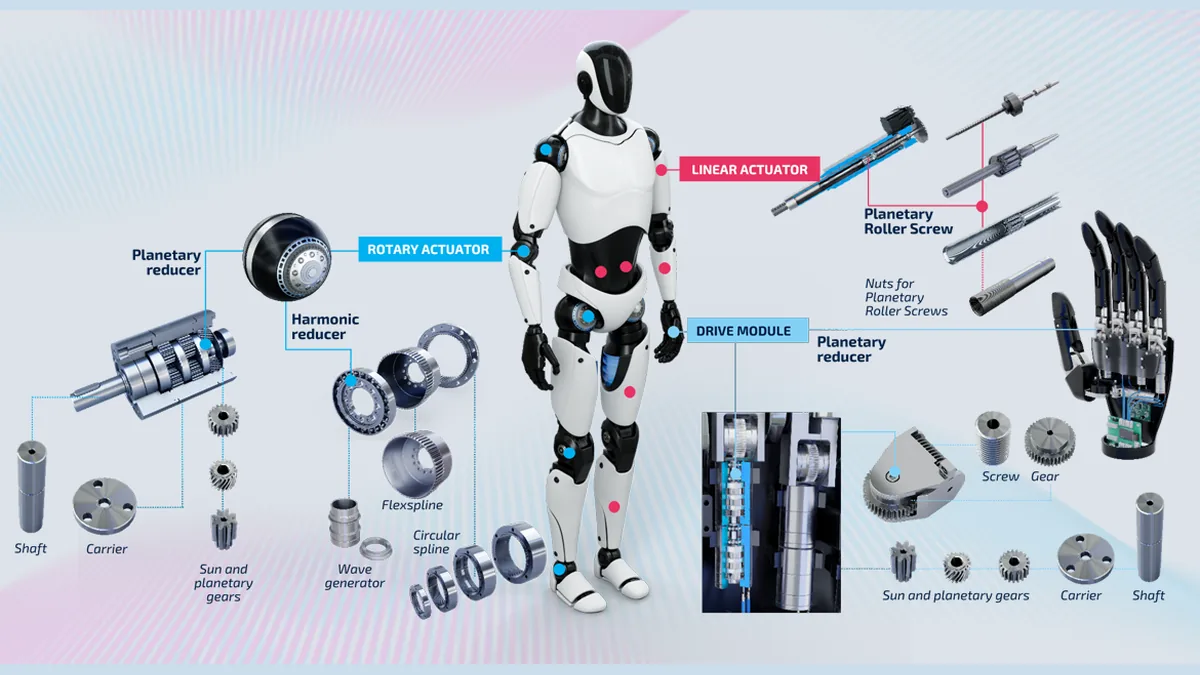
Why Optimus Needs Machine-Tool Control Over Sub-5 um Gears
Founded in 1867, EMAG manufactures precision turning, grinding, and gear-hobbing machinery primarily for automotive transmissions, and was hit hard by the drivetrain slowdown after announcing 455 German job cuts (roughly 300 in Salach) and reporting a 42 million EUR loss on 496 million EUR revenue in 2024. Alongside restructuring, however, EMAG spent recent years building turnkey manufacturing lines for humanoid joint hardware, culminating in a November 25 engineering note arguing that joint mechanics, not foundation models, govern production scalability.
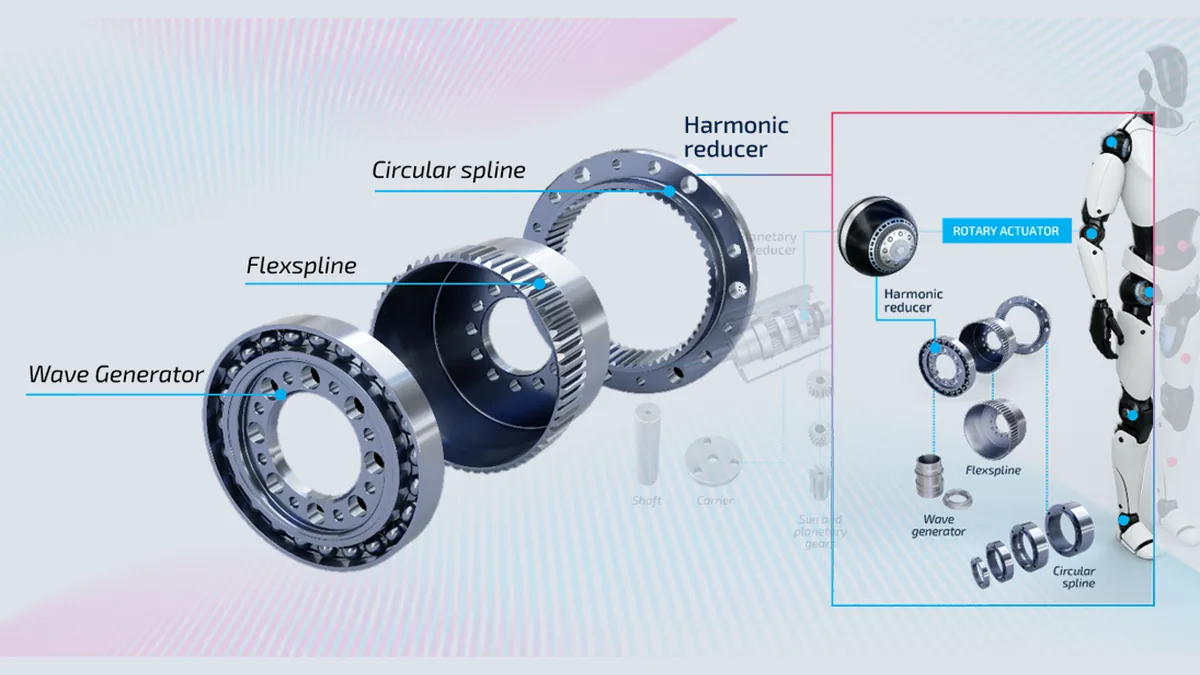
For Tesla, vertical control over gear production directly addresses its loudest Q3 2026 earnings-call warning: CEO Elon Musk identified dexterous hands as Optimus’s hardest hardware challenge and singled out custom gear reliability as a primary engineering hurdle as Fremont scales pilot tooling toward a long-term goal of one million robots per year. Counting structural body joints plus hand and forearm drives, EMAG estimates full-scale humanoids require at least 14 primary rotary actuators and up to 120 total drives depending on hand complexity. Furthermore, post-hardening gear profiles reach 56 to 62 HRC with microscopic tooth modules down to 0.4 mm (24 teeth) on planetary gears, 0.3 mm (158 teeth) on flexsplines, and 0.2 mm (206 teeth) on circular splines, turning precision grinding into the decisive production bottleneck for platforms like Tesla Optimus Gen 3.
| Component Class | Role in Humanoid Joint | EMAG Platform | Verified Spec / Tolerance |
|---|---|---|---|
| Flexspline | Elastic hollow gear (<1 mm wall, 100-400 teeth, up to 100:1 reduction) | K 160 / K 300 + hydraulic mandrels (<=3-5 um) | ISO 1328 / DIN 3960 Class 4; runout <5 um; 0.3 mm module |
| Wave Generator | Elliptical cam driving elastic flexspline deflection | VLC 350 GT (single setup) | Concentricity & symmetry <=3 um; 30-40% faster cycle |
| Planetary Gears | Multi-tooth high-torque transmission for shoulders, hips, and knees | K 160 + G 160 / G 250 HS / G 375 H | DIN Class 4 to 5 tooth quality; 0.4 mm / 24-tooth profile |
| Linear & Actuator Chain | Rotary-to-linear roller screws & general actuator gear finishing | Hard machining, turning & grinding | DIN 5 or better overall (DIN 3 pitch/concentricity); 56-62 HRC |
Technical Convergence With Reutlingen and Germany’s Automation Base
The Salach registration follows Tesla’s well-established playbook in German industrial engineering: buying Grohmann Engineering in Prüm (2016), briefly absorbing Wiferion’s engineering talent (2023), and acquiring approximately 300 staff from Manz in Reutlingen in early 2025 under Tesla Automation. By July 2026, Tesla had already begun recruiting in Reutlingen specifically to develop and manufacture sensors, gearboxes, and Optimus actuators alongside dedicated production machinery.
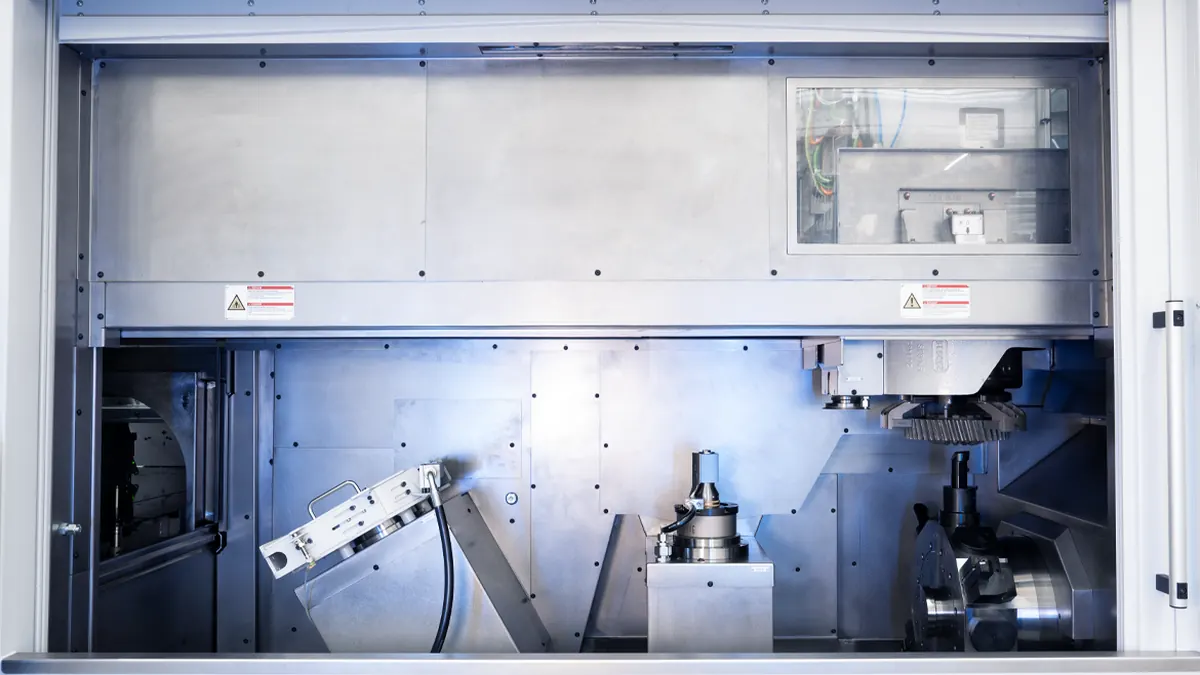
Salach sits roughly 45 km (28 miles) east of Stuttgart and within easy engineering reach of Reutlingen. Crucially, holding thin-walled steel flexsplines under 1 mm (0.04 in) thick to ISO 1328 Class 4 pitch accuracy demands hydraulically expanding mandrels with <=3 to 5 um runout and single-setup machines like EMAG’s VLC 350 GT (combining turning, milling, and internal/external grinding up to 75,000 RPM) so zero reclamping errors accumulate.
What Remains Unconfirmed
While Germany’s commercial registry, Grünheide HR leadership involvement, and Salach workforce briefings strongly point toward an engineering integration centered on Optimus actuator machinery, three critical facts remain undisclosed: neither Tesla nor EMAG has announced transaction terms, whether Tesla Machining Technologies Management SE targets specific EMAG divisions, a 220-specialist transfer, or machining-process licensing remains private, and how output will split between Fremont pilot lines and future European facilities is still unclear.
Compare Tesla Optimus Gen 3 against leading industrial rivals in our verified database:
- Tesla Optimus Gen 3 vs Figure 03 (73 DoF custom actuators vs Helix 2.5 zero-shot home & warehouse autonomy)
- Tesla Optimus Gen 3 vs XPeng IRON (Fremont scaling vs Jan 2027 mass-production 76-DoF solid-state contender)
- Tesla Optimus Gen 3 vs Boston Dynamics Atlas (high-volume automotive supply chain vs Hyundai-backed 56-DoF industrial deployment)