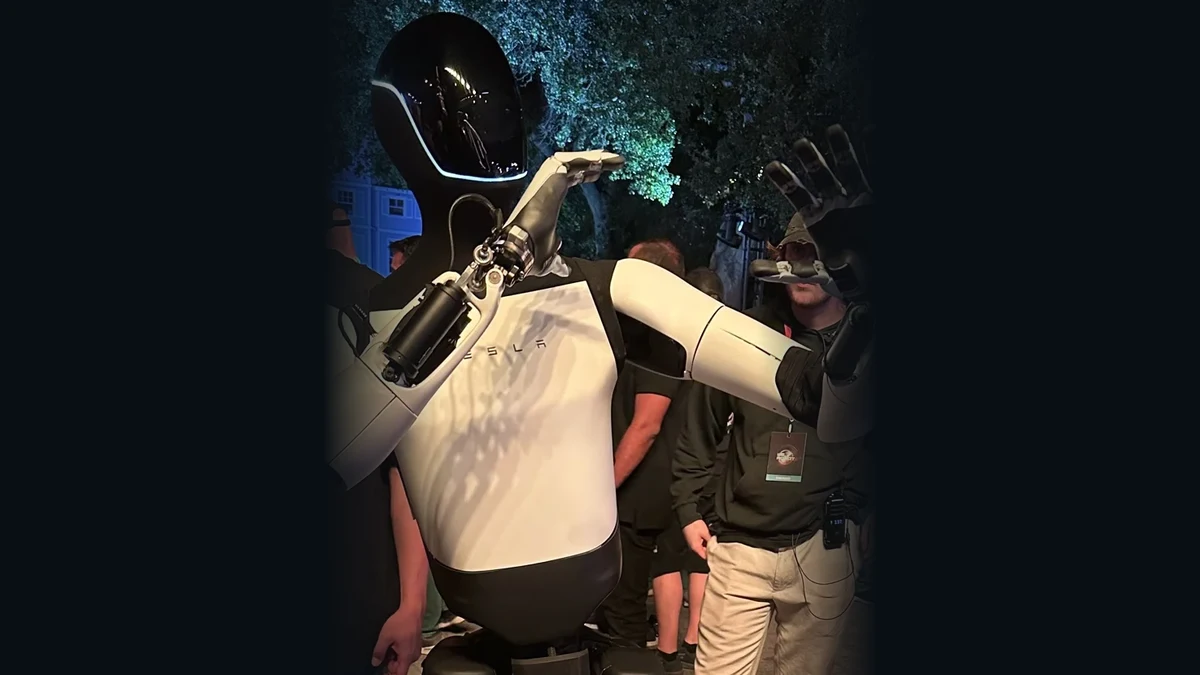
In late September 2026, an unexpected update to Tesla’s official Android application delivered the clearest look yet at the company’s next-generation bipedal platform: Tesla Optimus Gen 3. Embedded directly within the application’s installation package, high-fidelity 3D assets intended for an upcoming user monitoring interface were extracted by community researchers.
Rather than cosmetic styling adjustments, the leaked model reveals an extensive structural overhaul. Tesla has systematically engineered out the delicate, exposed mechanisms that characterized previous iterations, replacing them with a sealed, industrial architecture optimized for the harsh realities of high-volume automotive manufacturing.
From Lab Prototype to Sealed Industrial Workhorse
Previous generations of Optimus, including the Gen 2 platform showcased throughout 2024 and 2025, served primarily as dynamic motion and teleoperation testbeds. While mechanically impressive, those earlier revisions featured open joint linkages, exposed wiring harnesses, and delicate actuators around the pelvis and lower spine. In an operational automotive plant, such open architecture is vulnerable to airborne particulate matter, metal shavings from stamping presses, and ambient lubrication mist.
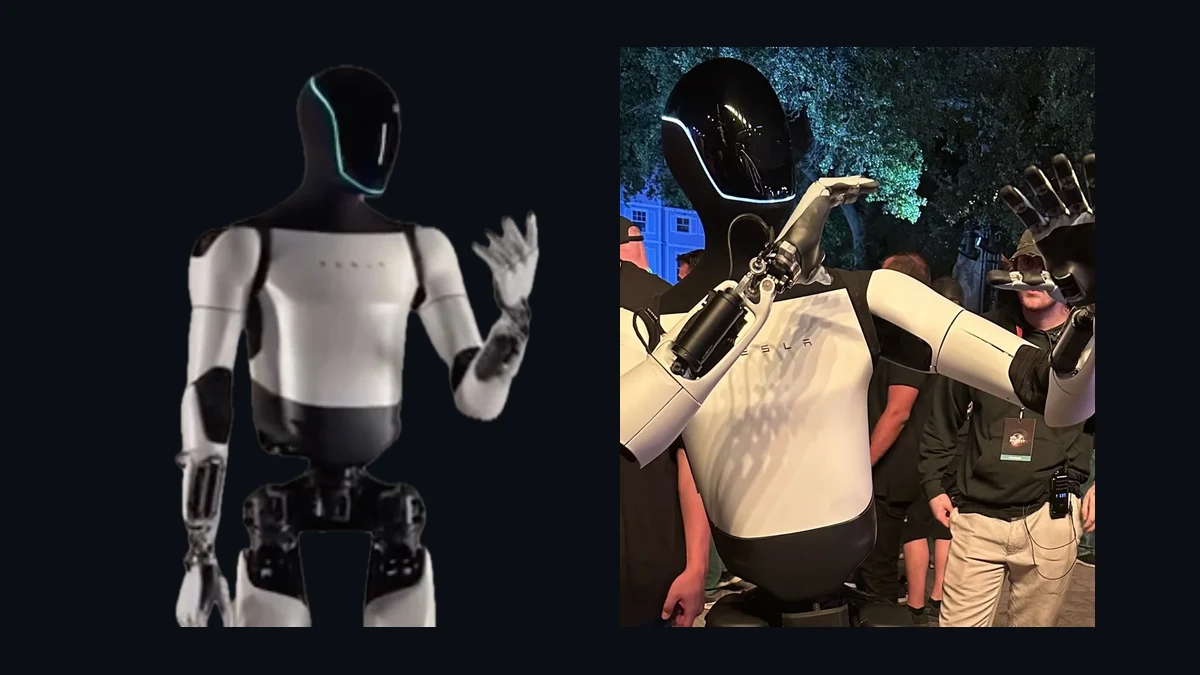
The Gen 3 assets reveal a series of decisive hardware adaptations:
- Sealed Flexible Bellows: The hip, pelvis, and neck articulations are now enclosed behind durable accordion-style gaiters. These flexible boots prevent abrasive dust from infiltrating the cycloidal reducers and precision bearings during long shifts.
- Matte-Black Structural Fairings: The prototype’s polished white and gold-plated limb accents have been replaced by impact-resistant matte-black protective panels, specifically covering the lower shins and forearms where collisions with carts and workstations are most frequent.
- Integrated Forearm Tendon Routing: The robot’s hands feature 22 degrees of freedom, actuated via tensile cables routed through reinforced forearm channels. Moving the drive motors away from the fingers protects sensitive electronics while keeping the hand silhouette compact enough to reach inside vehicle chassis cavities.
Companion App Integration and the Fremont Ramp
The presence of fully rendered 3D assets inside the consumer Tesla application signals an important shift in operational architecture. The interface hooks point toward a native telemetry dashboard where factory floor supervisors (and eventual commercial fleet managers) can track individual units in real time.
Discovered strings indicate monitoring parameters for battery pack thermals, joint wear diagnostics, spatial occupancy network status, and automated charging dock scheduling. Rather than requiring dedicated industrial pendant terminals, Optimus fleet management is converging directly with Tesla’s broader connected ecosystem.
This software discovery coincides with accelerating production lines at the Fremont vehicle factory in California. Tesla has progressively ramped internal assembly from several dozen units per week earlier this year toward hundreds of weekly builds, targeting a run rate of 1,000 units weekly by the end of 2026. While hand assembly tolerances remain a key manufacturing bottleneck, Gen 3 confirms that Tesla’s design focus has transitioned entirely from lab balance demonstrations to rugged factory deployment.