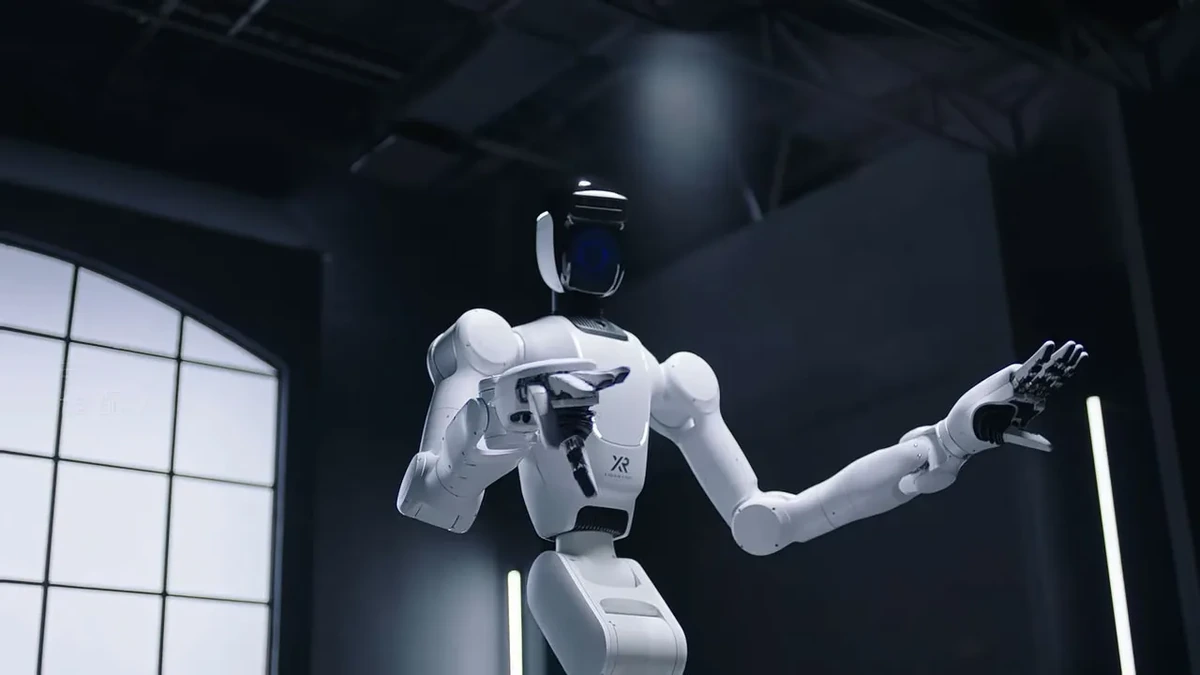
On November 23 and 24, 2026, Shenzhen-based X Square Robot opened the core runtime layers around its WALL-OSS-1.0 physical AI ecosystem on GitHub: the initial developer preview of XR Harness (November 23), production fleet-serving updates and benchmarks in XInfer (November 23 to 24, backed by arXiv:2611.14969), and a WALL-X API RTC client in the X2Real benchmark repository (November 23). Arriving less than two weeks after its Quanta X1 Pro was named a CES Innovation Awards 2027 Honoree (November 11 PR Newswire release), these repositories expose concrete latency, GPU-density, and architectural figures that most humanoid makers keep closed.
For engineering teams evaluating wheeled humanoids, we are adding X Square’s flagship 164 cm / 62-DoF X Square Quanta X2 as the 50th entry in the SpecsLib humanoid database and auditing every claim against X Square’s primary product pages on x2robot.com, its GitHub repos, and third-party trackers.
XR Harness & WALL-OSS-1.0: Three-Tier Agent Control & Real Deployment Limits
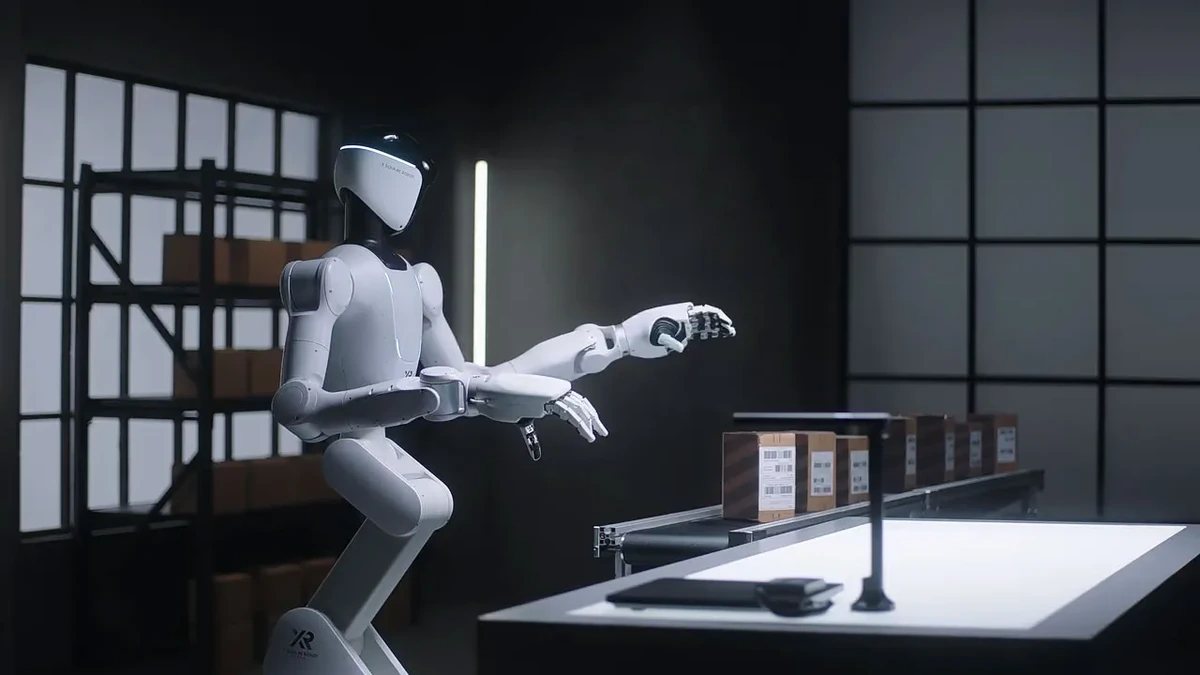
Unlike monolithic vision-language-action (VLA) prototypes that force one model to handle long-horizon planning and millisecond control simultaneously, X Square’s November 23 XR Harness repository splits a robot agent into three coupled layers:
- System 2 (XR Brain): Built atop the MIT-licensed DeepSeek Harness, it interprets open-ended user requests from scene observations, plans task steps with constraints, and revises subsequent instructions when execution feedback signals a failure or unexpected obstacle.
- System 1 (XR Cerebellum): Executes each step through VLA backends such as WALL-OSS-1.0 (supporting the WALL-X Public API via the
wallx-public-v2transport documented inVLA_BACKENDS.md) and native device tools, paired with a Watcher checking step completion and a Monitor reporting scene changes. - System 0 (RAP Runtime): Connects physical robot controllers, cameras, and simulators (including the RoboDojo adapter) via the Robot Agent Protocol (RAP), exposing standardized capability discovery and state telemetry.
On the model side, X Square’s open weights confirm a shift to a Qwen3.5 backbone, but buyers should note strict scope limits documented in the repositories. On Hugging Face, x-square-robot/wall-oss-1.0-lite-robodojo (Apache-2.0, published October 24, 2026) predicts 32-step native end-effector-pose action chunks refined through four residual passes with a sliding-window keyframe memory (roughly 19 GB GPU memory per server process across ten batched environments), yet its model card explicitly states it supports end-effector actions for the arx_x5 embodiment in RoboDojo simulation only and is not validated on real robots. Similarly, XInfer documents WALL-OSS-1.0-Nano for a desktop dual-arm format (three camera views, 16-step action chunks, Real-Time Chunking / RTC), and ships serving code only: compatible checkpoints must be obtained separately.
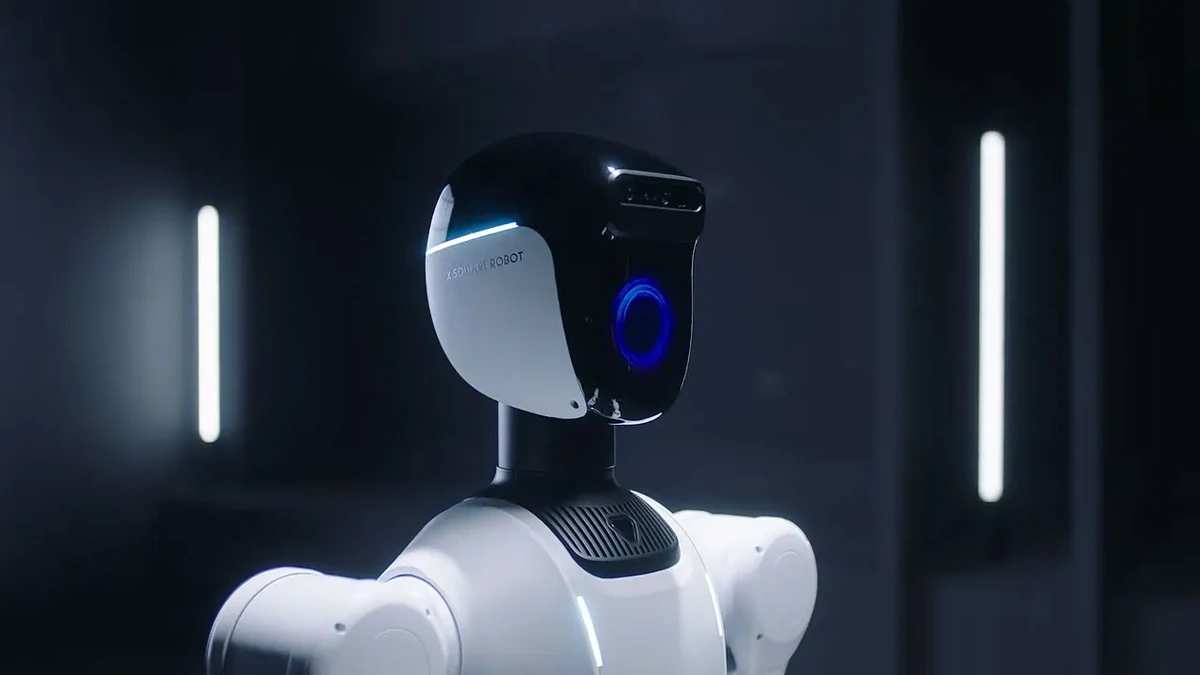
XInfer Benchmarks: 15.1 ms Latency & 25 Concurrent Robots on One RTX 5090
The most commercially revealing release is XInfer (github.com/X-Square-Robot/xinfer, updated November 24) and its companion paper “Scaling VLA Serving Under Robotic Execution Constraints” (arXiv:2611.14969). In the paper abstract, X Square reports that “hundreds of VLA-powered robots are already operating in real-world environments” and achieves 1.26x to 3.75x higher effective robot capacity (ERC) than baseline serving systems by overlapping heterogeneous compute stages asynchronously across CUDA streams.
XInfer’s public benchmark table (docs/performance.md, measured November 13 to 21, 2026 using three camera views per request on WALL-OSS-1.0-Nano) provides rare single-accelerator fleet numbers:
| Model | Precision & Stages | Accelerator | Single-Request P50 | Fleet Capacity (Robots) | Server P50 / P95 at Capacity | Peak Throughput |
|---|---|---|---|---|---|---|
| WALL-OSS-1.0-Nano | BF16 | NVIDIA RTX 5090 | 20.1 ms | 14 robots | 85 / 107 ms | 81.3 req/s |
| WALL-OSS-1.0-Nano | MXFP8 (vision & prefill; BF16 action) | NVIDIA RTX 5090 | 15.1 ms | 25 robots | 67 / 88 ms | 141.0 req/s |
| WALL-OSS-1.0-Nano | BF16 | Huawei Ascend 950DT | 20.6 ms | 15 robots | 129 / 163 ms | 83.9 req/s |
| WALL-OSS-1.0-Nano | BF16 / NVFP4 | Jetson AGX Thor / RTX 5090 | TBD | TBD | TBD | TBD |
Quantizing only vision and prompt prefill layers to MXFP8 while preserving BF16 in the action stage lifts single-GPU capacity from 14 to 25 concurrent robots on one RTX 5090 and cuts server P95 latency from 107 ms to 88 ms. Support for NVIDIA Jetson AGX Thor and Huixi Rhino RPU (R1) is listed in development, and X Square explicitly notes that public reproduction artifacts for the Ascend 950DT NPU figure remain TBD (tracked in PR #33). On the simulation side, X2Real (arXiv:2609.27449, updated November 23 with a WALL-X API RTC client) pairs NVIDIA Isaac Sim 6.0.1 and Isaac Lab 3.0 across 44 hierarchical long-horizon tasks spanning 10 capability dimensions.

Quanta X1 Pro vs Quanta X2 vs Open-Source Targets: Full Hardware Audit
Because X Square markets distinct proprietary models and chassis tiers across its press releases and GitHub repos, the matrix below clarifies which machine runs which model based on primary disclosures:
| Platform / Release | Primary Source | Hardware Scope | AI Model / Stack | Key Verified Specs |
|---|---|---|---|---|
| Quanta X1 Pro | PR Newswire (Nov 11, 2026) | Commercial wheeled dual-arm (CES 2027 Honoree) | WALL-B (proprietary) | 0-1.6 m vertical workspace; piloted in residential stays & bookable cleaning in China |
| Quanta X2 | x2robot.com/en/product/quantum2 | Flagship wheeled humanoid (#50 in SpecsLib) | WALL-A (tens of billions params) | 164 cm, 62 DoF, 0-1.8 m range, 765 mm reach, +/-0.03 mm, 6/12 kg payload, 1 m/s, 2D LiDAR |
| WALL-OSS-1.0 (Lite / Nano) | Hugging Face & XInfer GitHub | arx_x5 sim (Lite) / desktop dual-arm (Nano) | WALL-OSS-1.0 (Qwen3.5) + XR Harness + XInfer | Lite: Apache-2.0 sim-only (32-step); Nano: serving code only (16-step RTC, 15.1 ms MXFP8) |
Auditing the flagship X Square Quanta X2 directly against x2robot.com/en/product/quantum2 and x2robot.com/en/product/68ad9a319d9a1f1ecd40c31d highlights three engineering takeaways:
- 62 Whole-Body DoF & ArtiXon Hand Specs: Dual 20-DoF ArtiXon five-finger hands (40 DoF combined, 15 active actuators per hand, <1 kg, 3 to 5 kg hand payload, 0.1 N normal/shear tactile resolution, 100 Hz closed-loop control, 1,000,000-cycle life), dual 7-DoF arms (14 DoF), a 6-DoF articulating torso (0 to 1.8 m / 0 to 5.9 ft vertical range), and a 2-DoF wheeled base (2 DoF).
- Precision & Mobility Limits: 164 cm (5 ft 5 in) official height, 6 kg (13.2 lbs) single-arm and 12 kg (26.5 lbs) dual-arm arm payload, 765 mm (30.1 in) reach, +/-0.03 mm repeatability, 1.8 m/s TCP speed, 1.0 m/s (3.6 km/h / 2.2 mph) wheeled mobility, and 1x 2D LiDAR (no 3D LiDAR) alongside 3x RGB-D, 3x BEV, 2x ToF, and 4x ultrasonic sensors.
- Commercial Caveats & Tracker Discrepancies: X Square’s official Quanta X2 sheet omits list pricing (quote only), chassis weight, battery kWh/V, runtime, onboard compute SoC, and IP rating. Third-party tracker Aparobot reports 95 kg (209.4 lbs) weight, a 756 x 540 mm base, 40 mm step / +/-15-degree slope limits, and 172 cm height (conflicting with X Square’s official 164 cm), while contradicting itself on runtime (240 min header badge vs “up to 2 hours” in text). SpecsLib uses X Square’s primary 164 cm specification and leaves battery and runtime undisclosed.
X Square will showcase Quanta X1 Pro and live embodied AI demos at CES 2027 (January 6 to 9 in Las Vegas, LVCC South Hall 3, Booth 40017).

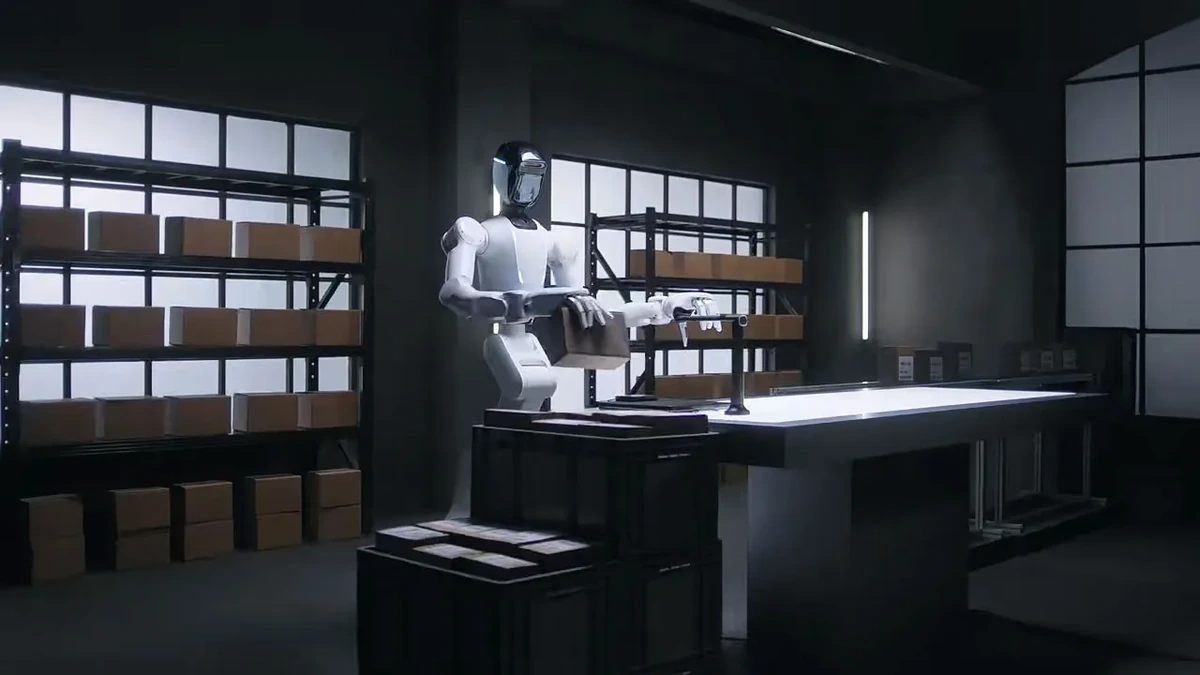
Explore our full X Square Quanta X2 engineering specification profile or compare it directly against competing wheeled and bipedal humanoids: