 Factory PilotUS • 2026
Foundation Phantom (MK-1 / MK-2)
Foundation Future Industries • United States
« Heavy-duty US cycloid-actuated humanoid (>160 Nm legs, AMD X100/FPGA) facing payroll turmoil and $150M Base Group rescue talks. »
Overview & Architecture Analysis
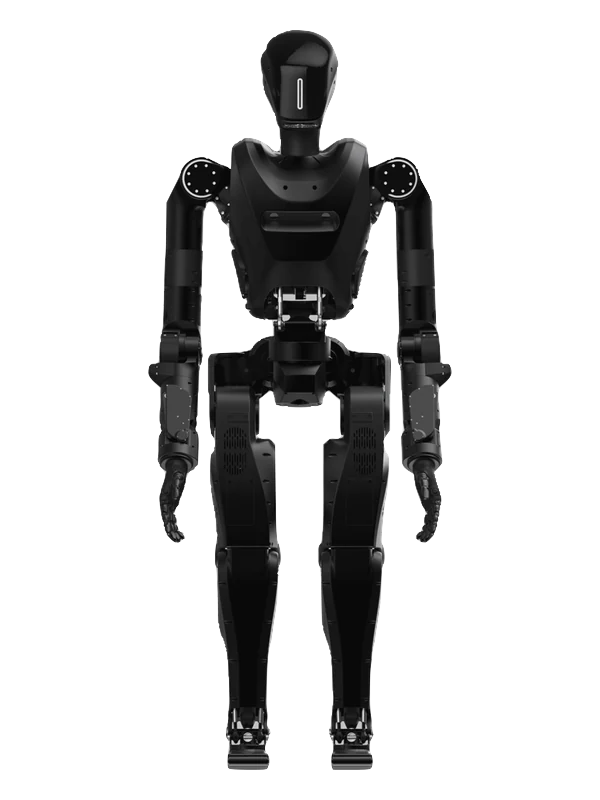
Built by San Francisco-based Foundation Future Industries, Phantom MK-1 (1.8 m, 80 kg, 29 DoF, 1.7 m/s) uses proprietary electric cycloid actuators peaking above 160 Nm in the legs (9 rad/s at 48 V, 12 rad/s at 72 V) paired with Cortex DVBF+VLM AI and AMD Ryzen AI Embedded compute. Leased in August at $100,000/yr per MK-1 (100-unit minimum) with a $75,000/yr target for the unreleased IP67/100G MK-2, buyers face severe governance risks after missed October 30 payrolls and pending $150M Base Group talks.
Hardware Strengths
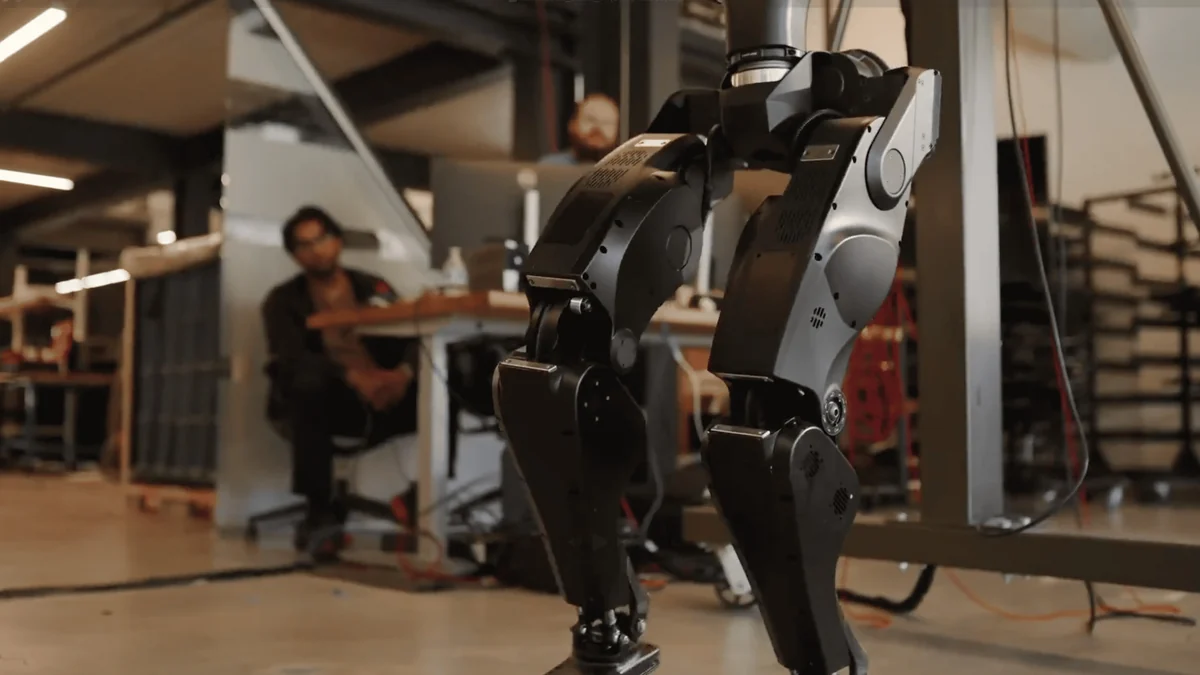
- ✓Proprietary electric cycloid actuators: >160 Nm leg torque, 119 Nm shoulder, 20 Nm wrist, <1.0 Nm back-driving torque, <10 ms response (9 rad/s @ 48V, 12 rad/s @ 72V)
- ✓AMD embedded architecture: Ryzen AI Embedded X100 processors, Kria AI SOMs, and FPGAs for 23-DoF tactile hands (MK-2 native)
- ✓Cortex AI model combining Deep Variational Bayes Filters (DVBFs) with Vision-Language Models for predictive physics control
- ✓Upcoming MK-2 (6 ft, 200 lbs aluminum) targets IP67 waterproofing, 100G shock rating, ~6-hour battery endurance, and $75,000/yr target lease
- ✓Explicit dual-use industrial and defense roadmap backed by $3.22M in inherited Boardwalk Robotics government contracts (zero direct 2026 Foundation federal awards listed) and pending $150M Base Group talks
Target Operational Use Cases
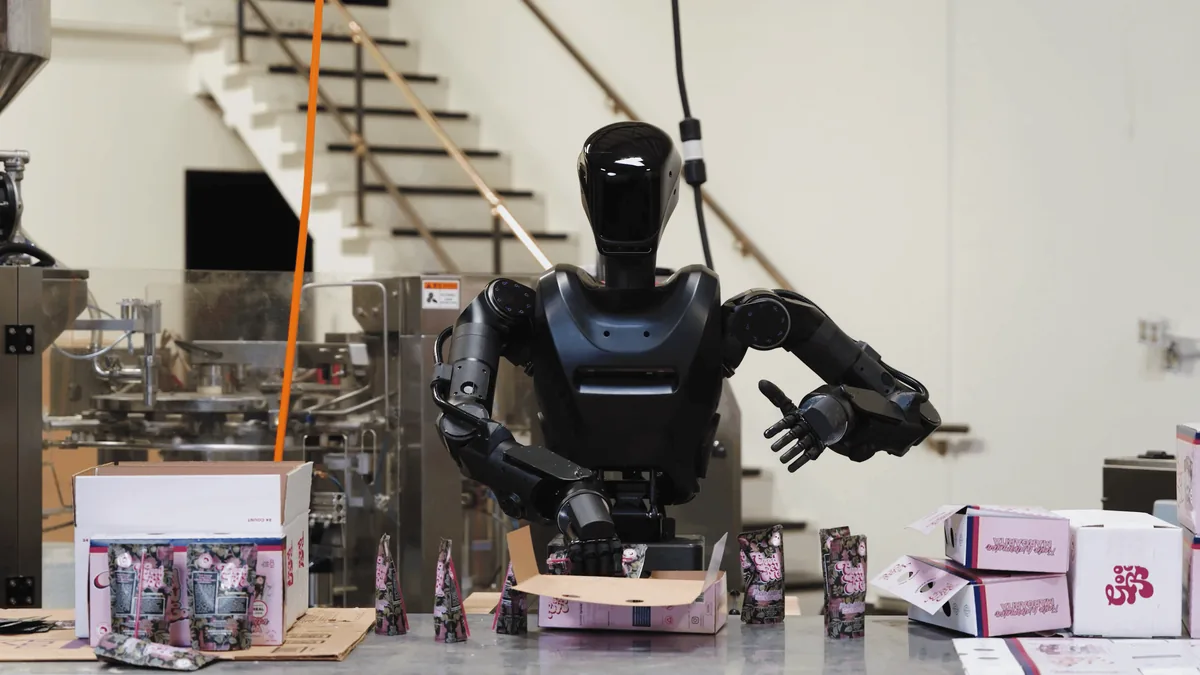
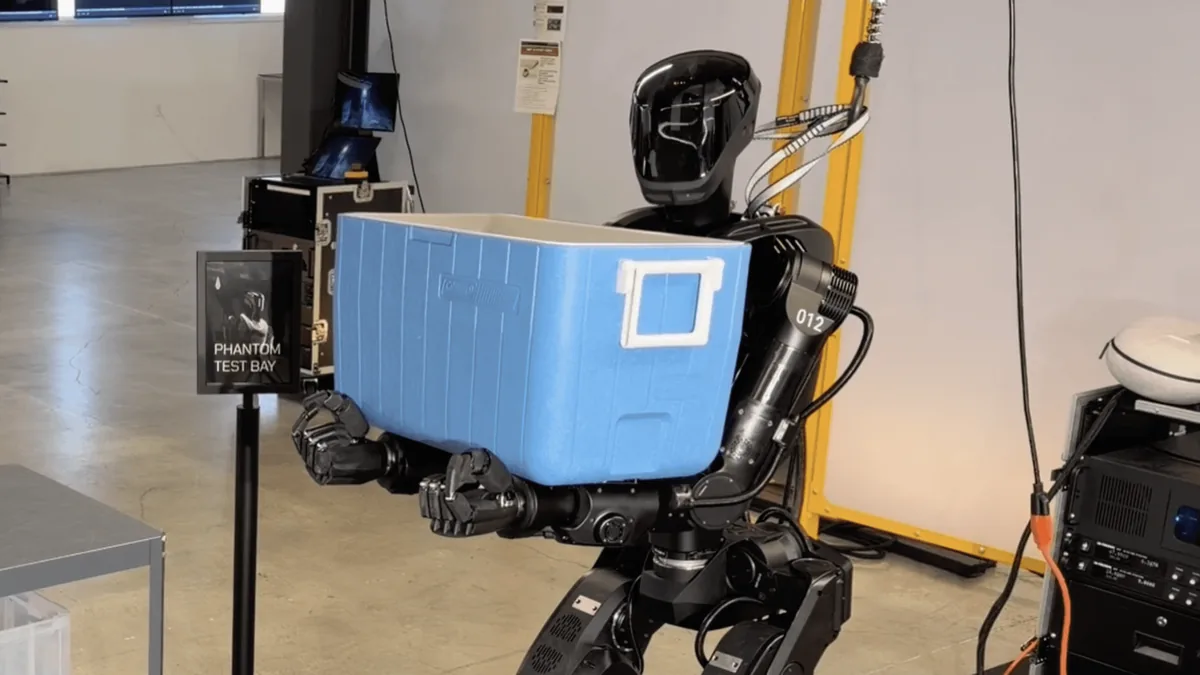
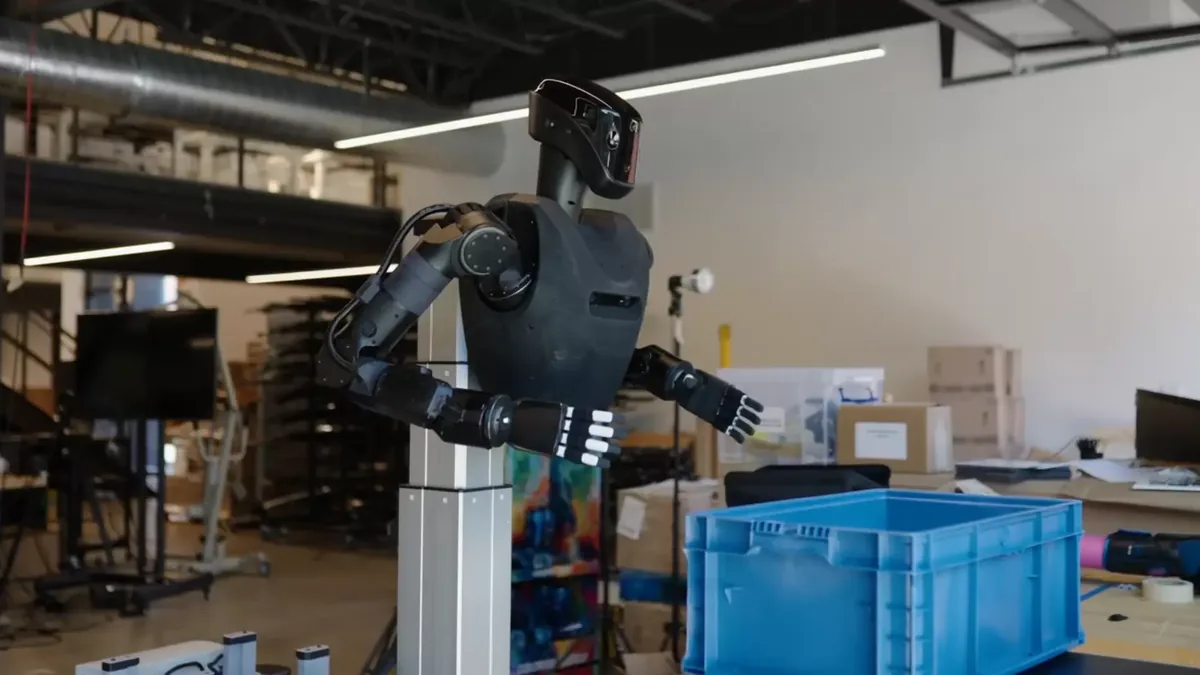
- •Beverage pouch sorting, carton packing, and heavy tote handling
- •Automotive component pilot cells (racking and kitting) and industrial material transport
- •Military logistics, reconnaissance, and contested defense trials
Engineering Watchouts & Caveats
- ⚠Severe liquidity & governance watchout: missed employee payrolls starting Oct 30, 2026, a $4.6M CEO home loan, and survival tied to pending $150M Base Group financing
- ⚠Spec inconsistencies on foundation.bot/phantom: desktop lists 40 kg (88.2 lbs) and 29 DoF, mobile lists 20 kg, and meta tags list 19 DoF / 44 lbs; $10M/yr minimum entry on MK-1 (100 units at $100,000/yr)
- ⚠MK-1 operates tethered without an onboard battery or weather sealing; MK-2 has not publicly debuted and remains behind safety barriers
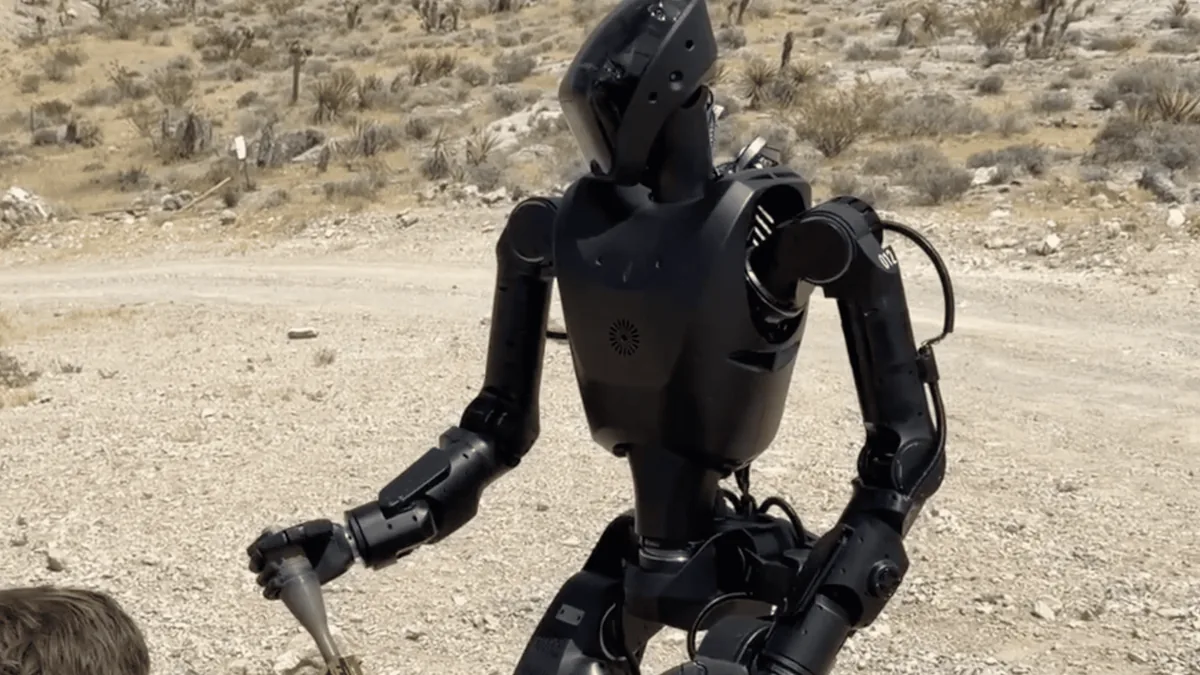
- ⚠Disputed field claims: SF Standard witnessed MK-1 fail a mortar-loading trial over 15 minutes, while Foundation had to walk back earlier Ukraine delivery claims after Brave1 and journalist Craig Smith said no border-crossing demos occurred
Who is this robot built for? (Procurement Verdict)
Independent engineering assessment grounded in official manufacturer disclosures, deployment trials, and facility constraints.
Ideal Profile & Recommended Use Cases
- ✓Defense procurement teams and dual-use R&D integrators evaluating high-torque electric cycloid actuators (>160 Nm legs)
- ✓AMD embedded compute architects tracking Ryzen AI Embedded X100 + Kria SOM + deterministic FPGA hand control
- ✓Heavy manufacturing pilots testing stationary torso or tethered bipedal loading before battery-powered MK-2 arrives
Key Caveats & Who Should Avoid It
- ✕Enterprise buyers requiring guaranteed financial continuity, audited SLAs, or single-unit purchases (missed Oct 30 payrolls; August MK-1 lease required a 100-unit minimum at $100,000/yr)
- ✕Facilities requiring non-weaponization vendor covenants (Foundation explicitly rejects anti-weaponization pledges)
- ✕Unstructured environments requiring battery-autonomous, IP67-sealed bipedal deployment today (MK-1 runs tethered without sealing; MK-2 has not publicly debuted)
Procurement Reality & Commercial Availability : How to procure or deploy?
Direct fleet lease and government/DoD pilot engagements via San Francisco headquarters ($100,000/yr per MK-1 at 100-unit minimum reported in August; MK-2 lease targeted at $75,000/yr; commercial scale contingent on pending Base Group financing).
Field Reality: AI Autonomy vs Teleoperation
Assessment of real-world operational independence versus human supervision.
💡 SpecsLib Summary: Cortex (DVBFs + VLM) validated on beverage packaging and tote handling, though independent SF Standard inspection observed MK-1 fail mortar loading over 15 minutes and rely on VR teleoperation or power tethers.
Confirmed 100% Autonomous Capabilities
- ✓Stationary tabletop pouch sorting and carton packing on beverage lines
- ✓Bipedal laboratory walking and heavy crate lifting in structured test bays
- ✓Outdoor field walking and object grasping trials under supervision
Tasks Requiring Teleoperation or VR Supervision
- ⚠VR-headset human teleoperation for complex dexterous assembly or ordnance demos
- ⚠Tethered engineering evaluation for unsedated MK-2 high-force hardware
Kinematics & Drives
Subsystem breakdown of degrees of freedom (DoF) and actuation torque.
- Total DoF
- 29 DoF
- Hands & Fingers
- Undisclosed
- Arms
- Undisclosed
- Legs
- Undisclosed
- Torso & Neck
- Undisclosed
- Actuator Type
- Proprietary electric cycloid actuators (>160 Nm legs, 119 Nm shoulder, 20 Nm wrist; <1.0 Nm back-driving torque, <10 ms response; 9 rad/s @ 48V, 12 rad/s @ 72V)
Sensors & Compute
Perception cameras, onboard AI compute hardware, and power management.
- Vision Perception
- 360-degree helmet vision cameras; tactile feedback sensors planned on MK-2 23-DoF hands
- LiDAR Sensing
- Undisclosed
- Compute Architecture
- AMD Ryzen AI Embedded X100 Series, AMD Kria AI SOMs & AMD FPGAs (validated on MK-1, native on MK-2)
- Embedded AI Model
- Cortex physics foundation model (Deep Variational Bayes Filters / DVBFs + VLM; next-generation version in development)
Energy & Payload
Lithium battery capacity and rated lifting payload.
- Battery Pack
- Undisclosed
- Endurance Runtime
- 0 h onboard (MK-1 tethered; MK-2 targets ~6 h)
- Total Payload
- 20 kg mobile / 40 kg desktop (unverified site discrepancy)
- Single Hand Payload
- Undisclosed
- Charging Interface
- Tethered external power in MK-1 demos (48V/72V bus, no onboard battery); MK-2 targets ~6 h integrated battery
Hardware Gallery: Foundation Phantom (MK-1 / MK-2)
Manufacturer photography covering chassis architecture, actuators, and operational validation.
Frequently Asked Questions & Expert Answers : Foundation Phantom (MK-1 / MK-2)
Everything you must know before evaluating or acquiring this platform.
1What is the $150 million Base Group lifeline reported on November 20, 2026?
According to internal emails reviewed by Reuters and reported by The Korea Times on November 20, 2026, South Korean conglomerate Base Group is preparing a $150 million investment in Foundation Future Industries plus a joint venture supplying aluminum for robot frames and lithium for batteries. The lifeline comes after Foundation missed employee payrolls beginning October 30, 2026.
2How does Phantom MK-1 compare to the upcoming Phantom MK-2?
Official Phantom MK-1 specifications list 1.8 m height, 80 kg weight, 29 DoF, 1.7 m/s speed, and electric cycloid actuators delivering >160 Nm leg torque (160 Nm general max peak rating), though MK-1 runs tethered without an onboard battery or weather sealing. Phantom MK-2, which remains behind a safety curtain without a public debut, targets an aluminum 200 lb (~91 kg), 6 ft (~1.83 m) chassis with IP67 sealing, 100G shock tolerance, a roughly 6-hour battery, and native AMD Ryzen AI Embedded X100 + 23-DoF FPGA hands.
3Why are Foundation's payload and DoF figures listed inconsistently across sources, and what is the lease pricing?
Foundation's /phantom page updated in November 2026 displays 40 kg (88.2 lbs) payload and 29 DoF on desktop viewports, 20 kg on mobile layouts, and older figures (19 DoF and 44 lbs) in its HTML meta description. Foundation has not published an official payload rating for Phantom MK-2 (described as a ~91 kg / 200 lb chassis that CEO Sankaet Pathak said could lift a human). Separately, The San Francisco Standard reported that as of August 2026 Foundation leased MK-1 at $100,000/yr per unit with a 100-unit minimum ($10M/yr entry) and targeted $75,000/yr for MK-2, with a long-term goal below $10,000 (or under $20,000 per BBC/Humanoid.guide).
Verified Manufacturer Sources
Primary official documents and spec sheets used to verify these engineering figures:
- Foundation Future Industries: Official Phantom Specifications & Cycloid ActuatorsVerified 2026-11-20
- Foundation Future Industries: Cortex Physics Foundation Model (DVBFs + VLM)Verified 2026-11-20
- Pulse 2.0 (Jul 23, 2026): Foundation & AMD Ryzen AI Embedded X100 / FPGA CollaborationVerified 2026-11-20
- The Korea Times / Reuters (Nov 20, 2026): Base Group $150M Lifeline & JV PlansVerified 2026-11-20
- The San Francisco Standard (Nov 14, 2026): MK-1 / MK-2 Lease Pricing, Ukraine Retraction & SoMa InspectionVerified 2026-11-20
Latest News & Deployments: Foundation Phantom (MK-1 / MK-2)
Recent industrial milestones, pilot deployments, and hardware updates involving Foundation Phantom (MK-1 / MK-2) (Foundation Future Industries):
Recommended Head-to-Head Duels
Confront this robot directly against other market leaders with 1-click comparison: