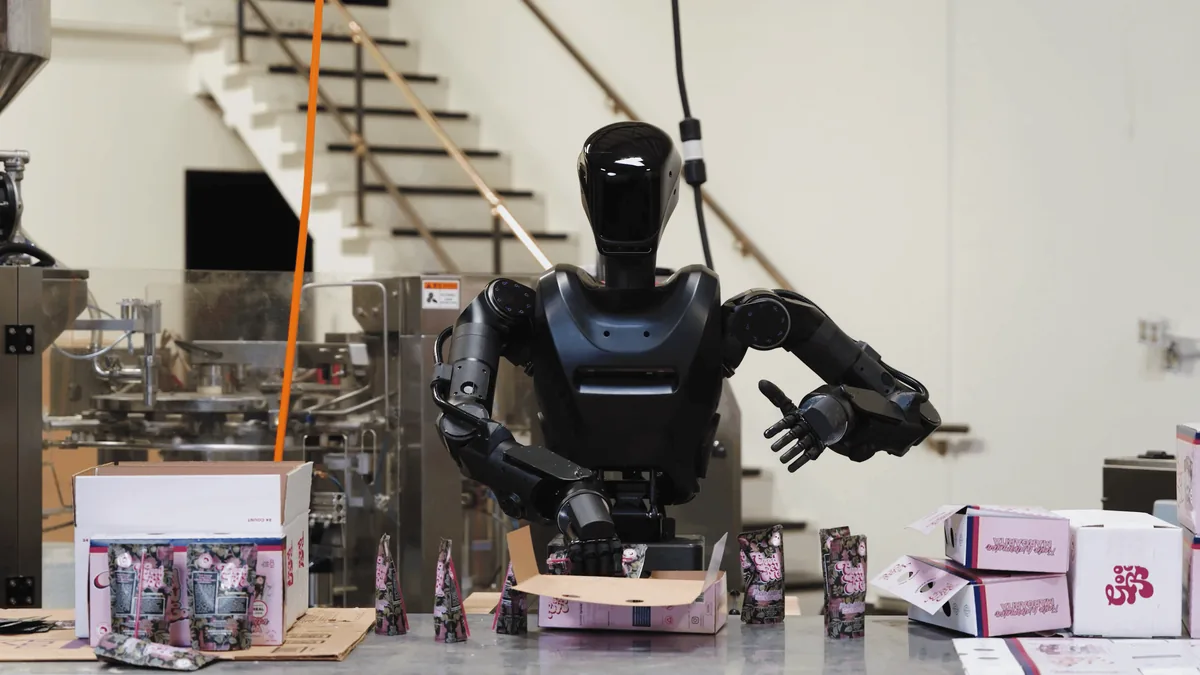
San Francisco humanoid startup Foundation Future Industries (operating at foundation.bot) is at a critical financial and engineering crossroads. According to internal company emails reviewed by Reuters and published by The Korea Times on November 20, 2026, South Korean conglomerate Base Group is preparing a $150 million investment and an aluminum-and-lithium supply joint venture to rescue Foundation Phantom after the startup missed employee payrolls starting October 30.
The disclosure lands days after Foundation refreshed its website on November 18 and amid new reporting on its unreleased Phantom MK-2 hardware. For industrial and defense buyers, the divergence between Foundation’s cycloid actuator specifications, $10M/year fleet entry terms, and operational liquidity warrants close inspection.
$150M Base Group Lifeline, Aluminum JV, and Payroll Scrutiny
Internal emails dated November 8 and November 12 from co-founder and CEO Sankaet Pathak describe Base Group Chairman Kim Seong-jip backing a long-term partnership that pairs the $150 million capital injection with a joint venture supplying aluminum for robot frames and lithium for battery packs. A Base Group spokesperson confirmed to Reuters that the group is considering an investment, though neither amount nor closing date is finalized.
The lifeline follows CNBC and Futurism reporting that Foundation missed employee payrolls on October 30, while scrutiny mounted over a $4.6 million company loan Pathak agreed in August 2025 to buy a California home, which he told staff had no relation to the current cash shortage. Because Foundation employs Eric Trump as chief strategy adviser (onboarded in March 2026) and Base Group faces an August 2026 U.S. Democratic Senate inquiry questioning whether a $2 million 2025 payment to the Trump Organization was linked to U.S. aluminum tariff relief, the proposed aluminum-and-lithium deal carries heightened political and regulatory overhang.
Phantom MK-1 Official Specs vs MK-2 Targets
On the hardware front, Foundation’s updated /phantom portal bases Phantom MK-1 on proprietary electric cycloid actuators intended to deliver hydraulic-grade force density without fluid leaks or noise. Yet independent reporting by The San Francisco Standard and Humanoid.guide shows sharp differences between deployed MK-1 machines and the unreleased MK-2 target specification:
| Specification | Phantom MK-1 (Official /phantom & Field Tests) | Phantom MK-2 (Reported Targets / Unreleased) |
|---|---|---|
| Height & Weight | 1.8 m (5 ft 11 in) / 80 kg (176 lbs) | ~1.83 m (6 ft) / ~91 kg (200 lbs) aluminum |
| Payload | 40 kg (88.2 lbs) desktop / 20 kg mobile | Undisclosed (CEO claims human-lifting strength) |
| Kinematics & Speed | 29 DoF (meta tag: 19 DoF), 1.7 m/s (~6.1 km/h) | Undisclosed body DoF; 23-DoF FPGA hands |
| Battery & Endurance | Tethered in demos (no onboard battery) | ~6-hour integrated battery target |
| Sealing & Shock | Not dustproof or waterproof | IP67 rating & 100G shock tolerance |
| Compute Stack | AMD compute validated on locomotion | Native AMD Ryzen AI Embedded X100 + Kria SOM + FPGA |
| Annual Lease Rate | $100,000/yr (100-unit min = $10M/yr entry) | $75,000/yr target ($10k-$20k long-term goal) |
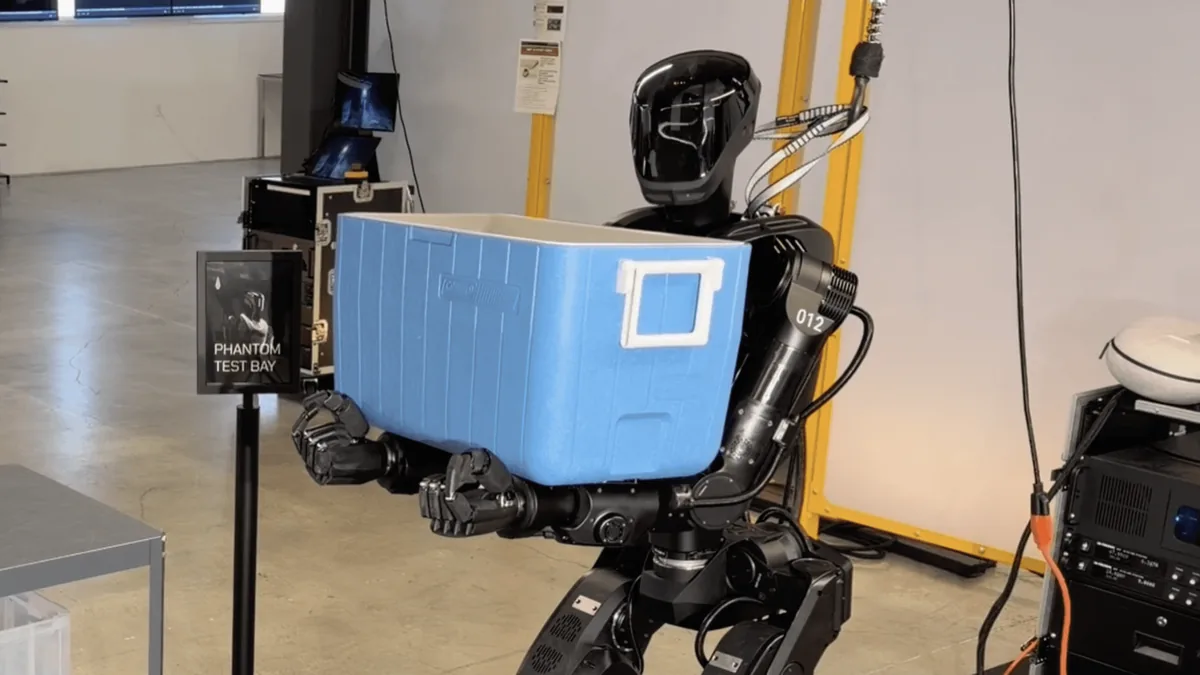
On MK-1, Foundation rates its cycloidal drives at 160 Nm max peak torque (>160 Nm legs, 119 Nm shoulder, 20 Nm wrist), <1.0 Nm back-driving torque, and <10 ms response time across 9 rad/s at 48 V and 12 rad/s at 72 V. However, the /phantom page displays 40 kg (88.2 lbs) payload on desktop viewports, 20 kg on its responsive mobile layout, and older 19 DoF / 44 lbs / 5 ft 9 in figures in its HTML meta description.
AMD Ryzen AI Embedded, Cortex DVBFs, and MK-2 Status
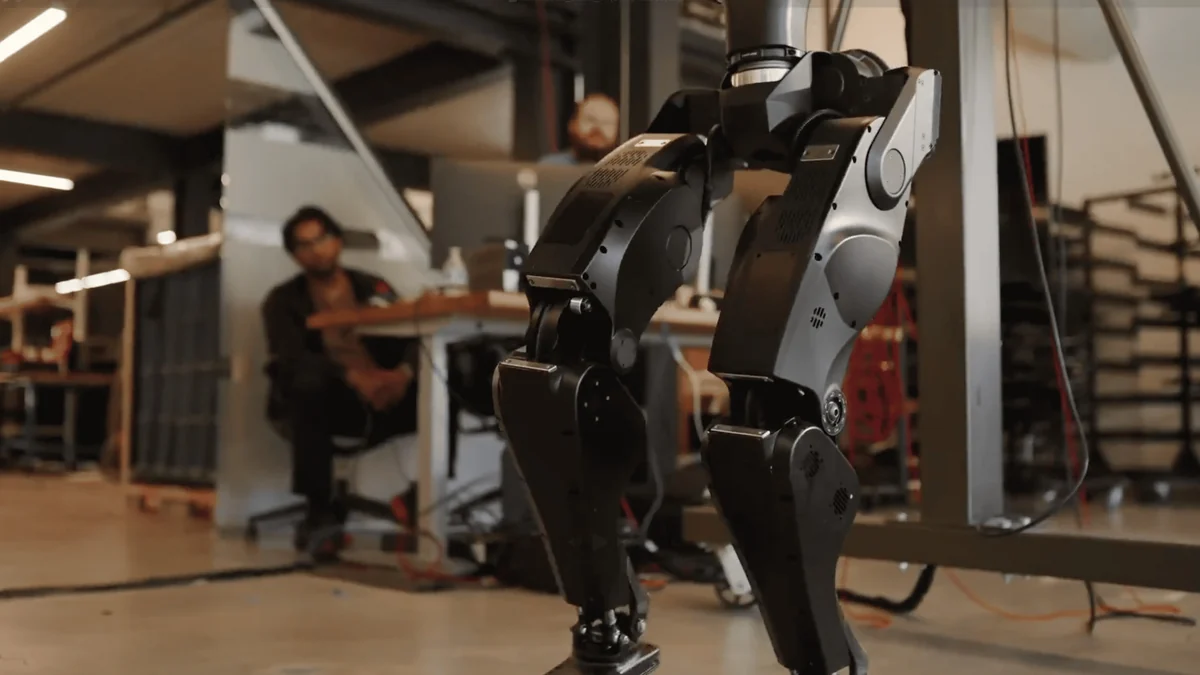
According to The San Francisco Standard, Phantom MK-2 remains confined behind a red-light safety bay in SoMa without a public debut because the unit has not been force-limited (“sedated”). Under a July 2026 collaboration with AMD, MK-2 is engineered natively around AMD Ryzen AI Embedded X100 Series processors and AMD Kria AI SOMs, paired with AMD FPGAs governing custom 23-DoF tactile hands through a deterministic control loop.
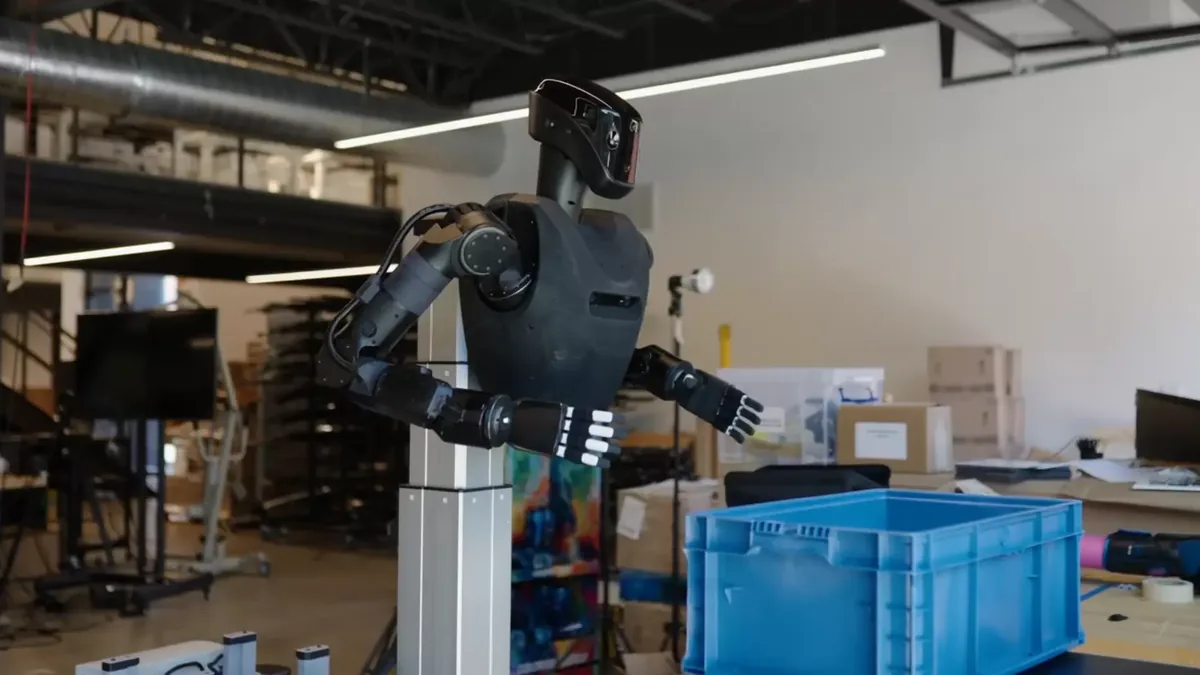
Autonomy relies on Cortex, pairing Deep Variational Bayes Filters (DVBFs) with Vision-Language Models (VLMs) and 360-degree helmet cameras (with a next-generation version in development). Commercially, The San Francisco Standard reported that as of August Foundation leased MK-1 at $100,000 per year with a 100-unit minimum ($10 million annual commitment), targeting $75,000 per year on MK-2 and an eventual sub-$10,000 cost goal (or under $20,000 per BBC/Humanoid.guide).
Defense Pivot vs Field Reality: Buyer Caveats
Unlike most Western peers, Foundation’s Master Plan explicitly rejects non-weaponization pledges, targeting U.S. Department of Defense logistics and combat support. Foundation inherited $3.22 million across four government contracts by acquiring Boardwalk Robotics in late 2024 (though The San Francisco Standard notes federal spending records show zero publicly listed 2026 contracts awarded directly to Foundation, linking the ~$24 million DoD figure cited by Futurism to a 2025 $24.8 million Navy award to Boardwalk research partner IHMC) and reported sending an MK-1 into tunnels in Gaza while discussing collaboration with the Israel Defense Forces.
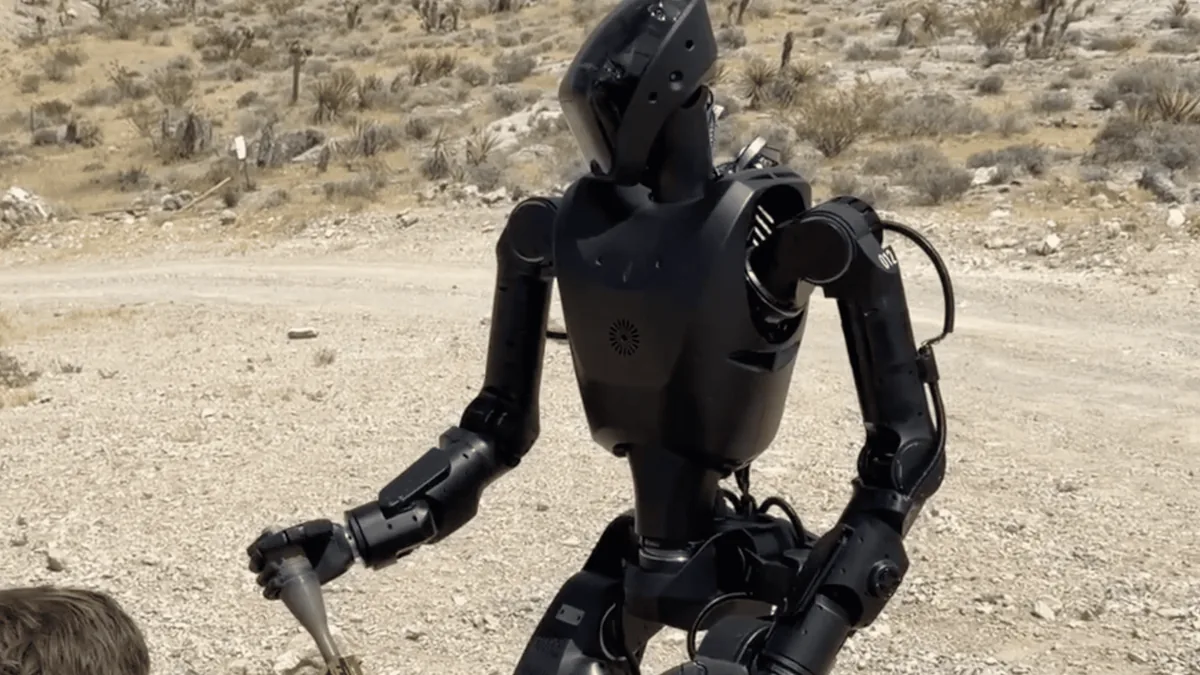
Yet independent due diligence highlights wide credibility and readiness gaps. After Foundation claimed to have tested two robots in Ukraine, Eye On AI journalist Craig Smith (who accompanied the team) stated they never crossed the border and Ukraine’s defense tech group Brave1 confirmed no demos took place with Smith, forcing co-founder Mike LeBlanc to acknowledge Foundation had not delivered an actual demo. During a July lab visit, The San Francisco Standard witnessed an autonomous MK-1 drop a plastic mortar shell repeatedly over 15 minutes without completing the load, while UC Berkeley professor Giuseppe Loianno warned reliable unstructured autonomy remains a decade or more away. Alongside General Motors calling Foundation’s 2024 $300 million order claim “fabricated” and unverified 24/5 production claims (24,000 vehicles cited, clarified by Pathak as racking and kitting), enterprise buyers should await audited closing of the Base Group deal and untethered MK-2 benchmarks. Inspect our full Foundation Phantom engineering profile and compare it directly against leading bipedal rivals: