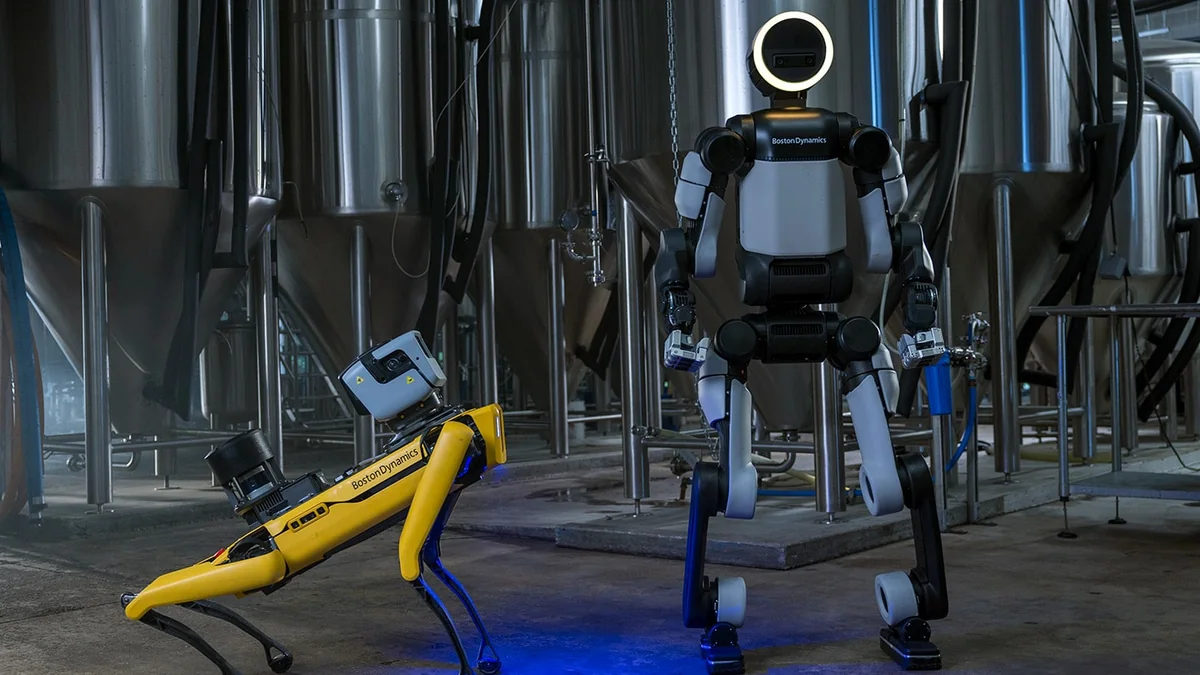
Boston Dynamics and semiconductor foundry GlobalFoundries (GF) announced on November 17, 2026, that GF will become the first customer outside the automotive industry and the first chipmaker to test the production all-electric Atlas humanoid robot. Under the expanded collaboration, GlobalFoundries joins the Atlas early adopter program and skills development workshop, with on-site evaluations at GF facilities slated to begin in early 2027.
Alongside the humanoid milestone, GlobalFoundries is scaling fleets of Boston Dynamics’ quadruped Spot robot across four global manufacturing hubs: Malta (New York), Burlington (Vermont), Dresden (Germany), and Singapore. For enterprise robotics buyers, the deal signals that Boston Dynamics is pairing Spot’s multi-year inspection footprint with Atlas’s upcoming material-handling deployment inside high-uptime chip fabs.
From Burlington 200 mm Baseline to 90,000 Singapore Sub-Fab Inspections
The Atlas trial builds on more than four years of operational validation rather than a cold greenfield pilot. Since 2022, GlobalFoundries has deployed Spot inside its 200 mm wafer facility in Burlington, Vermont, where partner Levatas trained vision models to read analog pressure gauges and monitor temperatures across pumps, motors, and compressed-gas skids where fixed sensors proved uneconomical.
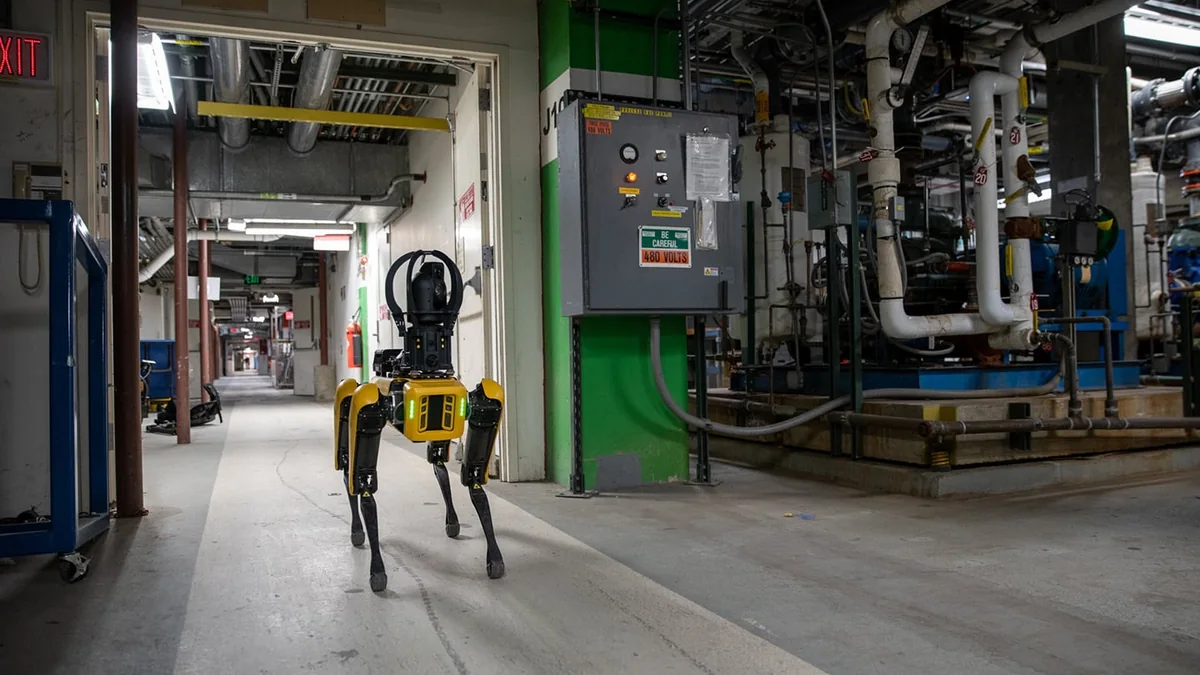
Recent production data from GF’s Singapore expansion underscores that maturity: since April 2026, two Spot units operating in sub-fab utility levels have traveled nearly 900 kilometers and executed over 90,000 inspections at a 99% mission success rate. Using updated hardware and software, GF redeployed 875 routine inspections in two weeks and plans to more than double that workload.
Multi-Site Sub-Fab Scale Across Four Countries
Expanding Spot simultaneously into Malta, New York, and Dresden, Germany, alongside Burlington and Singapore, embeds autonomous mobile inspection into critical sub-fab infrastructure supporting automotive, aerospace, and data center silicon.
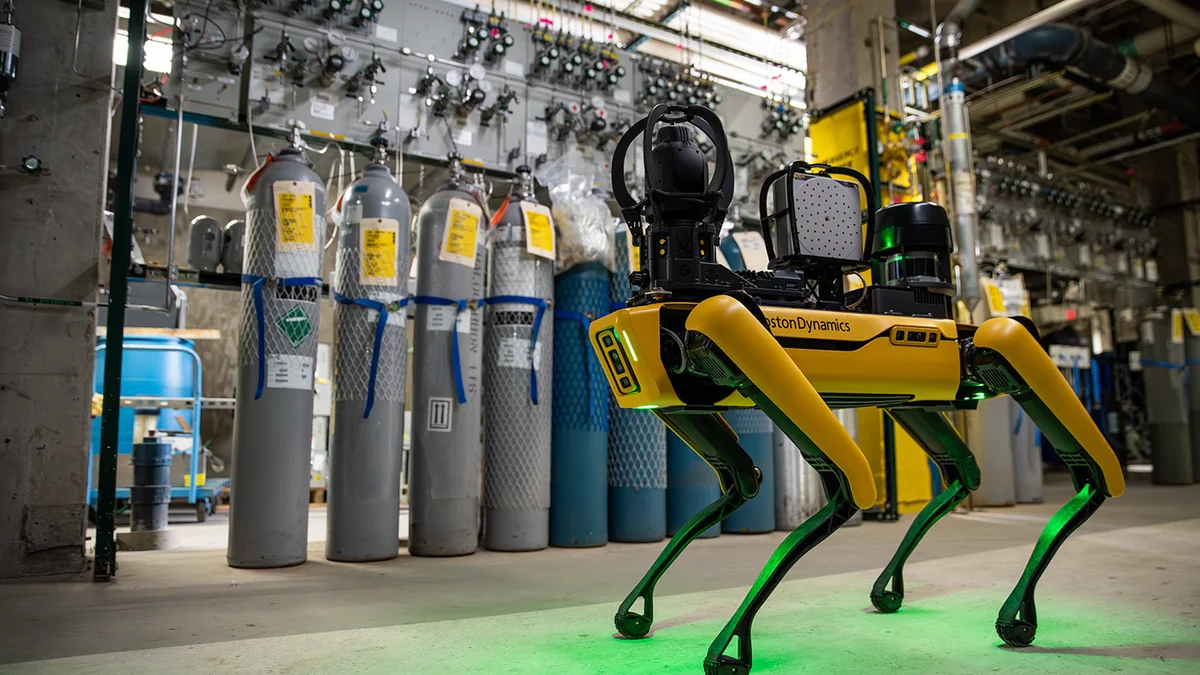
Chief Manufacturing Officer Pradip Singh noted that automated collection across thousands of inspection points moved GF from reactive repairs to predictive maintenance, framing the 2027 Atlas pilot as the next phase of physical AI across its global fab network.
Production Atlas Architecture: 56 DoF, 50 kg Lift, and Fenceless Safety
Unlike automotive sequencing pilots at Hyundai’s Georgia Robotics Metaplant Application Center (RMAC), semiconductor fabs impose tighter aisle clearances, strict contamination boundaries, and round-the-clock uptime targets. Per Boston Dynamics’ October 2026 specification sheet, the commercial all-electric Atlas arrives with enterprise-grade hardware specs suited to industrial retrofits:
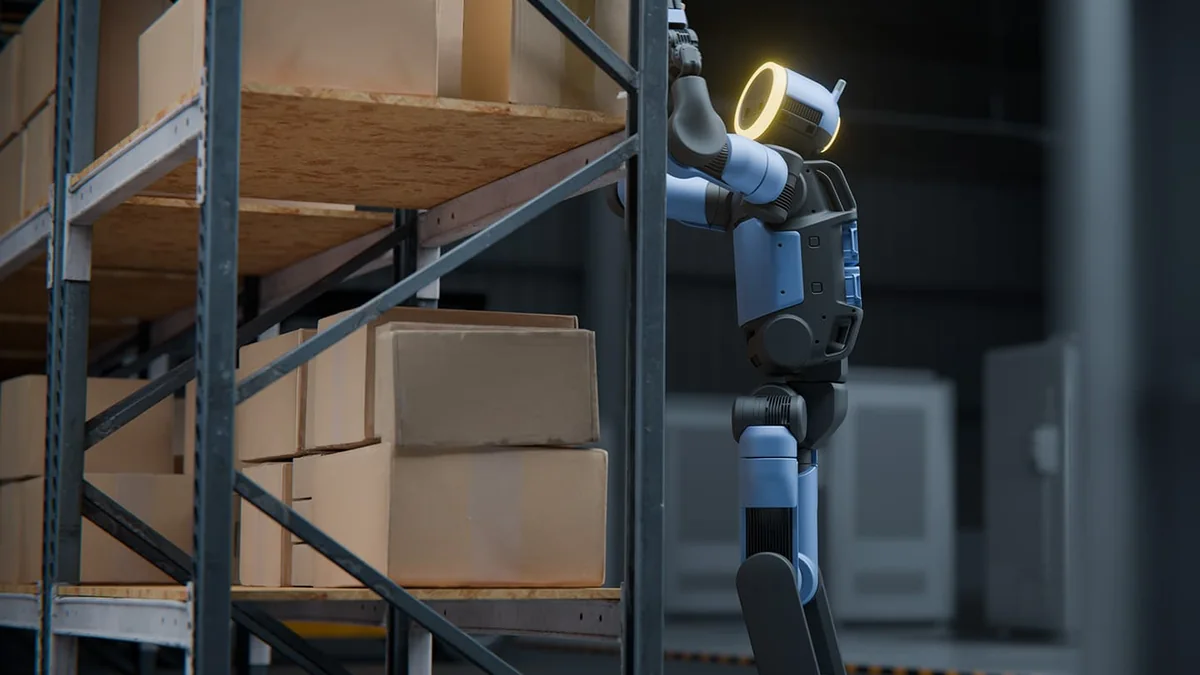
- Kinematics & Payload: 1.9 m (6.2 ft) height, 90 kg (198 lbs) weight, 56 degrees of freedom with continuous 360-degree joint rotation, 2.3 m (7.5 ft) reach, and tactile fingers and palm rated for 50 kg (110 lbs) instant, 30 kg (66 lbs) sustained, and 20 kg (44 lbs) one-handed lifting.
- 24/7 Power & Sealing: 4-hour battery life (2 hours under heavy lifting), 3-minute autonomous battery self-swap (1.5-hour charge on 110 V or optional 220 V), and IP67 protection operating from -20°C to 40°C (-4°F to 104°F).
- Safety & Control Modes: Fenceless guarding with human detection, barcode and RFID integration, modular field-replaceable components, and Autonomous, VR teleoperated, or Tablet control modes.
Shared Orbit Fleet Intelligence and Buyer Caveats
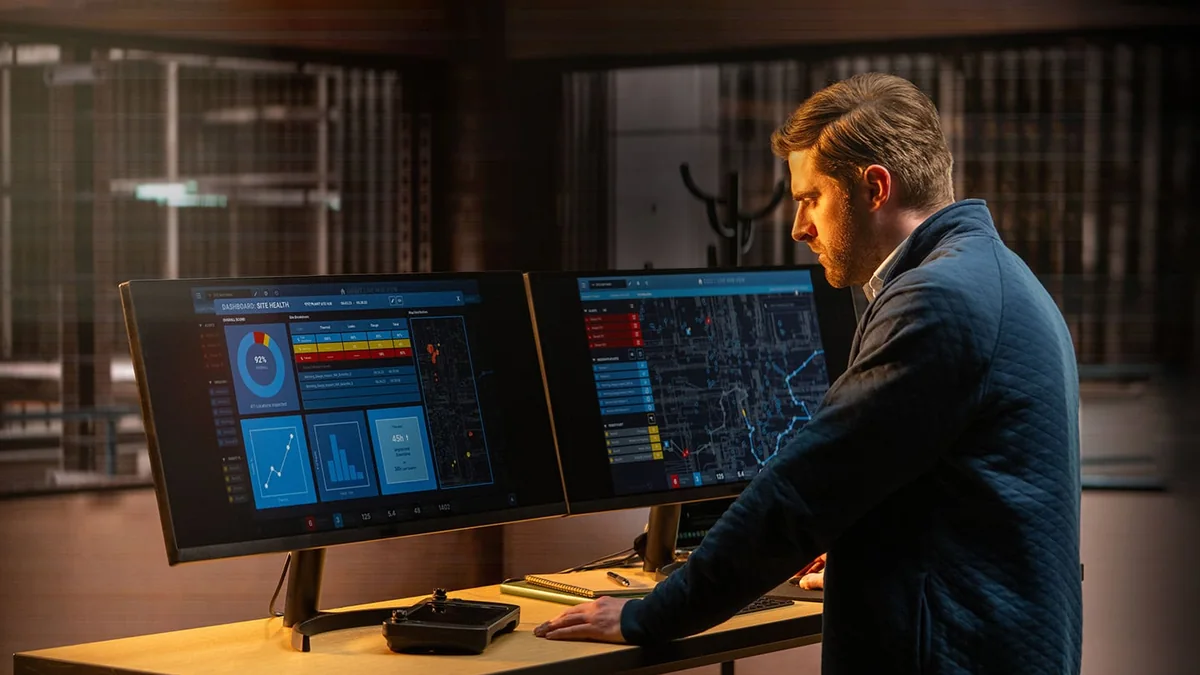
Boston Dynamics Chief Product and Technology Officer Zack Jackowski emphasized that existing Spot customers generate operational facility data that directly informs future automation. Because GlobalFoundries already manages Spot through Orbit (which integrates MES/WMS work orders, 360-degree Site View mapping, and Google DeepMind Gemini-powered visual reasoning), Atlas is engineered to plug into the same digital backbone once task training begins.
Still, engineering buyers should separate early-adopter validation from full cleanroom readiness. The early 2027 GlobalFoundries program is an exploratory skills development workshop rather than a volume wafer-bay deployment; neither company has disclosed cleanroom ISO particle certifications for Atlas or unit contract pricing. Organizations benchmarking enterprise humanoids can inspect our updated Boston Dynamics Atlas hardware profile or compare industrial trade-offs against leading peers: