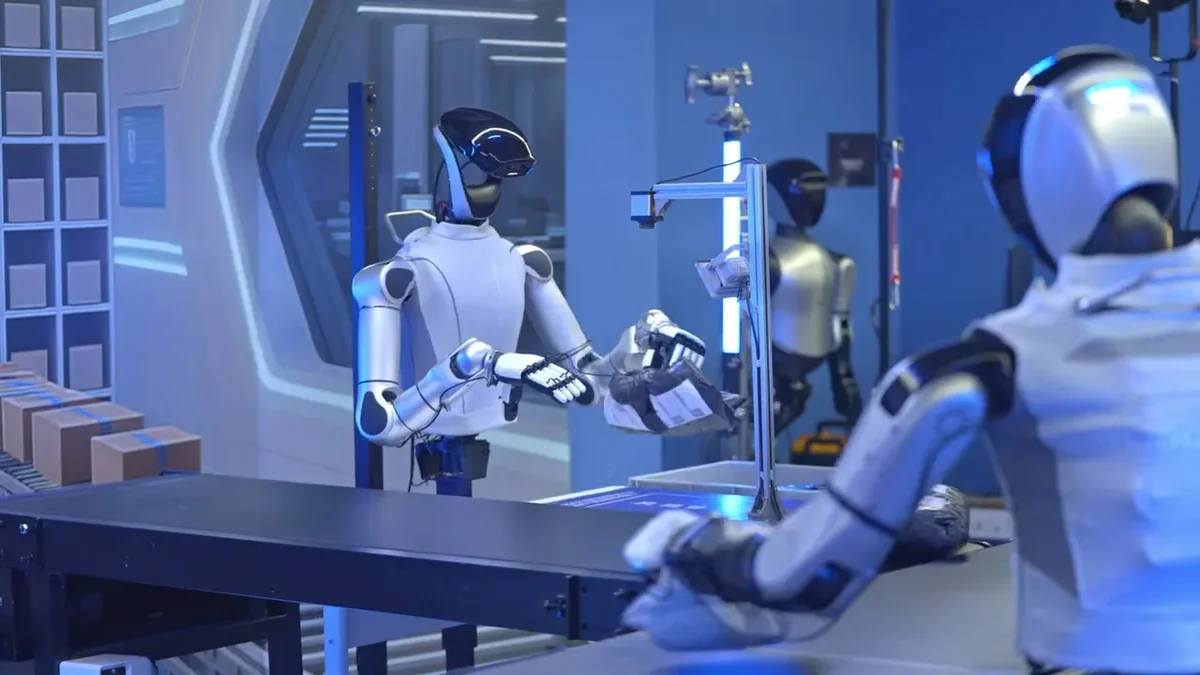
Beijing robotics developer ROBOTERA (Beijing Xingdongjiyuan Technology Co., Ltd.) stacked three consecutive commercial and hardware disclosures between November 16 and November 19, 2026. Following an initial pilot started in March 2026 at the Guangzhou Postal District Center, ROBOTERA and China Post Group Guangdong Branch expanded humanoid parcel-sorting operations to 11 postal hubs across eight cities in Guangdong Province, reporting an average induction throughput exceeding 1,500 parcels per hour.
At the 2026 APEC CEO Summit (November 17 to 19 in Shenzhen), CEO Jianyu Chen and co-founder Yue Xi also showcased live parcel sorting on the ROBOTERA M7 upper-body humanoid and confirmed active deployments with both China Post and SF Express across more than 10 logistics centers. Days earlier on November 16, the company opened commercial orders for the 16-DoF XHAND 1 Pro-U dexterous hand co-aligned with NVIDIA GEAR Lab’s DexUMI exoskeleton for NVIDIA GR00T 2 post-training.
11 China Post Hubs, East China & SF Express Scale
According to ROBOTERA’s November 17 PR Newswire release, the Guangdong expansion spans Guangzhou, Shenzhen, Dongguan, Jiangmen, Shantou, Shanwei, Jieyang, and Heyuan, placing autonomous sorters in China’s highest-volume express province alongside additional postal sites in East China and operations at SF Express.
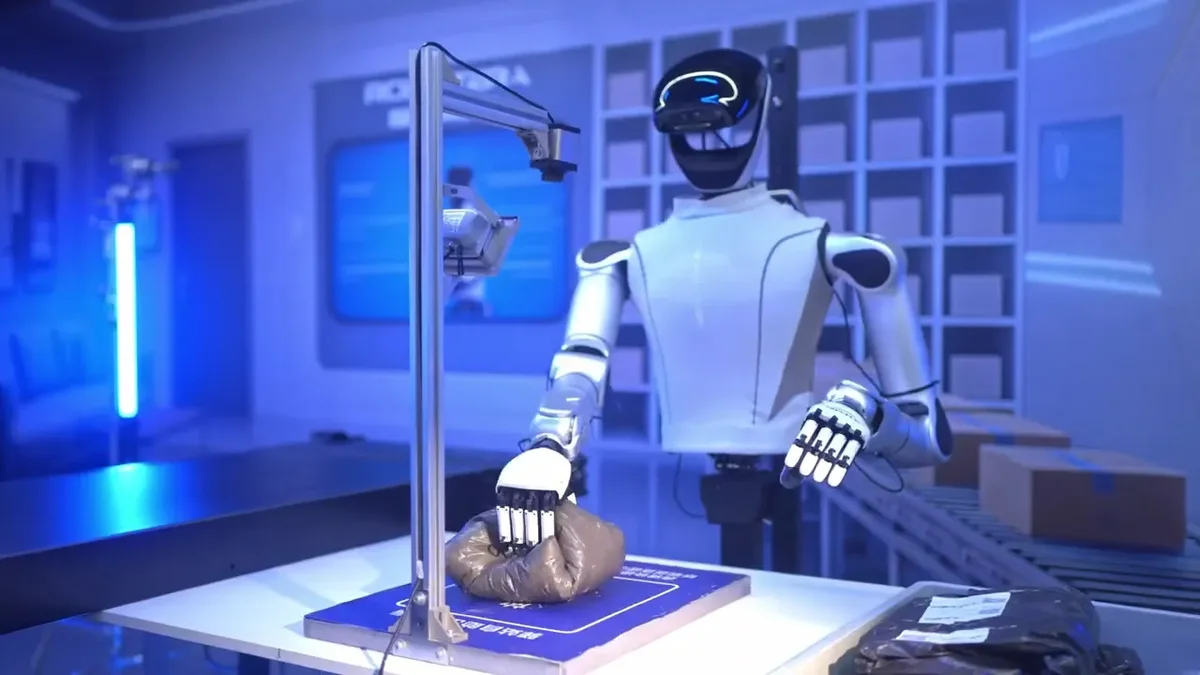
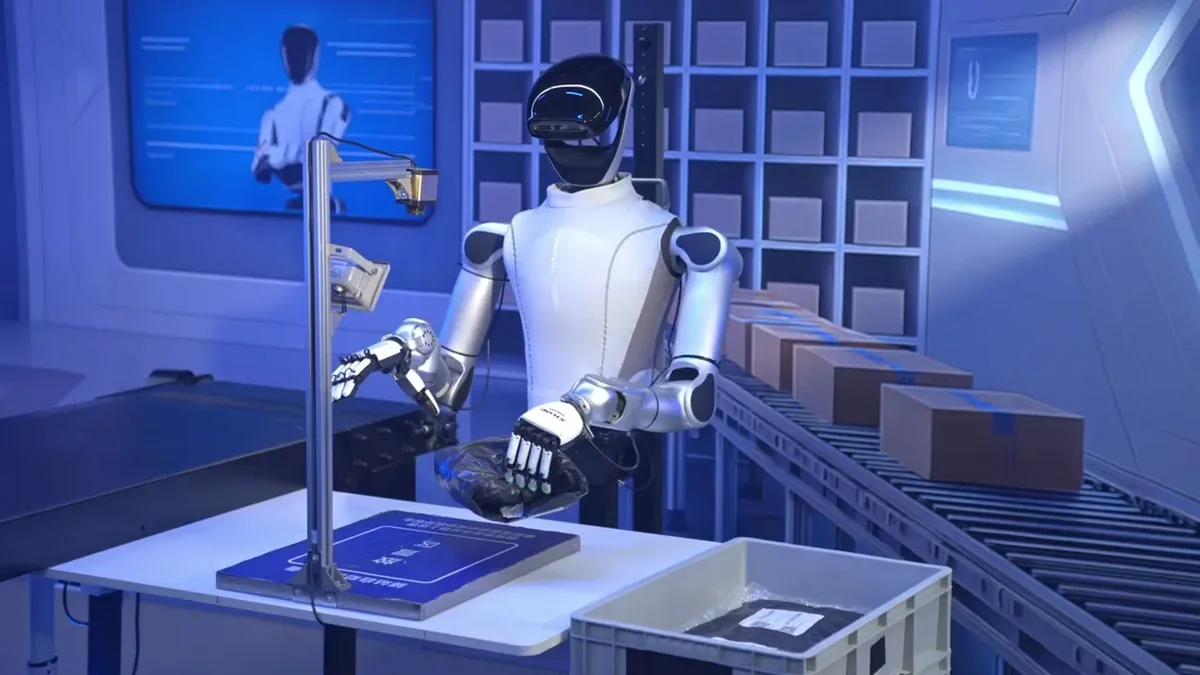
On the sorting line, ROBOTERA integrates its proprietary five-finger dexterous hands with irregular-item rejection, adaptive conveyor speed control, and multiple power options to reduce jams, collisions, and missed parcels during peak e-commerce surges. In operational testing since March 2026, the system sustained an average induction rate above 1,500 parcels per hour, matching experienced human sorters while reallocating staff toward maintenance, quality control, and fleet supervision. As Unite.AI noted, the real engineering challenge now shifts from one controlled Guangzhou pilot to maintaining that throughput across heterogeneous lines in eight cities.
M7 Sorting Architecture vs L7 Bipedal Zero-Shot Transfer
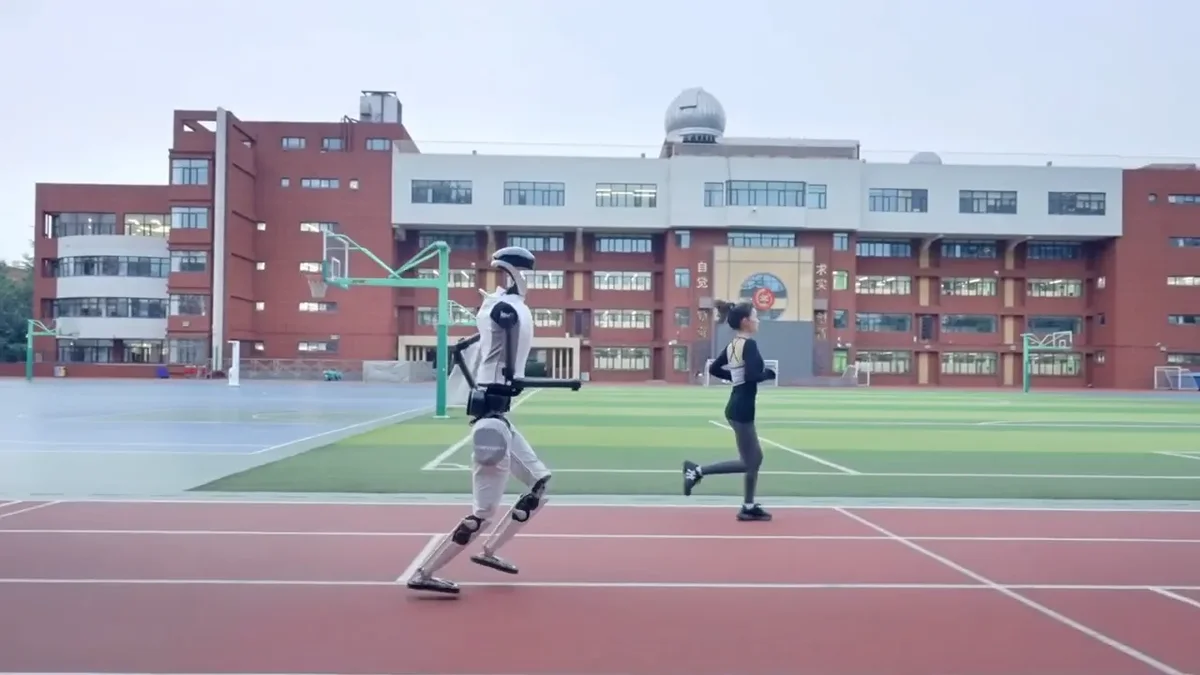
Notably, the November 17 China Post release cited “humanoid robots” without publishing a hub-by-hub breakdown of hardware SKUs. On November 19, ROBOTERA clarified its logistics workhorse at the APEC CEO Summit by demonstrating live parcel induction on the ROBOTERA M7 upper-body platform, while its official L7 product portal links M7 directly to the full-size bipedal ROBOTERA L7 via ERA-42 zero-shot policy transfer.
| Specification | ROBOTERA M7 (Upper-Body) | ROBOTERA L7 (Full-Size Bipedal) | XHAND 1 / XHAND 1 Pro-U |
|---|---|---|---|
| Form Factor | Stationary / modular torso (792 mm / 31.2 in) | Full-size biped (1.71 m / 5 ft 7 in) | Direct-drive 5-finger hand (191 x 94 x 47 mm on XHAND 1) |
| Mass | 65 kg (143.3 lbs) | 65 kg without hands (143.3 lbs) | 1,100 g (2.43 lbs on XHAND 1) |
| Degrees of Freedom | 43 DoF (19 body + 24 hands) | 55 DoF (31 body + 24 hands) | 12 active DoF (XHAND 1) / 16 DoF (Pro-U) |
| Actuation & Peak Force | Undisclosed on /product/M7 | QDD legs: 400 Nm knee, 25 rad/s | >25 kg full-hand grip (XHAND 1), 10 CPS |
| Reach & Speed | 717 mm arm / 2.1 m op. diameter | 2.1 m op. diameter / 4 m/s (14.4 km/h) sprint | ±0.20 mm repeatability (XHAND 1) |
| Payload | Undisclosed on /product/M7 | 20 kg (44.1 lbs) dual-arm max | >5 kg single finger / >20 kg 4-finger (XHAND 1) |
| Compute & Teleop | Meta Quest + Intel RealSense / Stereo | 80 TOPS x86 + 275 TOPS Jetson Orin | Ubuntu, C++/Python/ROS 1/2 (XHAND 1); DexUMI alignment (Pro-U) |
| Power | Undisclosed (/product/M7); multiple power options in logistics | 60V 15Ah (900 Wh) pack (runtime undisclosed) | 24V to 72V input, 7W static / 120W max @ 48V (XHAND 1) |
Sharing the identical 7-DoF arms, 2-DoF neck, 3-DoF waist, 3D LiDAR, binocular RGB-D cameras, and 2.1 m workspace lets operators validate manipulation policies on M7 workstations before deploying onto legged L7 units when floor mobility is required.
XHAND 1 (12 DoF) & XHAND 1 Pro-U (16 DoF) for NVIDIA GR00T 2
On logistics lines, flexible five-finger grippers avoid suction-cup failures on wrinkled polybags and irregular envelopes. Standard XHAND 1 units provide 12 active DoF (3 DoF each on thumb and index, 2 DoF on middle, ring, and pinky), 270-degree circumferential fingertip 3D tactile arrays (120 sensing points per finger on the XHAND spec table), 10 clicks per second (CPS) direct-drive gear speed, and ±0.20 mm fingertip repeatability.
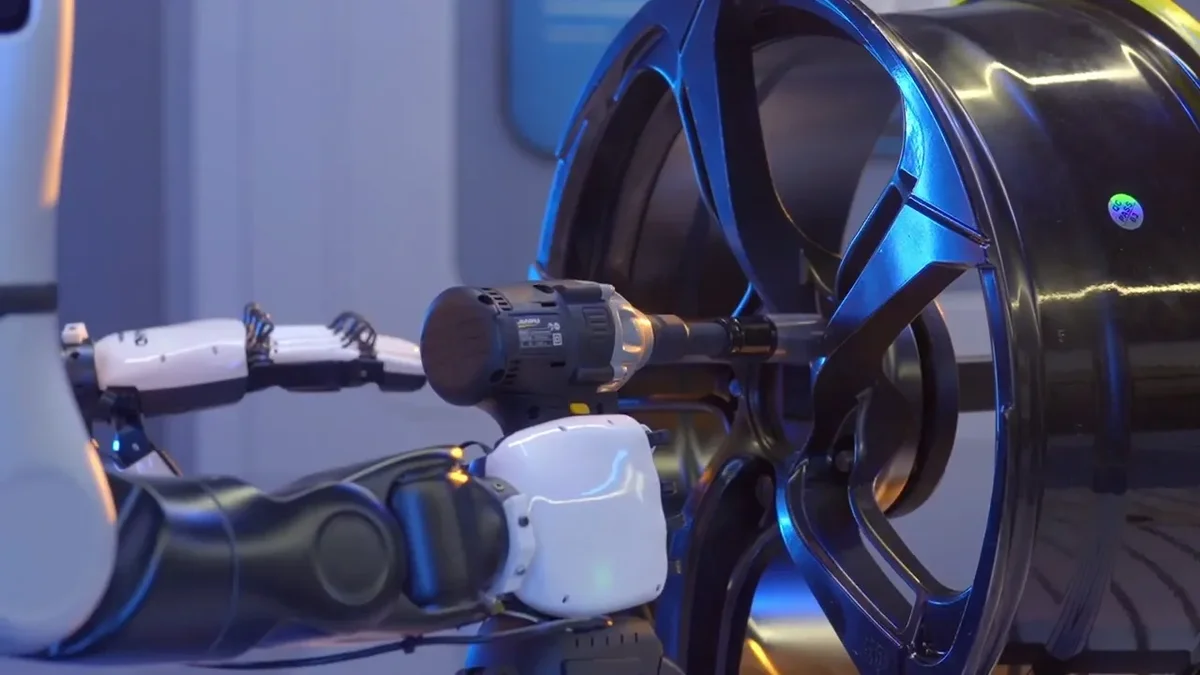
For research labs, the newly released XHAND 1 Pro-U expands to 16 DoF mechanically mapped 1:1 to NVIDIA GEAR Lab’s DexUMI wearable hand exoskeleton, optimizing thumb geometry and palm-side tactile sensing to capture motion and fingertip contact force directly from human hands without requiring an operator to remotely teleoperate the robot or perform intermediate motion retargeting. In the NVIDIA GR00T 2 demonstration presented by Jim Fan at CoRL, a dual-arm Pro-U setup trained from DexUMI captures scored 60% success preparing banana yogurt, 80% scooping granola, and 75% on multi-step fire chemistry (striking a match, lighting a lamp, and placing the match in water). Commercial availability opens with an initial batch of 40 units.
Pricing, Undisclosed Specs & Buyer Caveats
Enterprise buyers should weigh three procurement caveats before ordering. First, ROBOTERA publishes neither an official battery runtime in hours nor an IP ingress rating on its L7 specification portal (and omits actuator, payload, compute, and power specs on /product/M7); although the 60V 15Ah (900 Wh) battery handles mobile demos, continuous postal sorting relies on multiple power options adapted to site requirements rather than an advertised full-shift battery rating. Second, ROBOTERA omits public MSRP, routing inquiries through B2B sales, while distributor listings at Robots International place L7 ($99,999.95) and M7 ($99,999.99) near $100,000 and standalone XHAND 1 units at $15,800 each, and Humanoid.guide lists $120,000 for L7. Third, commercial proof currently centers on structured induction belts rather than unconstrained warehouse walking. Explore our full ROBOTERA L7 profile and ROBOTERA M7 profile and compare them against key rivals: