On November 24, 2026, at 13:17:46 Moscow Time (10:17 GMT), a Soyuz-2.1b carrier rocket lifted off from Baikonur Cosmodrome Site 31, Pad 6 carrying the Progress MS-36 (ISS 97P) resupply spacecraft and Teledroid, a 105 kg (231.5 lbs), 30-DoF anthropomorphic robotic torso built by SPA Android Technics (NPO Androidnaya Tekhnika) in cooperation with RSC Energia and TsNIIMash. Carrying 2,427 kg (5,351 lbs) of total deliverable cargo, the spacecraft is scheduled to dock with the International Space Station (ISS) on November 26.
Unlike terrestrial bipedal humanoids optimized for factory floors or warehouse aisles, Teledroid is engineered specifically for microgravity extravehicular activity (EVA) outside the ISS Russian Segment, eliminating legs entirely in favor of fixed mounting on the Nauka multipurpose laboratory module and transport via the European Robotic Arm (ERA).
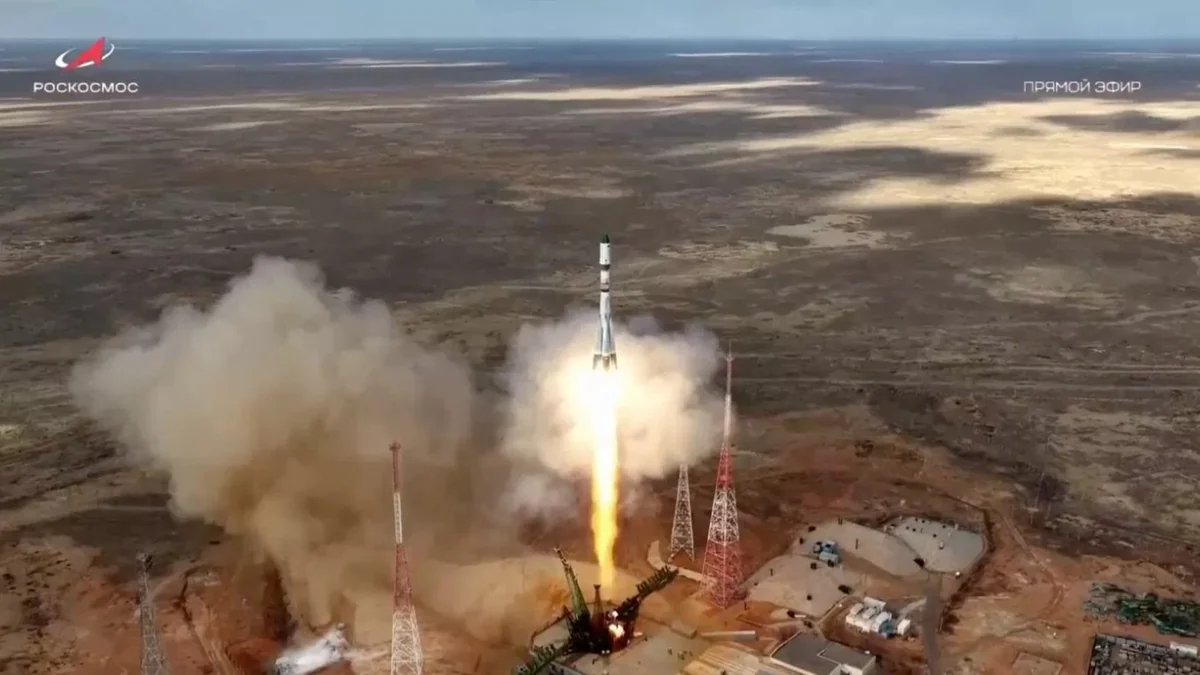
Two-Flight Delivery & Unprecedented Two-Port Docking Profile
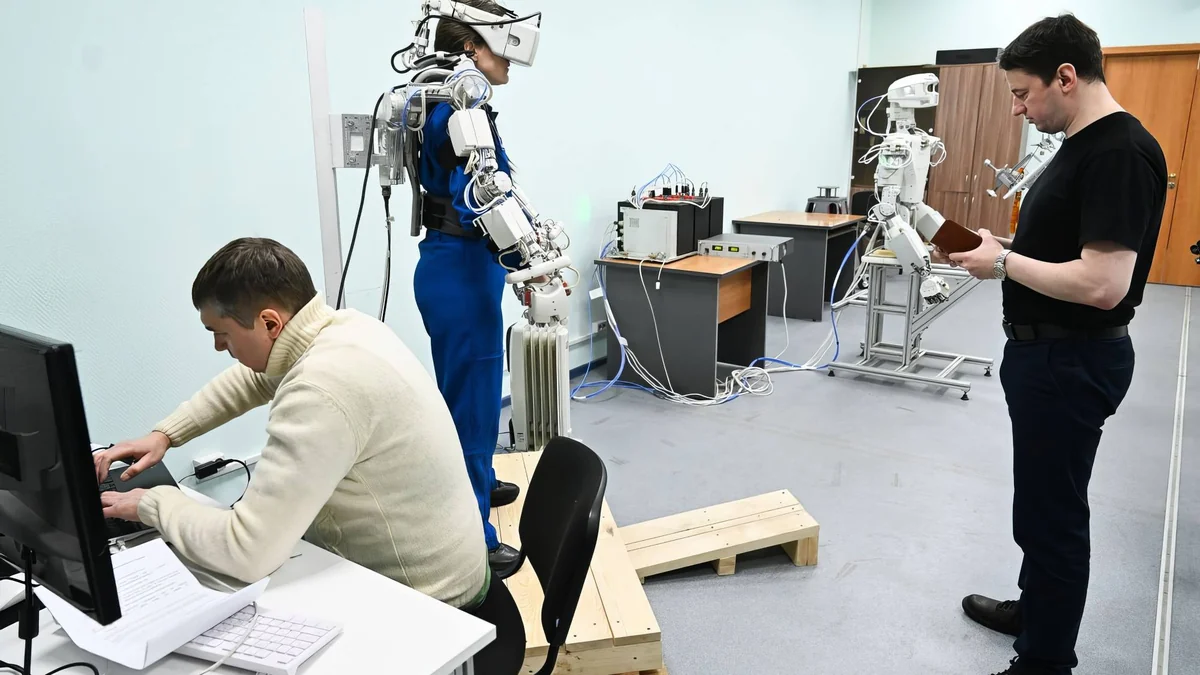
Teledroid’s orbital deployment was split across two consecutive Russian cargo flights. In September 2026, Progress MS-35 delivered the first hardware batch: an automated operator workstation, computing hardware, and the avatar teleoperation exoskeleton suit worn with a VR headset inside the station. Progress MS-36 now carries the physical robotic torso alongside an external observation camera and experimental task board.
| Mission Parameter | Verified Detail | Source |
|---|---|---|
| Launch Vehicle & Pad | Soyuz-2.1b (11S517A2 fairing), Baikonur Site 31 / Pad 6 | RussianSpaceWeb |
| Liftoff & Docking | Nov 24, 2026 (13:17:46 MSK / 10:17 GMT) -> Nov 26, 2026 | RussianSpaceWeb / Qazinform |
| Spacecraft & Total Cargo | Progress MS-36 (11F615 No. 466 / 97P), 2,427 kg | RussianSpaceWeb |
| Primary Unload Port | Poisk module (MIM2) zenith port | RussianSpaceWeb |
| Orbit-Correction Port | Zvezda Service Module (PrK aft port, hatches kept sealed) | RussianSpaceWeb |
Progress MS-36 also inaugurates a two-port docking choreography on the Russian Segment. Because the air-leaking Transfer Chamber (PrK) on the Zvezda Service Module remains permanently sealed, cosmonauts will first unload Teledroid and pressurized supplies through the Poisk (MIM2) zenith port before the spacecraft undocks and re-docks to Zvezda’s aft port solely to align its propulsion axis for ISS orbit-correction burns.
30 DoF, 105 kg & Avatar Teleoperation: Inside Teledroid’s Architecture
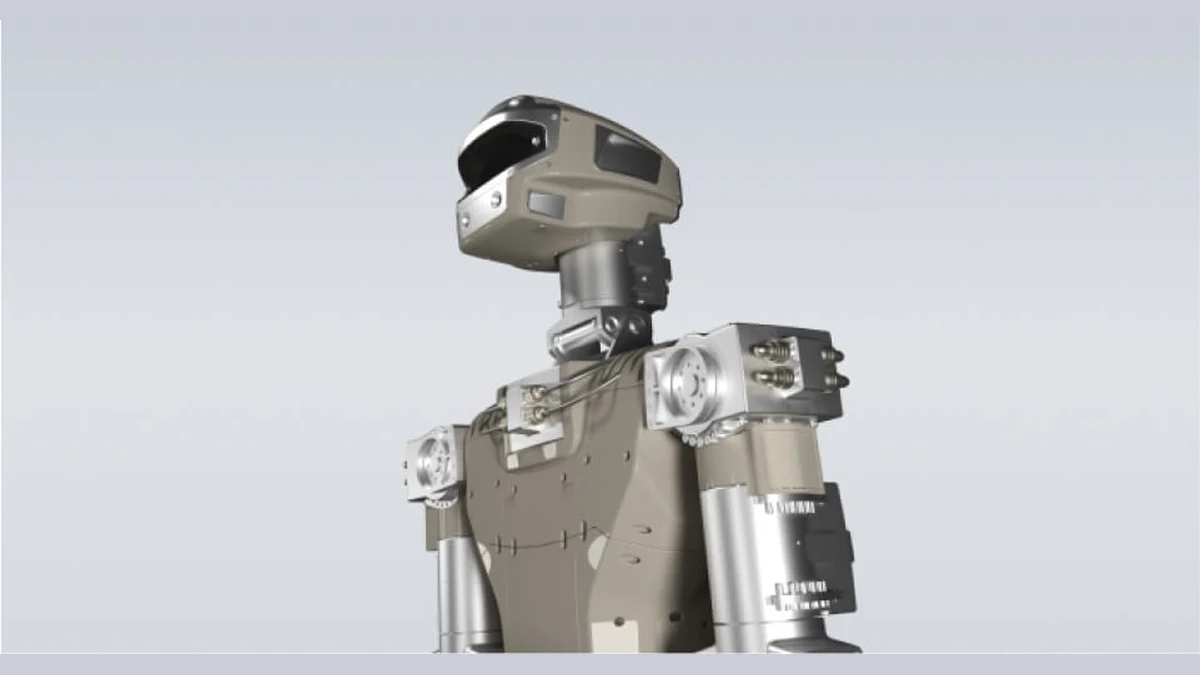
Developed under the “Robotic anthropomorphic multifunctional system” scientific equipment program initiated in 2021, Teledroid omits lower limbs altogether because astronauts and EVA robotics navigate the hull using handrails, tethers, and robotic arms rather than bipedal walking.
- Degrees of Freedom & Actuation: 30 DoF across dual anthropomorphic arms, dexterous hands, torso, and sensor head, engineered to handle standard EVA tools, electrical connectors, tethers, and carabiners.
- Mass & Environmental Hardening: Approximately 105 kg (231.5 lbs) flight unit packaged with its external observation camera, hardened against open-space vacuum, cosmic radiation, and extreme orbital thermal swings.
- Three Control Modes: Real-time “copy mode” (avatar teleoperation) driven by a cosmonaut inside the ISS (or ground control) wearing the exoskeleton suit and VR visor, supervised voice-command mode backed by machine vision, and autonomous execution for standardized routine operations.
Three-Phase Orbital Validation: From Virtual Twin to Nauka Exterior
Per Roscosmos briefings summarized by Kosmosnews and TsPK training disclosures on Habr, Teledroid’s orbital test campaign progresses through three stages:
- Virtual Twin Verification: Validating teleoperation latency and operator control against a virtual model of the robot inside the station.
- Pressurized Compartment Trials: Operating the physical hardware inside the ISS sealed compartment prior to EVA deployment.
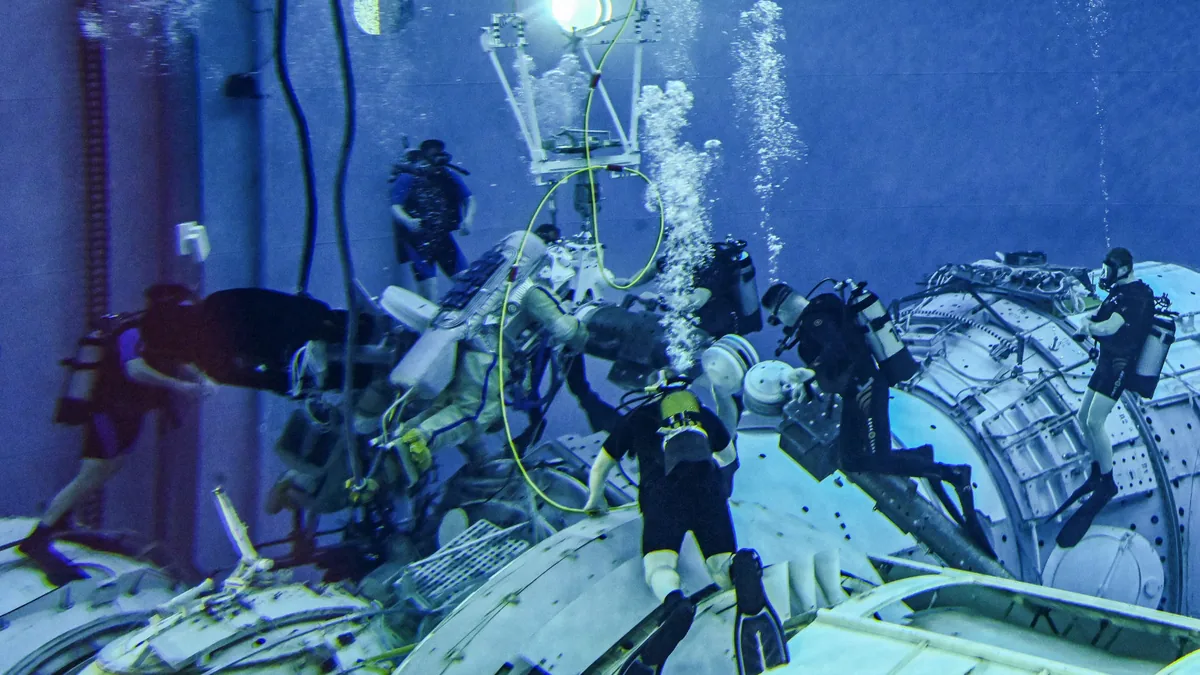
- External Nauka Operations: During a future spacewalk, cosmonaut Anna Kikina will ride the ERA robotic arm carrying the fragile 105 kg Teledroid package from the Poisk airlock to the Nauka module while Pyotr Dubrov translates along external handrails. Once mounted alongside its external observation camera and test board, Teledroid will practice connecting electrical plugs, operating carabiners, handling manual EVA tools, and managing cables while controlled from inside the station.
While orbital robotics trades legs for vacuum survival and zero-g mounting, terrestrial upper-body and industrial humanoids are converging on similar bimanual manipulation architectures. Compare leading terrestrial platforms in our 50-robot database:
- ROBOTERA M7 (43-DoF modular upper-body torso for industrial cells and teleoperation)
- X Square Quanta X2 (62-DoF wheeled dual-arm humanoid with 20-DoF ArtiXon tactile hands)
- Boston Dynamics Atlas (56-DoF electric bipedal flagship for automotive and fab pilots)
- Figure 02 & Agibot A3