 Industrial Pilot & Enterprise Deployment / Cage-Free Collaborative HumanoidCH • 2026
Embodied AI AIR
Embodied AI • Switzerland
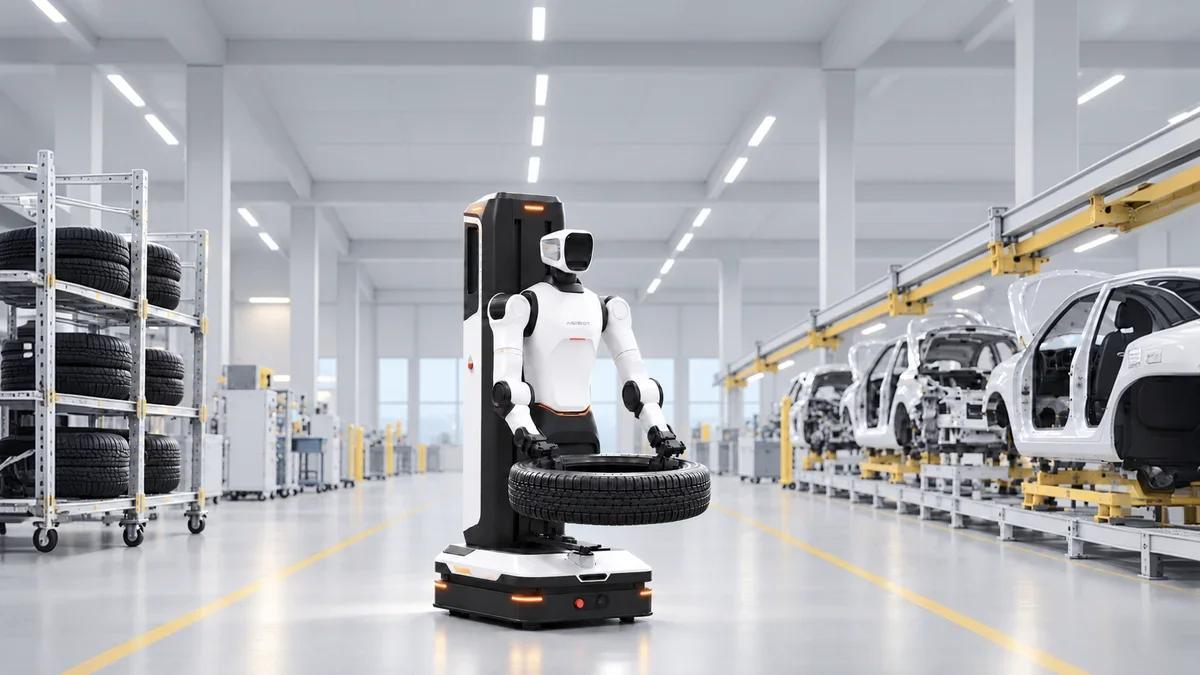
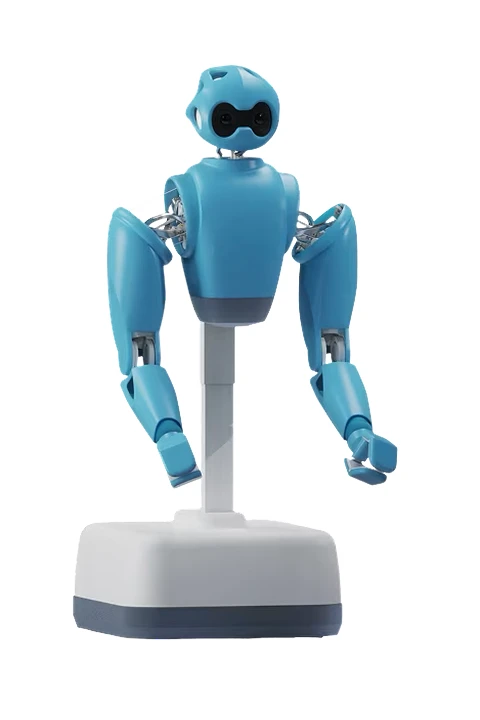
« Switzerland's cage-free collaborative humanoid with 2 kg tendon-driven arms lifting 5 kg payloads. »
Who is this robot built for? (Procurement Verdict)
Notre analyse indépendante basée sur les retours d'ingénieurs terrain, les tests en conditions réelles et les contraintes d'infrastructure.
Ideal Profile & Recommended Use Cases
- ✓Manufacturing plants seeking collaborative dual-arm automation without safety cages
- ✓Automotive and electronics assembly lines requiring fast 30-day task deployment
- ✓Logistics cells with repetitive kitting, box packing, and component sorting operations
Key Caveats & Who Should Avoid It
- ✕Unstructured rough outdoor construction sites or multi-floor stair climbing
- ✕Heavy pallet lifting exceeding 10 kg dual-arm continuous payload capacity
- ✕High-speed hazardous stamping presses without localized hardware e-stops
Procurement Reality & Commercial Availability : Comment l'obtenir concrètement ?
Direct enterprise deployment and customer integration via Embodied AI (Lausanne / Rome)
Field Reality: AI Autonomy vs Teleoperation
Assessment of real-world operational independence versus human supervision.
💡 Synthèse SpecsLib : Remote teleoperation on day one transitioning to 95% autonomous task execution within 30 days via multimodal imitation learning.
Confirmed 100% Autonomous Capabilities
- ✓Autonomous component sorting and bin picking
- ✓Cardboard box induction and folding
- ✓Precision mechanical cable and wire harness routing
- ✓Automated quality inspection and defect verification
Tasks Requiring Teleoperation or VR Supervision
- ⚠Initial shift workflow bootstrapping and demonstration data capture
- ⚠Handling rare packaging exceptions and novel SKU introductions
- ⚠Complex unstructured cable unknotting in non-standard bins
Cinématique & Moteurs
Subsystem breakdown of degrees of freedom (DoF) and actuation torque.
- Total DoF
- N/A
- Hands & Fingers
- N/A
- Arms
- N/A
- Legs
- N/A
- Torso & Neck
- N/A
- Actuator Type
- Tendon-driven cable transmissions with centralized torso brushless DC actuators and series elastic compliance
Capteurs & Calculateurs
Perception cameras, onboard AI compute hardware, and power management.
- Vision Perception
- Calibrated stereo RGB cameras with head-integrated depth sensing and workspace illumination
- LiDAR Sensing
- Non (Pure Vision)
- Compute Architecture
- Onboard multimodal AI Edge compute for real-time kinematic control, safety monitoring, and VLA model inference
- Embedded AI Model
- Embodied AI task-specific imitation learning policy stack with multimodal teleoperation telemetry transfer
Énergie & Charge
Capacité du pack lithium et charge utile admissible.
- Battery Pack
- N/A
- Endurance Runtime
- N/A
- Total Payload
- N/A
- Single Hand Payload
- 5 kg
- Charging Interface
- Continuous industrial shift deployment with automated docking (capacity not publicly disclosed)
Frequently Asked Questions & Expert Answers : Embodied AI AIR
Everything you must know before evaluating or acquiring this platform.
1Why does AIR use a wheeled mobile base instead of bipedal humanoid legs?
Industrial manufacturing plants have flat, polished concrete floors where bipedal walking consumes substantial battery power, increases tip-over risks, and introduces unnecessary mechanical complexity. The wheeled base ensures rock-solid operational stability, lower hardware costs, and zero fall hazards beside human colleagues.
2How do AIR's 2 kg tendon-driven arms safely lift 5 kg payloads without danger to humans?
By centralizing heavy electric motors and reduction drives inside the torso and transmitting power via lightweight synthetic cables, the moving arm retains minimal kinetic inertia. If contact occurs, the arm passively deflects and absorbs kinetic energy elastically before applying dangerous crushing forces.
3How does the teleoperation-to-autonomy transition work in factory pilots?
During initial shifts, remote human teleoperators control AIR to execute productive factory tasks immediately. Every manipulation demonstration is logged to train task-specific imitation learning policies, allowing AIR to take over autonomous execution within approximately 30 days with a 95% average success rate.
Recommended Head-to-Head Duels
Confront this robot directly against other market leaders with 1-click comparison: