 Extreme Terrain Bipedal Humanoid / Field Trial PilotCN • 2026
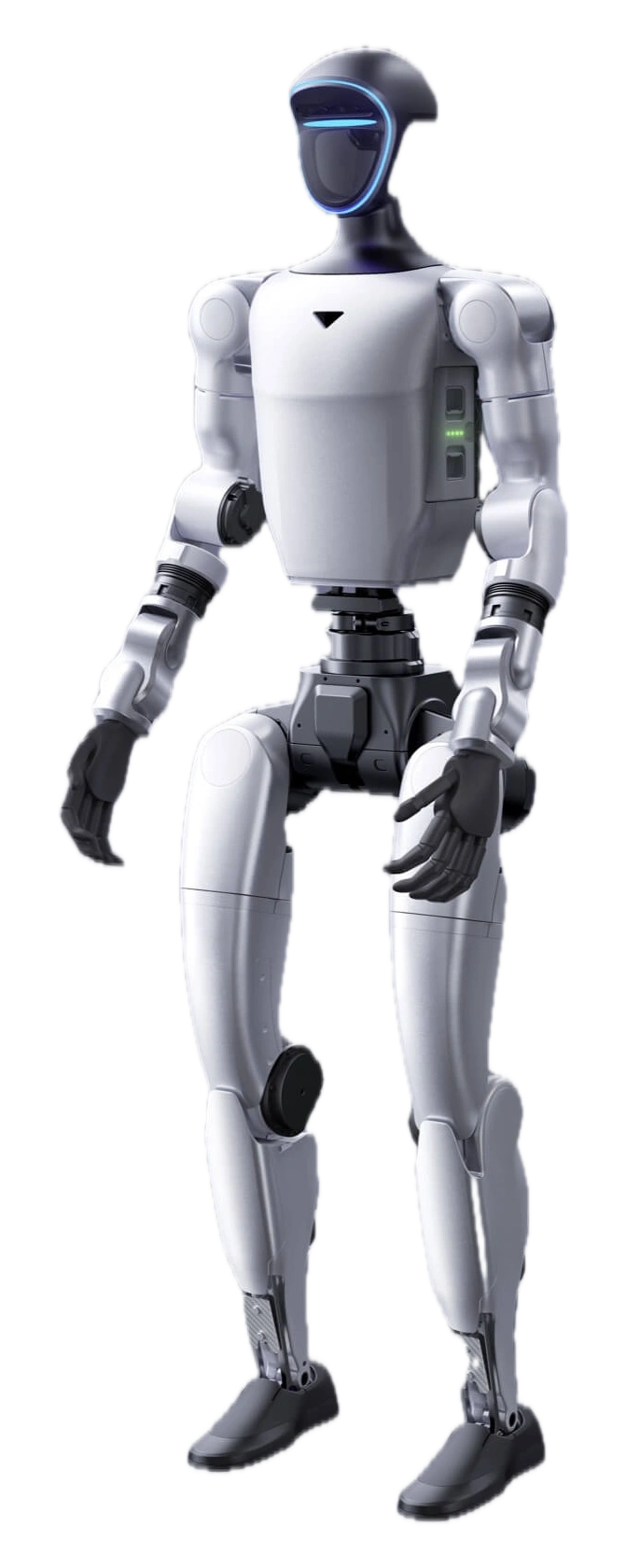
Yobotics E1 (Xingzhe Taishan)
Shandong Yobotics • China
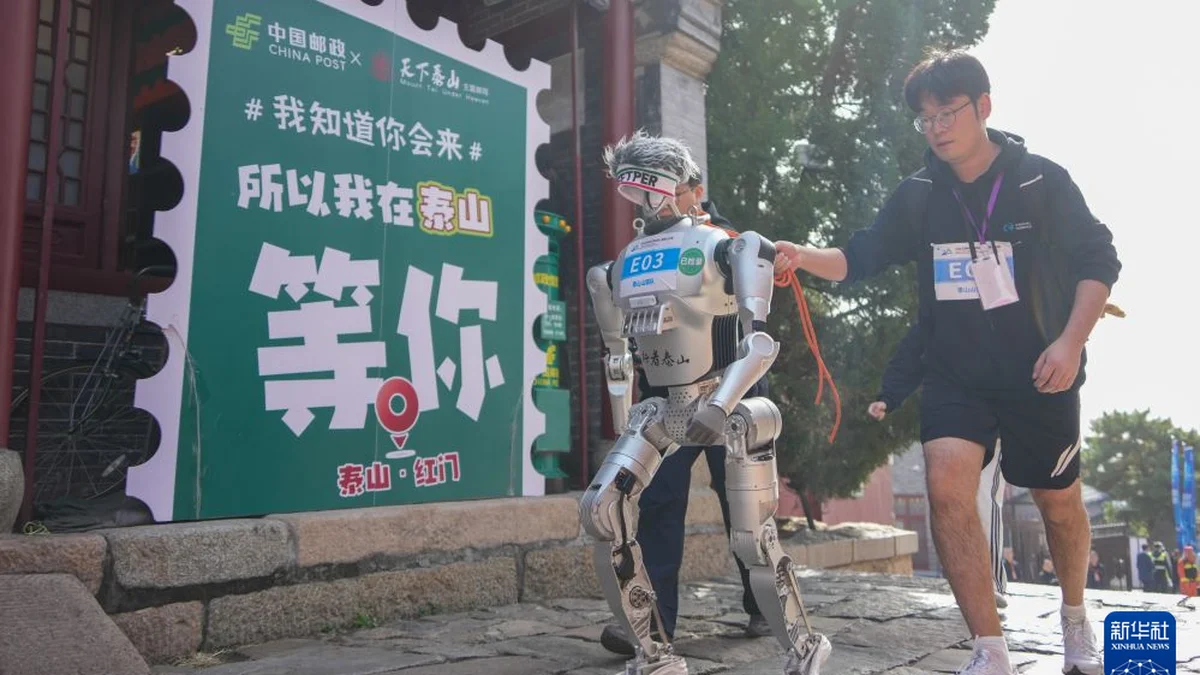
« Compact extreme-terrain bipedal humanoid proven on Mount Taishan's 3,100 irregular mountain stone steps. »
Who is this robot built for? (Procurement Verdict)
Notre analyse indépendante basée sur les retours d'ingénieurs terrain, les tests en conditions réelles et les contraintes d'infrastructure.
Ideal Profile & Recommended Use Cases
- ✓Outdoor field robotics research tackling non-standard stairs, unpaved cobblestones, and steep mountain inclines
- ✓Whole-body dynamic balance and proprioceptive torque control validation under continuous physical loading
- ✓Industrial inspection in harsh multi-level environments such as civil infrastructure, mines, and mountain towers
Key Caveats & Who Should Avoid It
- ✕High-speed athletic sprinting or parkour acrobatics requiring unconstrained lightweight chassis design
- ✕Fine domestic tabletop manipulation requiring sub-millimeter tactile multi-finger dexterity
- ✕Micro-budget student classrooms seeking low-cost tabletop educational demonstration kits
Procurement Reality & Commercial Availability : Comment l'obtenir concrètement ?
Shandong Yobotics Direct Enterprise & Academic Research Consortiums
Field Reality: AI Autonomy vs Teleoperation
Assessment of real-world operational independence versus human supervision.
💡 Synthèse SpecsLib : Autonomous outdoor bipedal stair climbing and slope traversal with human supervisor tele-oversight
Confirmed 100% Autonomous Capabilities
- ✓Autonomous stepping over irregular stone steps and cobblestones via whole-body coordinated motion
- ✓Real-time center-of-mass trajectory compensation against lateral slippage on worn stone treads
- ✓Multi-sensor ground plane estimation using stereo depth vision and joint torque feedback
- ✓Continuous incline climbing across varied riser heights without pre-mapped step dimensions
Tasks Requiring Teleoperation or VR Supervision
- ⚠Remote path selection and emergency halt commands during severe terrain drop-offs or rockfall hazards
- ⚠Manual gait recalibration when transitions between loose gravel and stone masonry require gait parameter tuning
Cinématique & Moteurs
Subsystem breakdown of degrees of freedom (DoF) and actuation torque.
- Total DoF
- 32 DoF
- Hands & Fingers
- 6 DoF
- Arms
- 12 DoF
- Legs
- 12 DoF
- Torso & Neck
- 2 DoF
- Actuator Type
- High-Torque Planetary Harmonic Brushless Actuators with Whole-Body Coordinated Dynamic Balance Control
Capteurs & Calculateurs
Perception cameras, onboard AI compute hardware, and power management.
- Vision Perception
- Stereo Depth RGB-D Cameras & Head-Mounted Environmental Perception
- LiDAR Sensing
- Oui (3D LiDAR)
- Compute Architecture
- Onboard Neural Processing Unit & High-Frequency Dynamic Motion Controller
- Embedded AI Model
- Whole-Body Reinforcement Learning Locomotion Policy & Proprioceptive Torque Feedback
Énergie & Charge
Capacité du pack lithium et charge utile admissible.
- Battery Pack
- 1.2 kWh (48V)
- Endurance Runtime
- ~2.5 h
- Total Payload
- 10 kg
- Single Hand Payload
- 3 kg
- Charging Interface
- Swappable High-Density Lithium Pack & Tethered Fast Charge
Frequently Asked Questions & Expert Answers : Yobotics E1 (Xingzhe Taishan)
Everything you must know before evaluating or acquiring this platform.
1What proven mountain climbing results has the Yobotics E1 achieved?
During the inaugural CMG World Robot Mount Tai Climbing Competition on November 2, 2026, the Yobotics E1 ('Xingzhe Taishan') finished as runner-up in the humanoid speed race, climbing 1.6 km and more than 600 irregular stone steps between Hongmen and Doumugong in 36 minutes and 18 seconds.
2How does the Yobotics E1 maintain balance on centuries-old uneven stone steps?
The robot combines head-mounted stereo depth cameras with joint torque sensing at 1 kHz. Rather than relying strictly on visual step recognition, whole-body coordinated compliance algorithms measure foot impact resistance on each riser, continuously shifting the center of gravity to prevent backward tipping.
3What are the physical dimensions and weight of the Yobotics E1?
The Yobotics E1 stands 1.40 meters tall (4 feet 7 inches) and weighs 39 kilograms (86 pounds). Its compact, low-mass structure lowers joint inertia and thermal load on the leg actuators during sustained climbing.
Recommended Head-to-Head Duels
Confront this robot directly against other market leaders with 1-click comparison: