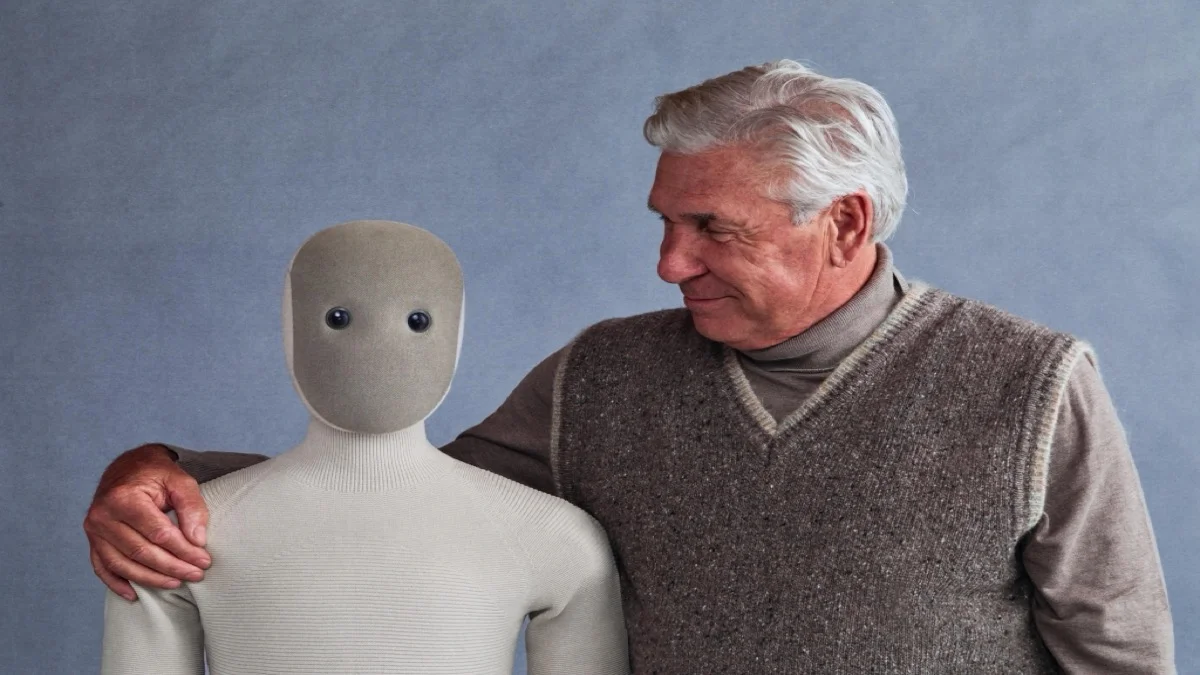
1X Technologies has officially commenced consumer-scale manufacturing for its NEO bipedal humanoid robot at its dedicated production facility in Hayward, California. Backed by the OpenAI Startup Fund and EQT Ventures, the Norwegian-founded robotics pioneer is transitioning humanoid robotics from rigid industrial shop floors directly into private living spaces, with early consumer deliveries scheduled before the close of 2026.
While major players like Tesla, Figure AI, and Boston Dynamics have targeted heavy industrial workcells with high-torque metallic frames weighing 70 to 90 kg, 1X has engineered NEO from the ground up around a fundamentally different premise: human safety and domestic compatibility.

A Biomimetic Tendon-Driven Architecture for Living Spaces
Standing 1.65 meters tall and weighing just 30 kg, NEO is roughly half the mass of typical industrial humanoids. This dramatic weight reduction stems from its bio-inspired cable and tendon-driven actuation system, which replaces bulky high-ratio harmonic drive gearboxes with compliant direct-drive motors distributed along the limbs.
Key engineering specifications include:
- Weight and Form Factor: 30 kg total mass, 1.65 m height, covered in a padded, non-snagging knit textile suit that eliminates pinch points and softens incidental contact.
- Acoustic Footprint: Operates at approximately 22 dB during indoor transit, making it virtually silent compared to the noticeable servo whine of industrial robots.
- Degrees of Freedom: 38 active DoF across the body, enabling natural bipedal strides, dynamic squatting, and fluid upper-body postures.
- Energy and Runtime: A 48V, 0.9 kWh high-density battery module delivering up to 4 hours of active operation, compatible with an autonomous floor charging mat.
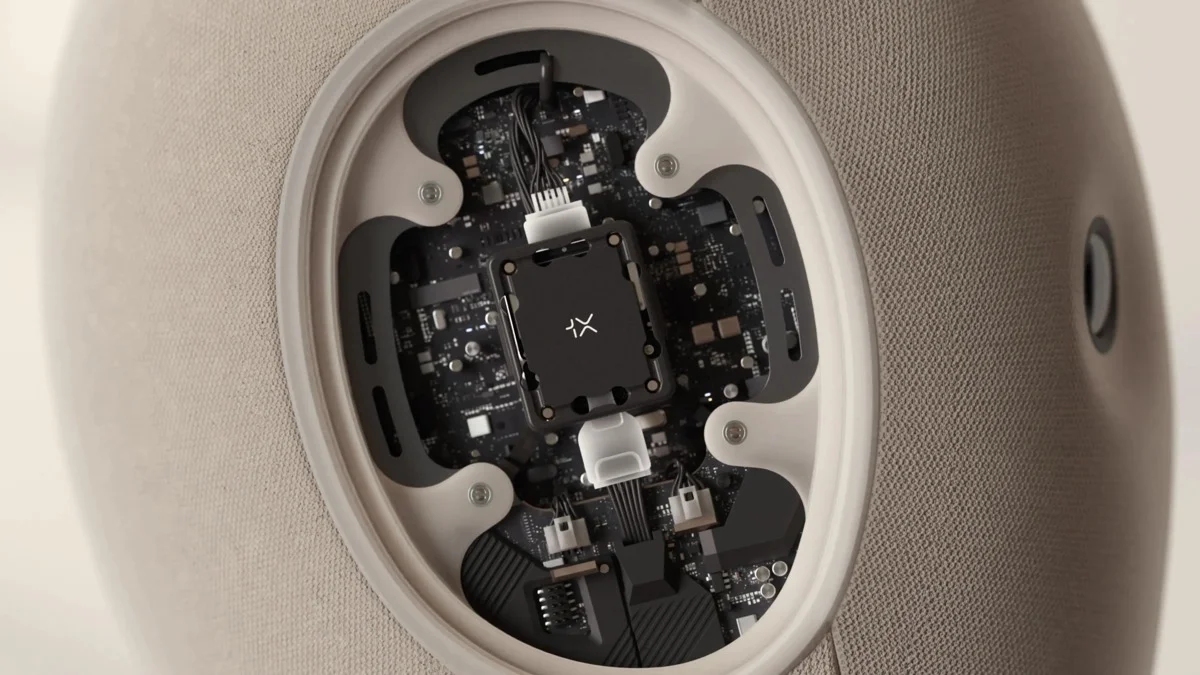
Dexterous 25-DoF Hands and Dual-Mode Autonomy
Manipulating household items requires an entirely different control paradigm than picking standardized automotive stamping parts. NEO features newly integrated hands boasting 25 degrees of freedom, equipped with tactile pressure arrays and high-friction synthetic fingertips.
This dexterity allows the robot to handle fragile, deformable objects like drinking glasses, laundry, and delicate plants without crushing them or dropping slippery surfaces.

To navigate unstructured home tasks, 1X pairs local physical AI foundation models (developed in collaboration with OpenAI and trained via the 1X World Model Lab) with an on-demand teleoperation fallback called Expert Mode. When the robot encounters an ambiguous scenario, such as an unfamiliar latch or a novel appliance interface, a remote human teleoperator can seamlessly intervene over an encrypted connection to complete the task. Every intervention generates rich multimodal training data, allowing local neural policies to master the edge case via over-the-air updates.
Two Diverging Paths: 1X NEO vs Unitree G1 in the Sub-$20,000 Segment
The commercial rollout of 1X NEO establishes a stark contrast with the other entry-level humanoid platform currently on the market, the Unitree G1 priced at $16,000. While both platforms target the accessible sub-$20,000 tier, their underlying engineering philosophies could not be more different:
- Actuation and Acoustic Footprint: The Unitree G1 relies on high-torque cycloidal gearboxes that produce noticeable servo noise and rigid mechanical impact risks, catering primarily to robotics labs and developers. Conversely, the 1X NEO employs 22 dB silent tendon-driven actuation wrapped in a soft knit padded exterior, prioritizing passive domestic safety around family members and pets.
- Autonomy and Utility: Where Unitree focuses on dynamic agility and research flexibility, 1X delivers a vertically integrated household companion backed by OpenAI foundation models and an on-demand teleoperation fallback.
Full engineering specifications, actuation benchmarks, and cohabitation ratings are available on our dedicated 1X NEO product profile and within the SpecsLib humanoid robotics platform.