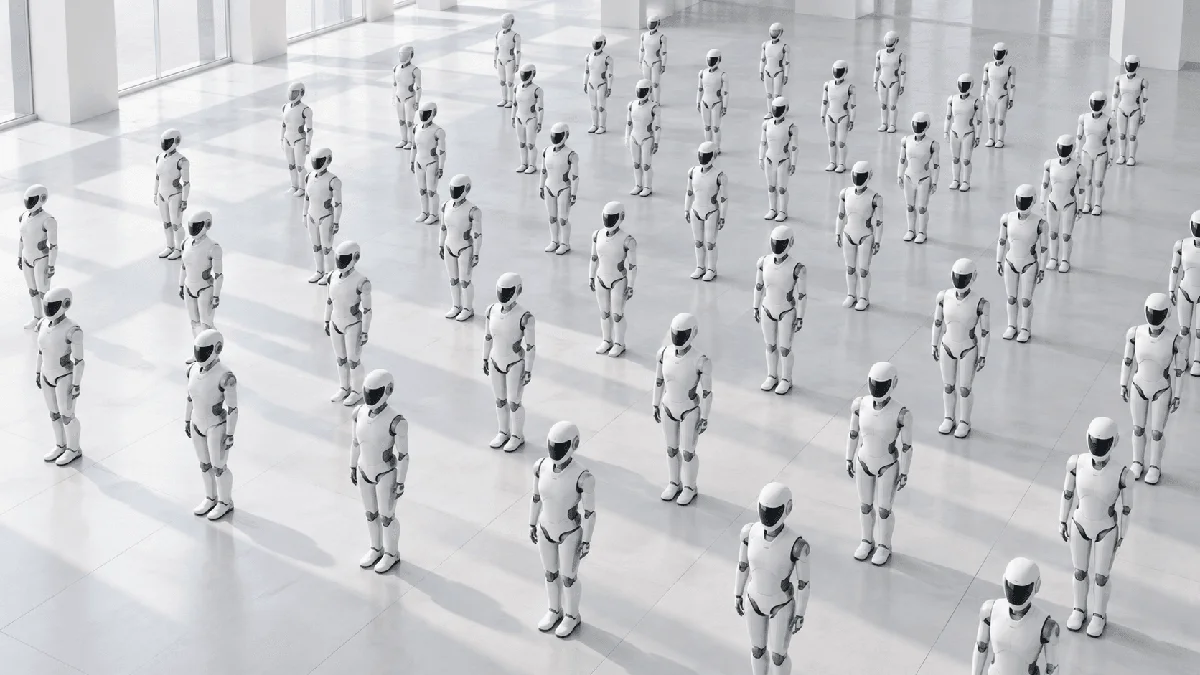
On October 24, 2026, Chinese robotics pioneer AgiBot (Zhiyuan Robotics) set an official Guinness World Record for the most humanoid robots dancing simultaneously. Staged at the Yellow River International Convention and Exhibition Center in Jinan, China, the performance brought together 110 full-size production Expedition A3 humanoid robots operating in synchronized motion for 5 minutes and 43 seconds without a single dropped routine or physical collision.
A Guinness adjudicator confirmed the physical count of 110 operational machines on site. While group robotics demonstrations often serve as festive novelties, the technical execution of this event addressed a pivotal milestone in physical embodied AI: proving that over 100 series-produced bipedal machines can execute millisecond-synchronized trajectory changes from autonomous live state estimation, rather than blind teleoperation or rigid motion playback.
Beyond Choreography: Real-Time Fleet Orchestration
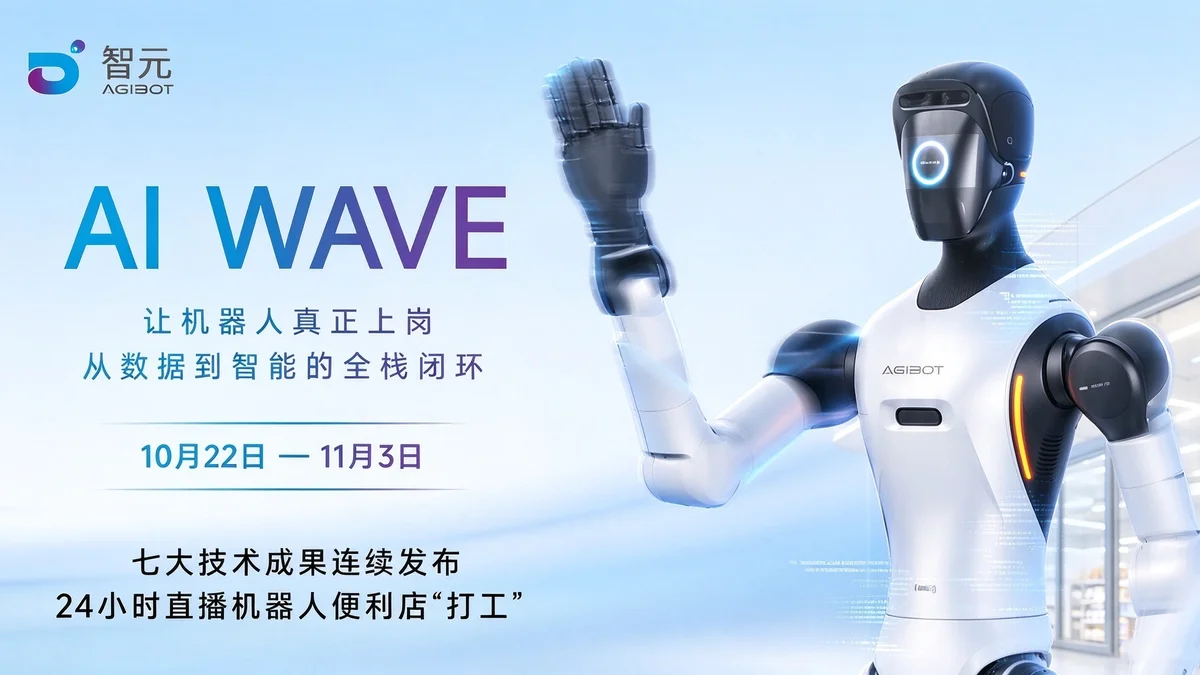
According to technical disclosures confirmed by AgiBot partner and senior vice president Wang Chuang, the core benchmark evaluated during the Guinness attempt was not theatrical aesthetic, but whether an industrial-grade fleet exceeding 100 units could self-calibrate straight from shipping crates and complete a dynamic routine with zero human intervention.
Engineers did not drive the machines via individual remote controllers. Instead, the 110 humanoids were orchestrated by LinkBots, AgiBot’s in-house multi-robot scheduling and fleet management platform. The coordination architecture relies on three structural engineering layers:
- State-Driven Trajectory Generation: Formation shifts and wave patterns are calculated dynamically from each robot’s live joint and spatial state, rather than replaying static pre-baked kinematic recordings.
- Centimeter-Level UWB Fusion: High-frequency Ultra-Wideband (UWB) transceivers deliver spatial positioning accurate to under 10 centimeters across the exhibition hall, counteracting line-of-sight occlusions caused by neighboring robot chassis and human crowds.
- Dual-Path Communication with Local Compensation: Operating over a synchronized 5G-Advanced and Wi-Fi dual-mode network, the fleet receives distributed mission commands while local obstacle avoidance subroutines guarantee that if an individual unit encounters a transient timing hiccup, adjacent machines adapt their spacing autonomously without triggering cascade stalls.
Wang noted that solving multi-agent positioning, distributed arbitration, and real-time collision avoidance represents the dividing line between experimental prototype demonstrations and deployable enterprise robotic workforces.
Off-The-Shelf Production Repeatability
A major hardware takeaway from the Jinan world record is the mechanical consistency of AgiBot’s manufacturing line. In bipedal robotics, running 110 units concurrently exposes any tolerance variances in harmonic reducers, planetary gearheads, motor encoder calibrations, or thermal dissipation. A 2% torque deviation across knee actuators can cause walking drift, leading to cluster collisions in tight formations.
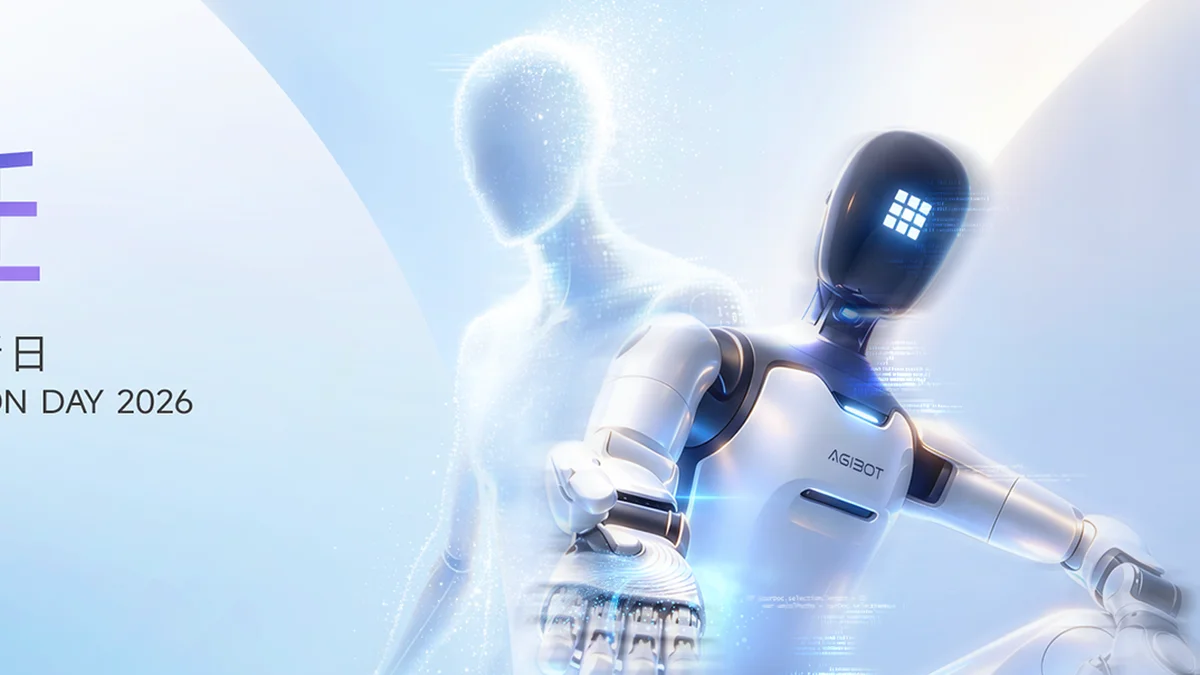
Every unit deployed in Jinan was a standard production Agibot A3 unit, matching the specifications honored with the IFA 2026 Innovation Award in Berlin. Standing 1.73 meters tall and weighing 55 kg, each A3 incorporates 52 active degrees of freedom, 360 Nm peak joint torque, a 10-second hot-swappable 1.8 kWh battery system, and OmniHand dexterous manipulators.
The company confirmed that the 110 robots used in the record attempt are transitioning immediately into real-world commercial pilots. Multiple units are currently operating in Jinan Metro stations (including the Olympic Sports Center and Zhuanshan West Road stations), assisting commuters with interactive navigation, platform crowd guidance, and routine safety patrols. Additional batches will be deployed across cultural tourism venues, municipal exhibition pavilions, and educational research centers.
What This Means for Physical AI Fleets
Following AgiBot’s recent delivery of its 20,000th commercial robot and the 300-unit deployment at Chimelong Spaceship Park, the 110-robot Jinan milestone underscores how rapidly Chinese embodied AI manufacturers are scaling from lab demos to factory-floor volume. While Western competitors like Figure AI and Tesla Optimus focus heavily on single-agent neural foundation models in structured automotive plants, AgiBot is simultaneously proving swarm control and production consistency in high-density public venues.
You can inspect full kinematic dimensions, actuator torque ratings, and battery runtimes on our dedicated Agibot A3 specification profile, or evaluate comparative strengths in our interactive engineering duels:
Discover all tracked commercial and industrial bipedal platforms in the humanoid robot directory.