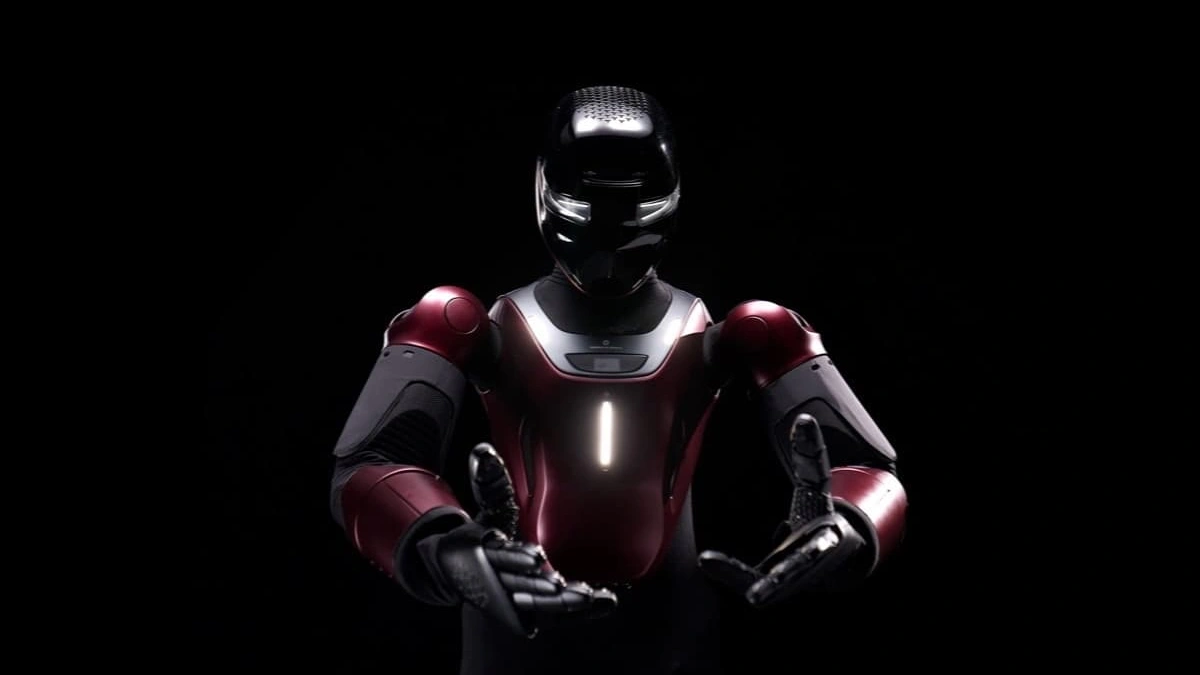
At CES Unveiled Milan on October 23, 2026, Italian deep-tech robotics company Generative Bionics announced plans to construct Europe’s largest dedicated Physical AI Data Factory, an expansive 5,000-square-meter facility in Italy scheduled to open in the fourth quarter of 2027. Powered by AMD Helios rack-scale AI computing infrastructure, the multi-site initiative is designed to solve the critical physical data bottleneck hindering general-purpose robotics by deploying fleets of the company’s sensor-skinned humanoid, the Generative Bionics GENE.01.
Spun out of the Istituto Italiano di Tecnologia (IIT) in Genoa and led by CEO Daniele Pucci, Generative Bionics closed a landmark 70 million euro seed funding round backed by CDP Venture Capital’s Artificial Intelligence Fund, AMD Ventures, Tether Investments, Eni Next, and industrial group Duferco. The data factory initiative establishes an end-to-end sovereign European infrastructure where robot training datasets, physics models, and mechatronic know-how remain anchored within continental borders.
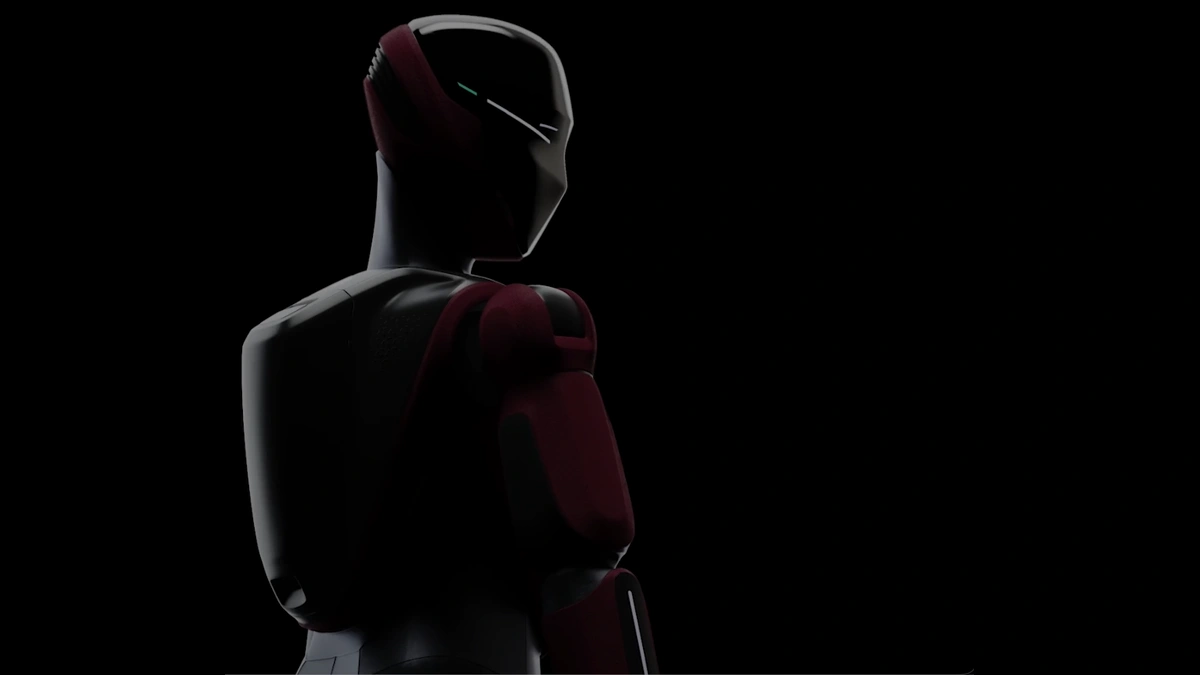
The Real-to-Sim-to-Real Data Pipeline
While frontier multimodal language models scale across internet text and video tokens, embodied robotics requires dense high-frequency physical interaction telemetry. Friction nuances, micro-slippage, compliance, cable flex, and thermal expansion cannot be accurately replicated through computer vision alone.
To overcome this constraint, Generative Bionics designed a continuous real-to-sim-to-real training paradigm:
- Physical Fleets at Scale: Fleets of GENE.01 humanoids operate continuously inside physical replication cells that mirror real-world industrial environments (such as naval shipyards and manufacturing plants). As robots execute assembly, welding, and material transfer tasks, every contact interaction is captured in high resolution.
- Parallel Digital-Twin Stress Testing: The physical sensor logs feed directly into AMD Helios rack-scale clusters running parallel digital-twin simulations. These simulations stress-test each motor policy across thousands of variations, altering workspace layouts, lighting conditions, object payloads, surface friction, and simulated hardware failures.
- World Action Model (WAM) Flashing: Optimized policies are compiled into robust World Action Models and flashed back onto physical GENE.01 units in the factory for real-world validation, creating an iterative improvement loop that accelerates operational reliability.
AMD Helios rack-scale architecture provides the multi-petaflop compute required to fuse heterogeneous sensor streams, execute high-throughput physics simulations, and train foundation action models on unified ROCm software stacks.
GENE.01: Full-Body Multimodal Tactile Skin
Debuting as the physical embodiment of this architecture, the GENE.01 humanoid stands 1.72 meters tall, weighs 65 kg, and features 45 active degrees of freedom. Developed from concept to functional machine in six months, the platform draws upon 15 years of humanoid research at IIT spanning the iCub, iRonCub, and ergoCub projects.
The defining breakthrough of GENE.01 is its distributed multimodal smart skin. Rather than relying solely on vision cameras and joint torque sensors, the entire outer chassis is enveloped in a sensitive electronic epidermis capable of measuring four distinct physical dimensions:
- Tactile Contact Force: Quantifies contact pressure and micro-shearing forces across the palms, fingers, forearms, and torso, enabling precise manipulation of heavy or delicate components.
- Proximity Sensing: Detects human workers and obstacles before physical contact occurs, triggering proactive kinematic slowdowns.
- Thermal Monitoring: Tracks local temperature gradients to avoid overheating risks during heavy welding operations and contact with hot machinery.
- Reflexive Cobot Safety: Low-latency sensor loops run directly on embedded AMD edge processors and Tether’s QVAC local intelligence layer, allowing the humanoid to stop or redirect motion in milliseconds without safety cages.
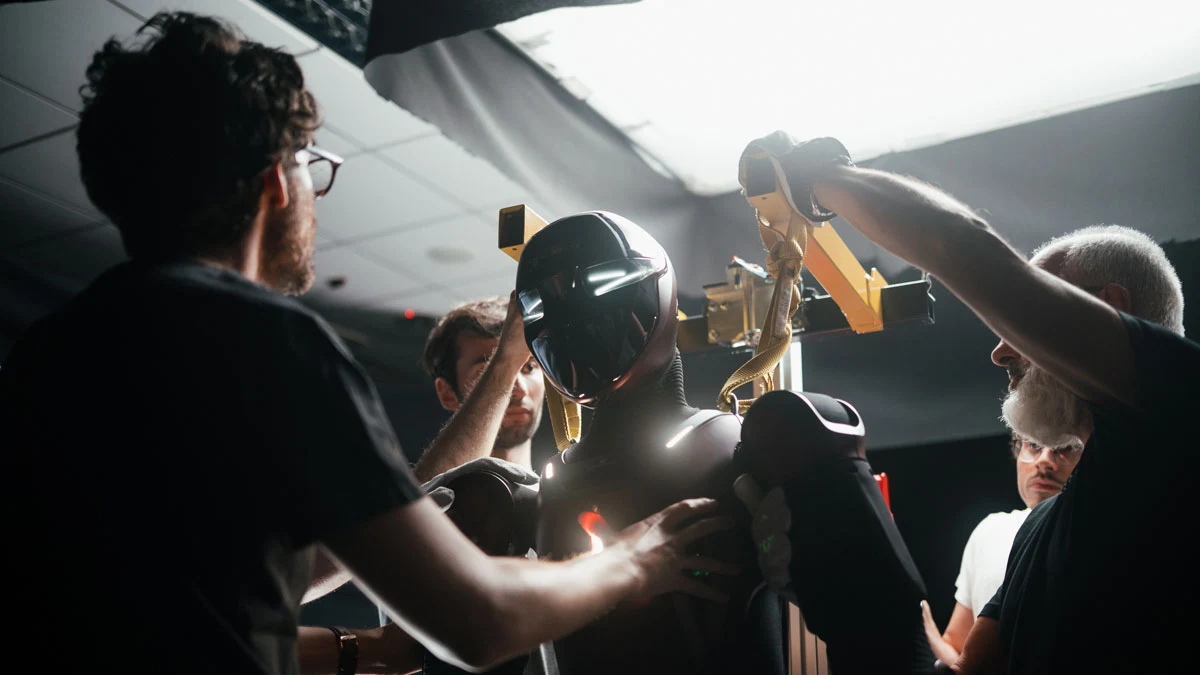
Industrial Deployment with Fincantieri Shipyards
Generative Bionics has structured the GENE.01 as a modular industrial platform with an open-source digital twin available across ROS, PyPI, and Conda. The platform’s first commercial customer is European shipbuilding giant Fincantieri.
In shipyard environments, human workers routinely operate in confined, high-temperature compartments where arc welding and grinding create severe ergonomic hazards. GENE.01 is configured with specialized thermal shielding and high-precision welding torches to take over repetitive structural welding passes and heavy plate joining, operating alongside human shipbuilders under collaborative ISO safety guidelines.
Mechatronic sovereignty is supported through a strategic partnership with German motor specialist Synapticon, which supplies integrated frameless servo actuators and high-resolution absolute encoders assembled and calibrated within the European Union.
Europe’s Expanding Physical AI Ecosystem
The announcement of Italy’s 5,000 m² Physical AI Data Factory reinforces Europe’s competitive momentum against Silicon Valley and Chinese humanoid clusters. In Germany, NEURA Robotics and TUM recently inaugurated the 2,300 m² TUM RoboGym for the NEURA 4NE1, while Munich-based Agile Robots showcased automotive parts sequencing with the Agile ONE SN at Audi Ingolstadt.
Generative Bionics plans to expand its data factory blueprint into a three-node global network, with a second facility planned elsewhere in Europe and a third dedicated to international enterprise markets.
Explore detailed engineering specifications, joint kinematics, and actuator configurations on the Generative Bionics GENE.01 technical profile, or compare its tactile collaborative capabilities against competing industrial humanoids:
- Compare GENE.01 vs NEURA 4NE1
- Compare Agile ONE SN vs GENE.01
- Compare Figure 02 vs GENE.01
- Compare GENE.01 vs Tesla Optimus Gen 2
You can review all commercial and research bipedal systems in our dedicated humanoid robot hub.