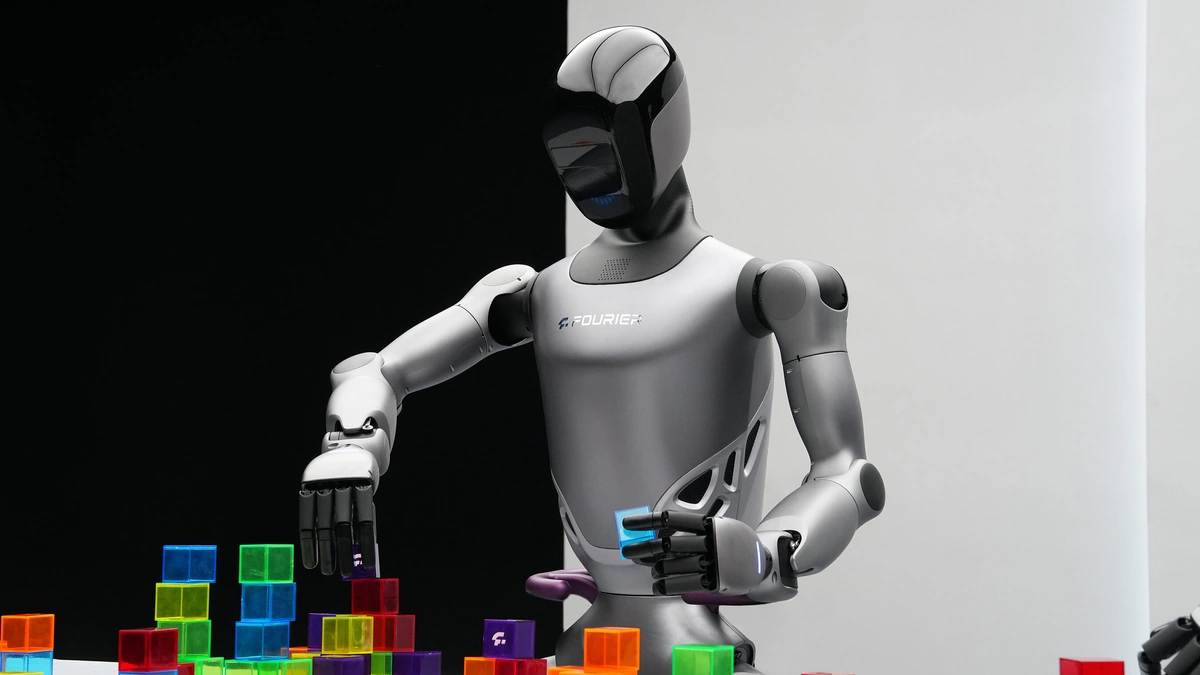
Meta Platforms has secretly designed and built an internal bipedal humanoid robot prototype codenamed “Max” in direct partnership with Chinese robotics manufacturer Fourier Intelligence. Built in just three months at Fourier’s advanced manufacturing facility in Shanghai, the machine marks Meta’s most decisive push yet into physical embodied artificial intelligence.
First revealed to engineering leads during Meta’s private robotics summit in late August, the prototype has already spurred immediate follow-on engineering: Meta and Fourier have initiated active development on a second-generation successor, “Max 2”, featuring an overhauled torso structure, upgraded tactile manipulation, and integrated projection systems.
Rapid Prototyping: 90 Days in Shanghai
The collaboration between the American social media and AI giant and Shanghai-based Fourier Intelligence represents an aggressive approach to physical AI hardware cycles. Rather than spending years in Silicon Valley cleanrooms designing bespoke actuators from scratch, Meta embedded its robotics leadership directly into China’s premier hardware prototyping ecosystem.
Li-Chen Miller, Meta’s Vice President of Product for Robotics, spent nearly two months stationed on-site at Fourier’s Shanghai factory, working shoulder to shoulder with Fourier’s mechanical, electrical, and control engineers. To solidify this pipeline, Meta has simultaneously launched recruitment drives across Shanghai and Shenzhen, targeting senior manufacturing engineers, supply chain specialists, and actuator quality leads.

Technical Architecture: Max Prototype Specifications
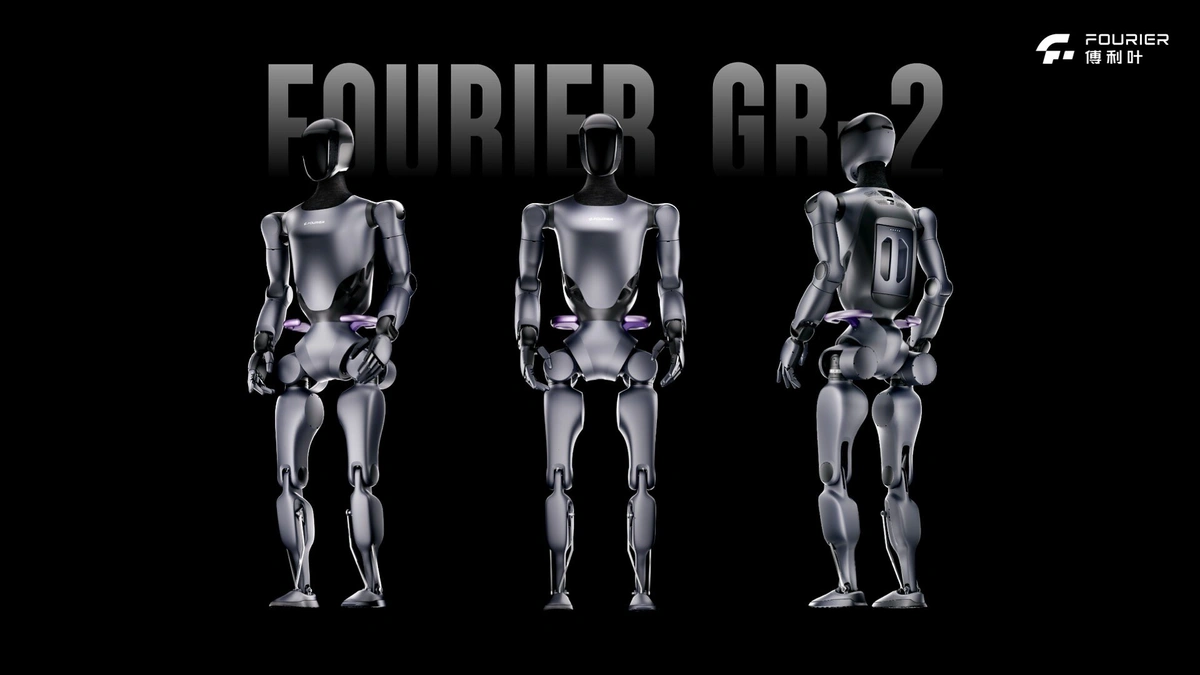
Unlike industrial heavyweights such as the Fourier GR-2 or factory-floor bipeds designed to lift 50 kg automotive payloads, Meta’s “Max” prototype is tailored specifically for indoor domestic environments:
- Stature and Form Factor: Max stands roughly 1.50 meters tall (approximately 5 feet) and weighs 48 kilograms (106 pounds). This compact stature lowers the robot’s center of mass, mitigating tip-over risks while operating safely alongside humans in residential rooms.
- Embedded Physical AI Compute: Max is powered by an onboard NVIDIA Jetson Thor robotics system-on-chip. Built on NVIDIA’s Blackwell architecture with integrated transformer engine support, Jetson Thor delivers the real-time processing bandwidth required to run multimodal Vision-Language-Action (VLA) foundation models directly at the edge.
- Dexterous Manipulation: Max is equipped with five-fingered articulated hands optimized for compliant grasping of domestic items, including glassware, kitchen utensils, and folded textiles, rather than rigid industrial crates.
- Social & Acoustic Interaction: The robot features an integrated facial display screen capable of rendering real-time animated expressions, status alerts, and focal gaze vectors, paired with directional speakers for voice interactions.
From Max to Max 2: The Next Iteration
Following telemetry gathered during the August demonstrations, Meta and Fourier commenced architecture work on “Max 2” in September. The second iteration addresses critical thermal, sensory, and kinematic constraints identified during initial testing:
- Redesigned Lightweight Torso: A re-engineered chassis frame improves passive and active heat dissipation, preventing thermal throttling on the NVIDIA Jetson Thor module during continuous reasoning tasks.
- Next-Generation End Effectors: Upgraded hands with higher degree-of-freedom density and integrated tactile sensing matrices on each fingertip for closed-loop slip detection.
- Spatial Projection Interface: An integrated optical projector designed to project environmental path trajectories, interactive visual interfaces, and operational intent directly onto floors and table surfaces.
- Enhanced Elevation Perception: Additional downward-facing depth sensors and LiDAR arrays calibrated specifically to detect stair treads, low-profile thresholds, and dropped cables.
Strategic Goal: A Physical Body for Meta’s ‘Muse’ AI
For Meta Chief Executive Mark Zuckerberg, the robotics initiative represents the missing physical layer of the company’s broader artificial intelligence strategy. Meta has invested tens of billions of dollars into its open foundation models and conversational assistants. CEO Mark Zuckerberg has repeatedly framed robotics as the physical embodiment of Meta’s upcoming “Muse” AI agent.
While virtual agents operate within smartphones, Meta Quest headsets, and Orion augmented reality glasses, physical AI models require embodied interaction with gravity, friction, and spatial geometry to achieve true general competence. Domestic chores, such as tidying living areas, sorting laundry, and loading dishwashers, present severe unstructured edge cases that cannot be solved purely through digital simulation.
By testing physical models on Fourier’s versatile robotic hardware, Meta’s AI researchers can collect rich Sim2Real sensorimotor data without bearing the overhead of building an end-to-end robotics manufacturing plant in North America.
Hardware Comparison: Max vs. Fourier GR Lineup
To understand how Max differentiates from Fourier’s commercial platforms, consider the engineering parameters across the lineage:
| Specification | Meta / Fourier “Max” | Fourier GR-2 | Fourier GR-1 |
|---|---|---|---|
| Primary Domain | Domestic AI & Research | Enterprise, Health & Tech | Rehabilitation & Research |
| Height | 150 cm (4 ft 11 in) | 175 cm (5 ft 9 in) | 165 cm (5 ft 5 in) |
| Weight | 48 kg (106 lbs) | 63 kg (139 lbs) | 55 kg (121 lbs) |
| Hands | 5-finger domestic tactile | 12-DoF dexterous tactile | 5-finger compliant gripper |
| Edge Compute | NVIDIA Jetson Thor | Custom Edge AI GPU | Embedded x86/ARM host |
| Max Payload | Light domestic objects (<5 kg) | 50 kg total / 12 kg per arm | 50 kg total lifting capacity |
| Human Interface | Facial display + speakers | Sleek visor + status LEDs | Head-mounted display shell |
| Current Status | Internal Prototype (Max 2 in dev) | Production / Commercial Fleet | Field Deployed / Commercial |
For an in-depth view of how Fourier’s production platform stacks up against contemporary compact humanoids, explore our detailed Fourier GR-2 vs Unitree G1 comparison.
Geopolitical Friction and Regulatory Hurdles
Meta’s deep hardware reliance on Shanghai is unfolding against an increasingly complex regulatory landscape in Washington. American policymakers have heightened scrutiny on Chinese advanced robotic hardware and component supply chains:
- FCC Covered List Restrictions: The Federal Communications Commission has moved to classify foreign-manufactured advanced robotic systems under its national security Covered List. Devices placed on the list cannot receive standard equipment authorizations required for commercial retail sale within the United States.
- Domestic Content Mandates: Under evolving trade guidelines, advanced commercial robots operating in sensitive domestic environments may eventually face requirements of over 65% domestic component value by 2028, rising to 75% in 2029.
- Research Import Caps: Proposed federal rules would restrict unauthorized research imports of covered robotic platforms from 4,000 units down to just 40 units per organization.
Meta’s official position reflects this delicate boundary. When asked about the partnership, Meta stated that its collaboration with Fourier Intelligence is strictly focused on internal research and experimentation, emphasizing that the company has no plans to commercialize or sell the current units to consumers.
By keeping Max strictly confined to research laboratories and internal AI evaluation summits, Meta avoids regulatory import roadblocks while continuing to harness the manufacturing speed and mechanical refinement of Shanghai’s embodied AI ecosystem.