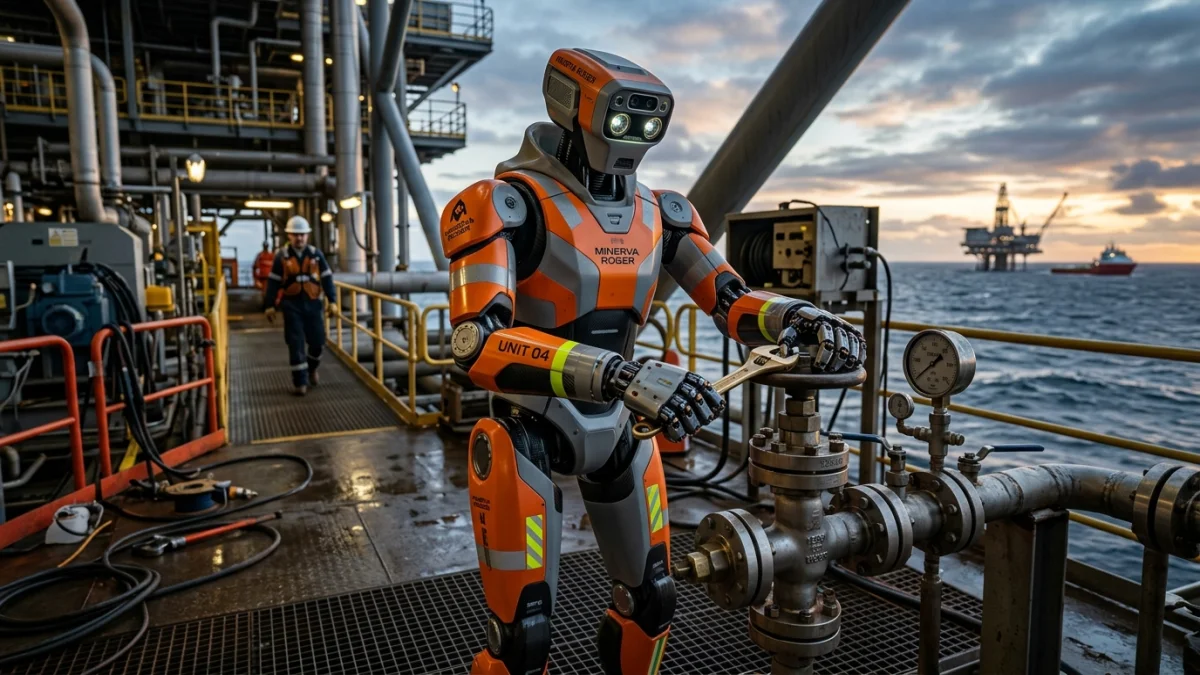
The humanoid robotics sector is expanding beyond general-purpose domestic assistants to target highly specialized, high-risk industrial environments. On October 6, 2026, German startup Minerva Humanoids emerged from stealth, announcing $10 million in pre-seed funding and unveiling its flagship robot, Roger.
Founded by Sandor Felber (formerly of MIT CSAIL and Tesla’s Optimus program) and Maurice Rahme (a former technical lead at Boston Dynamics), the company took Roger from concept to a walking prototype in just five months.
Shared Autonomy for Extreme Environments
Unlike fully autonomous robots aiming for “zero-shot” generalization, Roger operates on a shared autonomy model, placing a “human in the loop”. The robot is designed for the world’s most dangerous jobs, such as offshore oil rig operations, high-voltage maintenance, and explosive ordnance disposal (EOD).
A trained human operator uses a VR headset to see through Roger’s stereoscopic cameras and manually control the robot’s highly dexterous, multiple-jointed hands.
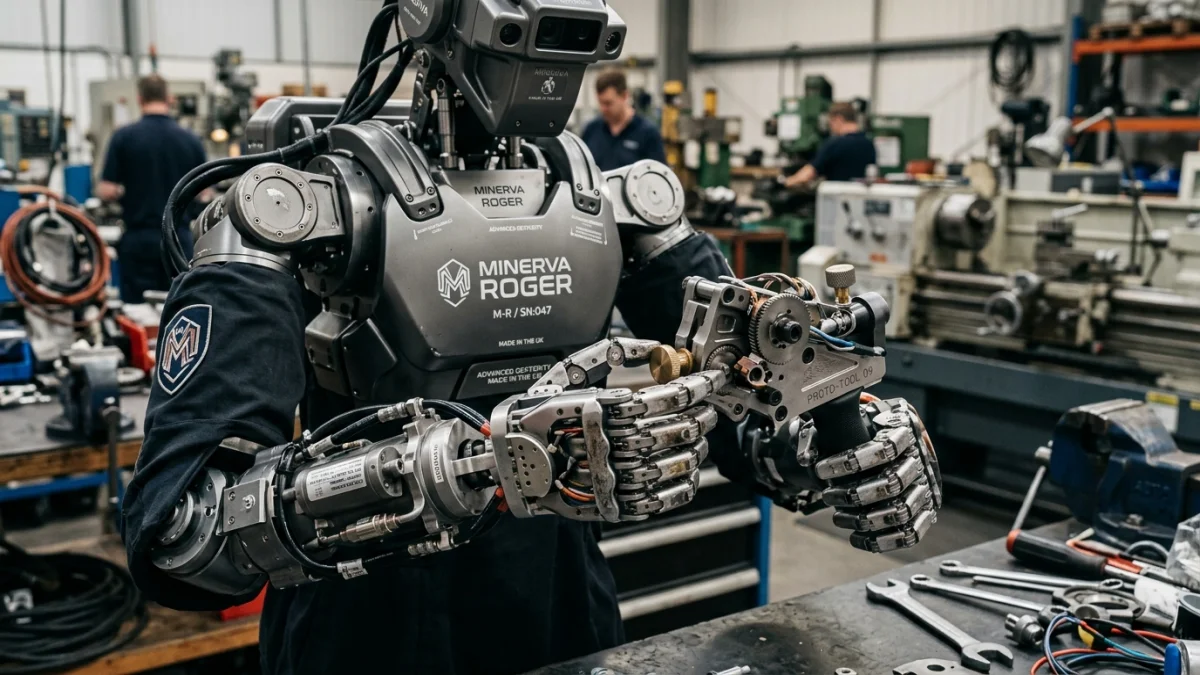
Meanwhile, the robot’s onboard AI, named Minerva Intelligence, handles the complex physics of bipedal locomotion. This includes dynamic balancing, navigating industrial stairways, and fall recovery, freeing the human operator to focus entirely on the delicate tasks at hand.
Early Pilot Programs
By focusing on extreme environments where human safety is paramount, Minerva Humanoids avoids the immediate challenge of consumer-grade safety certification. Roger has already been demonstrated at the NATO Explosive Ordnance Disposal Centre of Excellence, showcasing its potential for critical public safety applications.
With its initial prototypes manufactured and assembled in Germany, the company is now preparing to launch paid pilot programs in the energy and defense sectors.