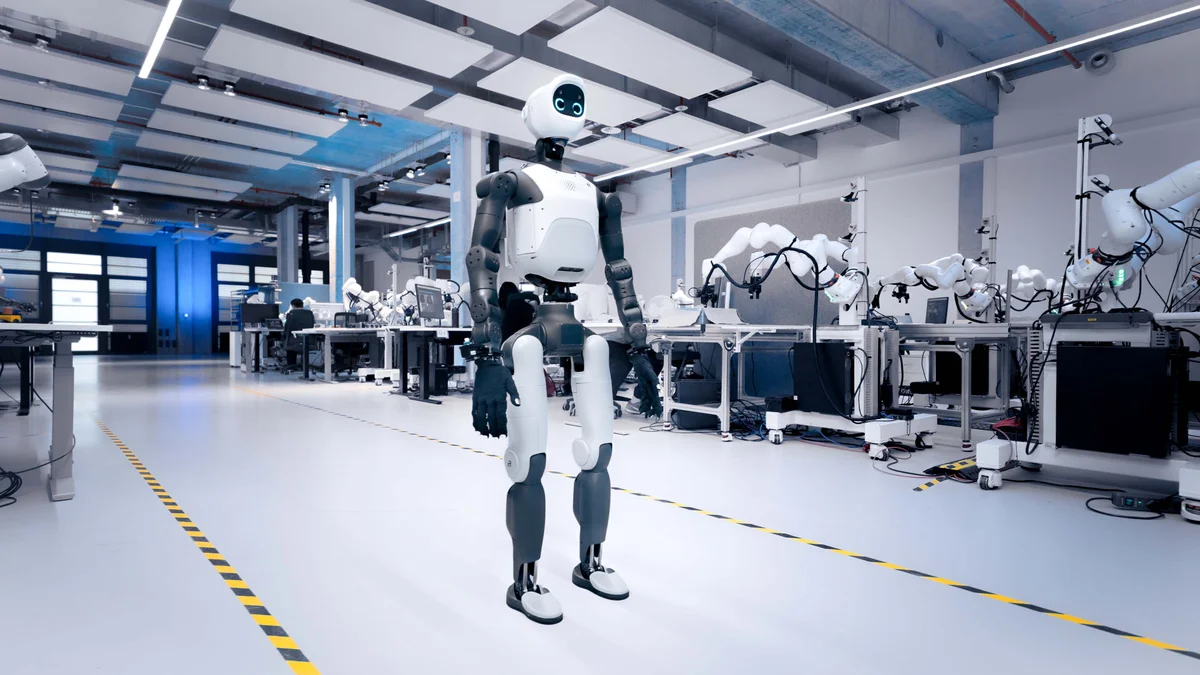
At NVIDIA GTC Berlin on October 21, 2026, German robotics manufacturer Agile Robots SE and NVIDIA jointly introduced the Agile ONE SN, an open, full-stack humanoid reference platform engineered specifically for Physical AI research and rapid industrial deployment. Standing alongside NVIDIA CEO Jensen Huang’s keynote announcements detailing the Isaac robotics software platform expansions, the Munich-headquartered robotics company revealed not only complete hardware specifications but also a live industrial deployment proof-of-concept conducted in collaboration with Audi and Dassault Systèmes at Audi’s Ingolstadt automotive manufacturing plant.
Agile Robots was spun out of the German Aerospace Center (DLR) Institute of Robotics and Mechatronics in 2018 by Dr. Zhaopeng Chen. By uniting aerospace-grade joint torque sensing with NVIDIA’s latest Blackwell-generation edge AI computing, the Agile ONE SN targets the friction that slows humanoid development: bridging the gap between simulation policies trained in Isaac Lab and physical execution on real factory floors.
Hardware Architecture: 71 Degrees of Freedom and DLR Torque Control
The physical platform is built on the Agile ONE S chassis, presenting a compact form factor engineered for safety in human-shared research labs and factory workstations. Standing 1.40 meters (4.59 feet) tall with an all-up system mass of 43 kilograms (95 pounds), the robot avoids the severe inertia and fall hazards associated with heavy 70-kilogram industrial prototypes:
- Body Kinematics: 31 active degrees of freedom across the legs, dual 7-DoF arms, torso, and articulated neck assembly.
- Actuation & Torque: Proprietary high-torque electric actuators derived from DLR impedance-controlled robotic arms, delivering peak joint torques up to 140 Nm.
- Payload Capacity: 3.0 kg continuous manipulation payload per arm across the full operational envelope.
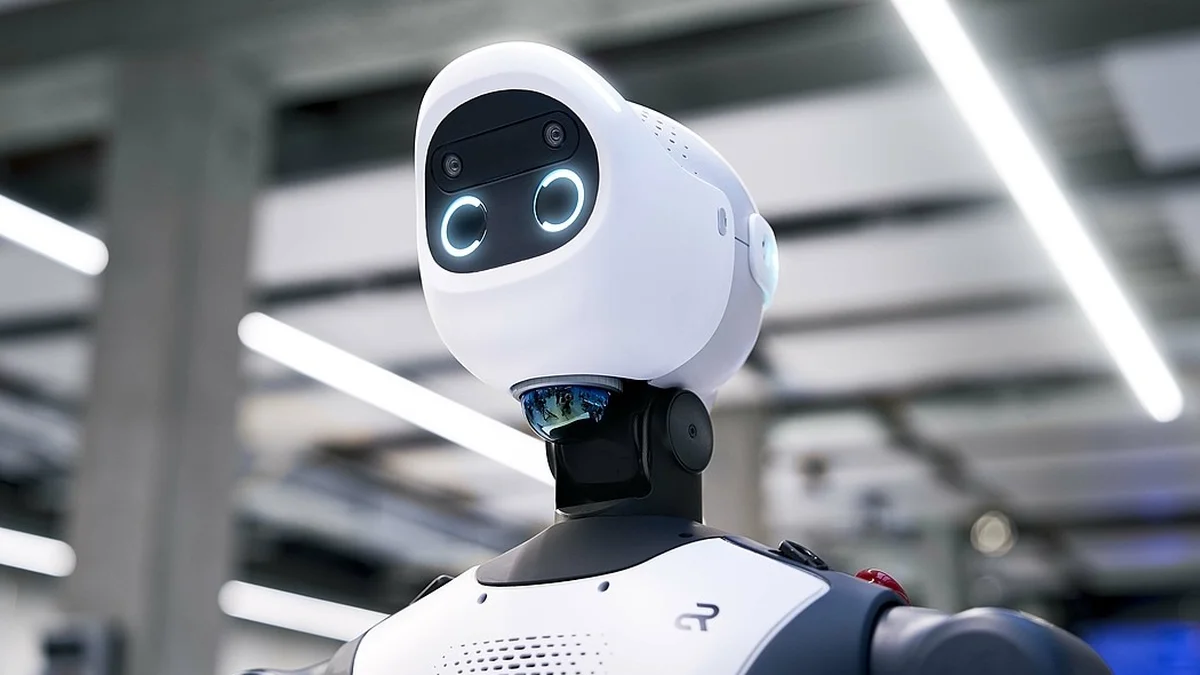
- Perception Array: Head-mounted stereoscopic RGB-D cameras for volumetric spatial mapping, wrist-mounted close-range cameras for micro-alignment, solid-state 3D LiDAR for 360-degree obstacle tracking, and integrated inertial measurement units (IMUs).
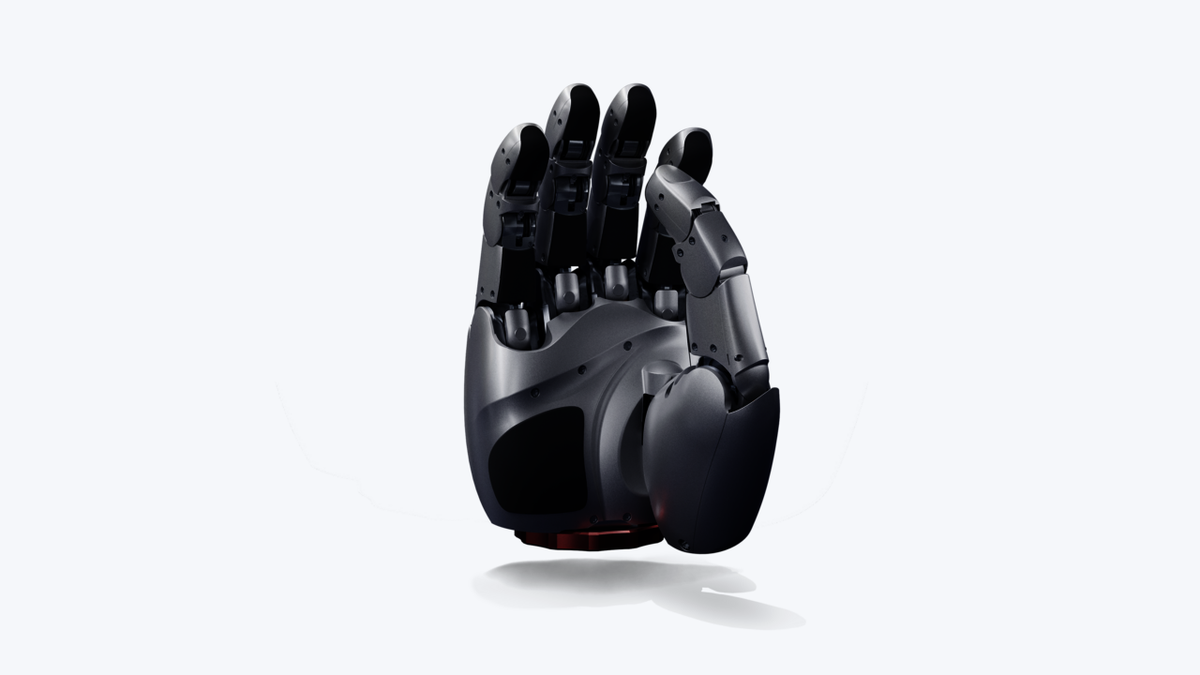
Where previous developer humanoids relied on simplified parallel grippers or underactuated hands, Agile Robots equipped the Agile ONE SN with dual WUJI Hand 2 five-finger end-effectors. Each hand features 20 active degrees of freedom, integrated high-density tactile sensor arrays on finger pads and palms, and a closed-loop force control frequency of 1,000 Hz. Combined with the 31 body joints, the complete platform provides 71 degrees of freedom, enabling delicate bi-manual manipulation of compliant, flexible, or semi-rigid objects.
NVIDIA Jetson Thor Onboard Compute and Isaac GR00T 1.7
The core processing heart of the Agile ONE SN is an integrated NVIDIA Jetson Thor edge supercomputer module. Built on the NVIDIA Blackwell architecture, Jetson Thor delivers 2,070 FP4 TFLOPS of compute power backed by 128 GB of high-bandwidth unified memory. This architecture allows the robot to run multimodal reasoning models and high-frequency whole-body dynamics locally, eliminating cloud round-trip latencies:
- Preconfigured Foundation AI: Ships out-of-the-box with NVIDIA Isaac GR00T 1.7, an open Vision-Language-Action (VLA) foundation model trained on physical interaction datasets.
- End-to-End Workflow: Unifies human demonstration capture via VR and teleoperation, synthetic asset simulation via Isaac Sim and Isaac Lab 3.0, and direct zero-shot policy deployment.
- Hardware Safety Stack: Designed for deep integration with NVIDIA Halos, establishing deterministic real-time safety envelopes and dynamic collision avoidance alongside the physical emergency stop system.
By standardizing USD (Universal Scene Description) and URDF digital twin definitions, research groups at institutions including Stanford University and ETH Zurich can train locomotion and manipulation policies in GPU clusters before loading weights directly onto the robot’s physical Jetson Thor board.
Live Automotive Validation: Audi Ingolstadt Logistics Pilot
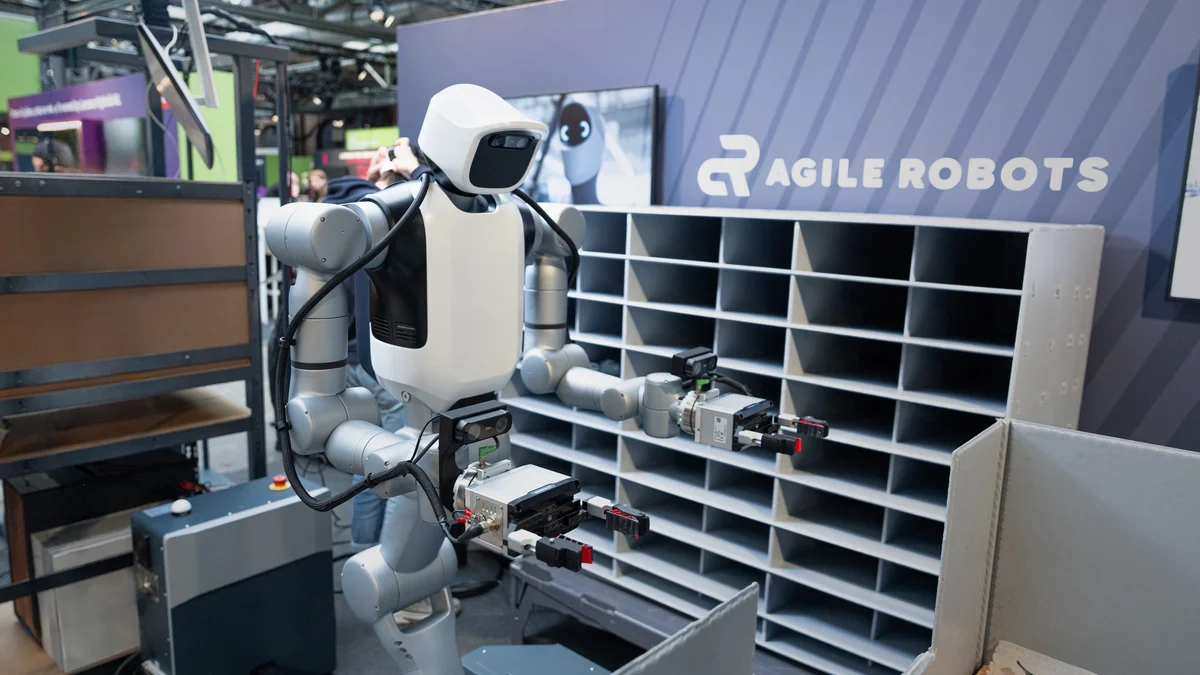
While many humanoid platforms remain confined to laboratory demos, Agile Robots, Audi, Dassault Systèmes, and NVIDIA presented real-world production results from Audi’s Ingolstadt plant Production Lab. Automotive supply chains require roughly one million daily picks to sequence body trim, clips, and interior modules in precise order for just-in-time vehicle assembly.
Handling high-variant, semi-rigid trim components has historically resisted automation due to packaging variations and unpredictable component flexing in bins:
- Virtual Twin Validation: Before physical deployment, Dassault Systèmes constructed a high-fidelity virtual twin of the Ingolstadt logistics facility using DELMIA on the 3DEXPERIENCE platform, accelerated by NVIDIA Omniverse physical AI libraries.
- Simulation-to-Line Acceleration: By simulating robot kinematics, reachability, ergonomics, and cycle timings virtually, Audi and Agile Robots compressed commissioning schedules from several months to a matter of days.
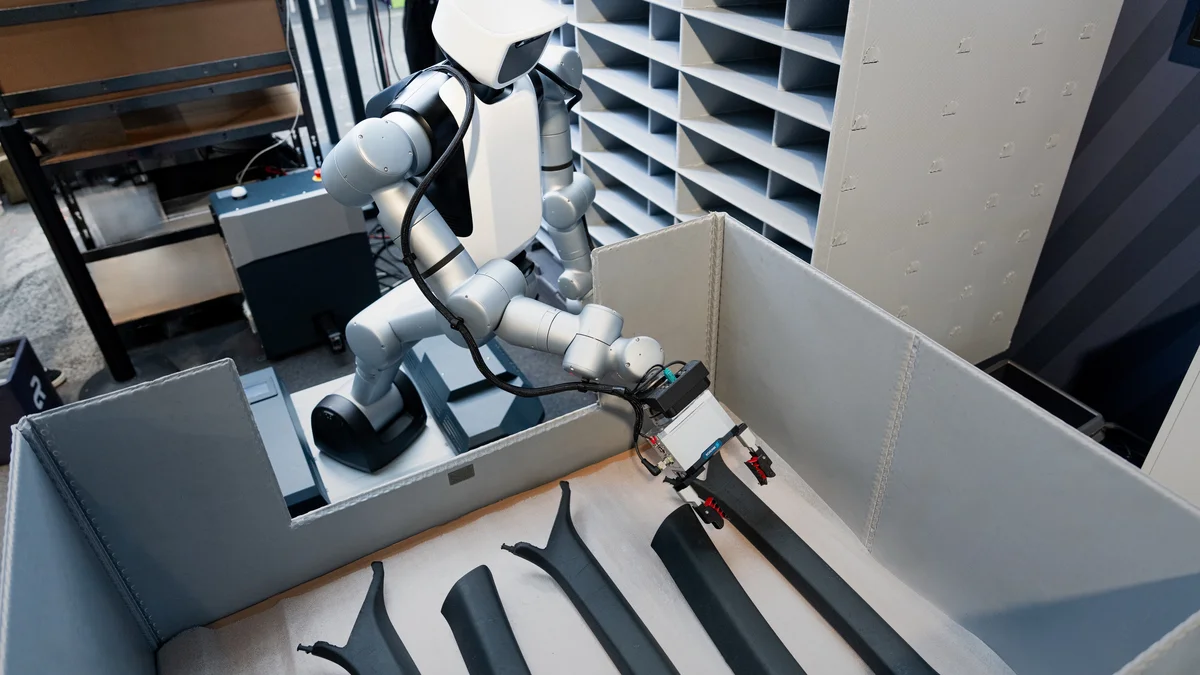
- Physical Bin-Picking: Mobile humanoid units deployed in the Production Lab autonomously identify unsorted interior trim parts from shipping containers, execute compliant dual-arm grasps, and place parts into transport racks in exact assembly sequence.
Ecosystem Positioning and 2027 Production Ramp
Agile Robots confirmed that commercial production of the Agile ONE SN is scheduled for early 2027, with an initial manufacturing target of 1,000 to 2,000 units earmarked for research laboratories, university faculties, and automotive pilot facilities.
The Agile ONE SN serves as the compact developer counterpart to the company’s full-scale industrial humanoid, the Agile ONE (1.74 m, 69 kg). Skills, motion primitives, and VLA policies trained and validated on the lighter Agile ONE SN transfer directly to the heavier industrial machine once manufacturing plants scale from pilot lines to high-volume assembly lines.
Within the European robotics landscape, the Agile ONE SN establishes Germany as a central force alongside NEURA Robotics 4NE-1. Globally, its close integration with NVIDIA hardware places it in direct competition with compact research systems like the Unitree G1 and industrial contenders like the Figure 02.
You can compare specifications and hardware capabilities in our side-by-side analysis to compare Agile ONE SN and NEURA 4NE-1 or evaluate kinematic performance in our head-to-head match between Agile ONE SN and Unitree G1.
For verified joint torque limits, dimensional schematics, and complete sensor breakdowns, visit the Agile ONE SN specification page or explore our comprehensive Humanoid Robotics Database.